anjir abdul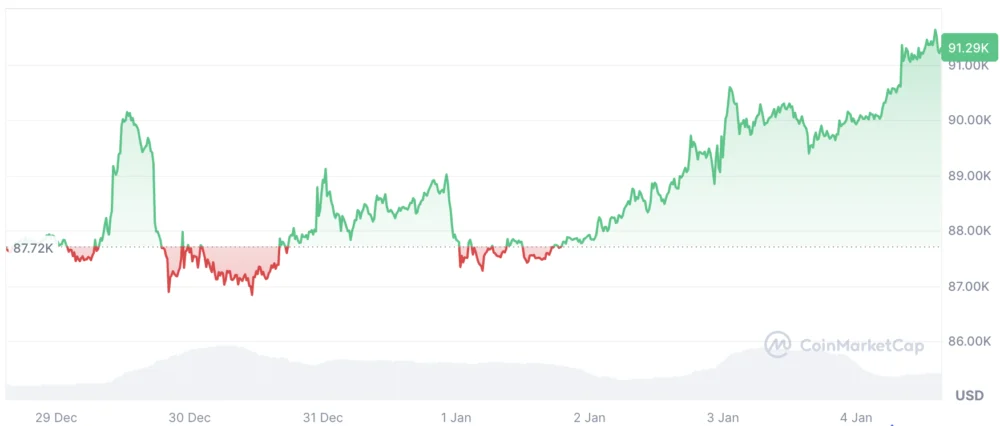
Michael van de Poppe, the astute founder of MN Trading Capital, articulated his perspective in an X post on Saturday, stating, "I don’t think we’ll see a widespread correction based on the attack in Venezuela on Bitcoin." His assessment provides a crucial counter-narrative to the knee-jerk reactions often observed in financial markets during such events, suggesting a more nuanced understanding of Bitcoin’s evolving market dynamics.
The US strikes on Venezuela, a targeted operation, reportedly commenced around 6:00 a.m. UTC on Saturday and concluded approximately 30 minutes later. The swift and decisive nature of the action appears to be a key factor in van de Poppe’s analysis. He posits that the event will not exert a direct, lasting negative impact on Bitcoin’s (BTC) price because it was characterized as a "planned and coordinated attack" and, critically, one that has "already passed us." This distinction is vital: markets often react more violently to unforeseen, escalating, or prolonged uncertainties rather than to discrete, completed operations. The rapid execution and conclusion of the strikes, therefore, may have limited the window for sustained market panic or widespread sell-offs.
Van de Poppe further elaborated that the probability of "more negativity on the markets" stemming directly from this particular event is "relatively slim." This outlook suggests that the market, having processed the immediate news and observing no signs of further escalation or protracted conflict, is likely to return its focus to underlying fundamentals and broader economic narratives rather than remaining fixated on this isolated geopolitical incident.
Bitcoin’s Historical Relationship with Geopolitical Uncertainty
While the current assessment points to stability, it is imperative to acknowledge Bitcoin’s well-documented tendency to exhibit significant price fluctuations around periods of geopolitical uncertainty. The asset, often touted as "digital gold" or a "safe haven," has, in practice, frequently behaved more like a risk-on asset, particularly during the initial shockwaves of major global events.
Over the past 24 hours, Bitcoin’s price has demonstrated remarkable stability, registering a 1.66% increase and successfully reclaiming the psychological $90,000 level. At the time of publication, BTC was trading around $91,290, according to CoinMarketCap data. This immediate resilience contrasts sharply with some past reactions to international crises. The current stability, rather than a decline, immediately following the Venezuela strike, supports the analyst’s view that this particular event is being absorbed differently by the market.
Further insights from CoinGlass data reveal that in the last 24 hours, approximately $60.04 million in Bitcoin leveraged positions were liquidated. Notably, short positions accounted for the vast majority of these liquidations, totaling $55.01 million. This pattern indicates that bearish bets anticipating a price drop post-strike were largely squeezed out, underscoring an underlying strength and perhaps even a bullish sentiment that defied expectations of a geopolitical-induced downturn.
Indeed, there have been several instances in recent history where Bitcoin’s price experienced sudden declines following escalating geopolitical tensions. The conflict between Iran and Israel, as well as the ongoing war between Russia and Ukraine, serve as stark reminders of how global instability can reverberate through the crypto markets.
For instance, in June 2025, during a period of heightened tensions in the Middle East, Bitcoin witnessed a sharp, albeit short-lived, drop. Following reports of explosions in Tehran, for which Israel later claimed responsibility, Bitcoin fell a notable 2.8%, plummeting from $106,042 to $103,053 within a mere 90 minutes. This rapid depreciation illustrated how quickly market participants can de-risk from speculative assets like Bitcoin in the face of immediate, alarming news. The fear of broader regional conflict and the unknown consequences of such an escalation typically trigger a flight to traditional safe havens like the U.S. dollar or gold, pulling capital away from more volatile assets.

Similarly, the full-scale invasion of Ukraine by Russia in early 2022 presented another critical test for Bitcoin. In the immediate aftermath, Bitcoin, along with broader equity markets, saw significant declines. Investors initially treated Bitcoin as a risk asset, selling off positions amidst the global uncertainty. However, as the conflict progressed, a fascinating duality emerged. While initial reactions were bearish, Bitcoin also began to demonstrate its utility as a censorship-resistant store of value and a means for capital flight in regions affected by conflict or sanctions, particularly in Ukraine and Russia itself. This highlighted the complex and evolving narrative surrounding Bitcoin’s role during crises, often oscillating between being a speculative asset and a potential hedge.
Bitcoin’s Growing Resilience: Staying Firm Above $90,000
The current situation post-Venezuela strike, however, appears to align more with Bitcoin’s developing resilience rather than its historical susceptibility to immediate geopolitical shocks. This is a testament to a maturing market, increasing institutional adoption, and a broader understanding of Bitcoin’s fundamental value proposition.
Echoing a sentiment similar to van de Poppe’s, crypto analyst Tyler Hill shared his perspective, noting, "generally the market really nukes when we expect things to get worse afterwards which doesn’t seem to be the case." Hill’s observation underscores the importance of market expectations. When a geopolitical event is perceived as a contained incident with limited potential for ongoing escalation or protracted negative consequences, the market tends to absorb it more calmly. In contrast, events that open the door to prolonged uncertainty or an unpredictable chain of reactions are far more likely to trigger widespread panic and sell-offs. The US strike on Venezuela, by its quick and seemingly decisive nature, appears to fall into the former category.
Intriguingly, Hill added a more optimistic take: "Could see this actually bring some green to the market as people take this as a sign of strength though." This perspective suggests that a well-executed, targeted military action, if perceived as resolving a specific threat or demonstrating decisive control without leading to wider instability, could paradoxically be interpreted by some market participants as a sign of overall stability or strength from a geopolitical standpoint. Such an interpretation might lead to a modest influx of capital into risk assets like Bitcoin, especially if the alternative is perceived as prolonged indecision or escalating, uncontrolled tensions.
Another prominent crypto analyst, Shagun Makin, further reinforced this confidence, stating that Bitcoin has proven it can "stay firm" despite "geopolitical noise," solidifying the belief that it can comfortably maintain its position above the $90,000 mark. This assertion points to a fundamental shift in how Bitcoin is perceived and traded. The market is increasingly differentiating between genuine, systemic threats that could destabilize global finance and more localized or contained geopolitical events.
Several factors contribute to this growing resilience. The increasing institutional involvement, spearheaded by the success of Bitcoin and Ether ETFs which pulled in a strong $646 million on the first trading day of 2026, provides a more stable and mature investor base. These institutional players often have longer investment horizons and are less prone to panic selling based on short-term geopolitical headlines. Furthermore, the narrative of Bitcoin as a legitimate store of value, an inflation hedge, and a viable alternative to traditional financial systems continues to gain traction globally. This growing conviction helps to anchor its price during periods of external uncertainty.
Moreover, the market’s ability to quickly process and move past such events indicates a higher degree of maturity and efficiency. Investors are becoming more sophisticated in discerning between transient "noise" and fundamental shifts. The "halving" narrative, anticipating a reduction in new Bitcoin supply, also continues to provide a long-term bullish underpinning, which can help to cushion the asset against shorter-term negative catalysts.
In conclusion, while Bitcoin has historically demonstrated vulnerability to geopolitical shocks, the analyst consensus regarding the US strike on Venezuela suggests a new chapter in its market behavior. The swift, coordinated, and concluded nature of the operation, combined with Bitcoin’s growing institutional acceptance and underlying market strength, appears to have insulated it from the widespread correction that might have occurred in earlier years. Bitcoin’s ability to reclaim and hold the $90,000 level amidst such events reinforces its evolving status as an increasingly resilient and mature asset, capable of weathering geopolitical storms that once sent it spiraling. The ongoing development of crypto laws in 2025 and further in 2026 will only continue to shape this narrative, embedding Bitcoin more deeply into the global financial landscape.