anjir abdul
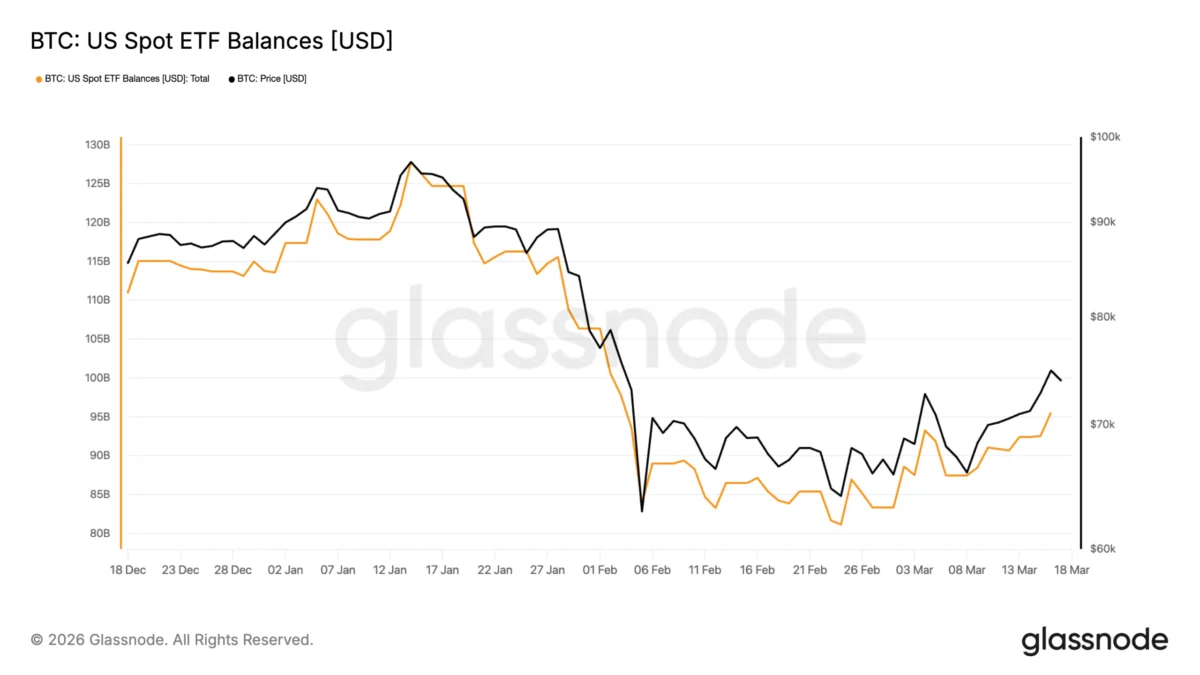
However, despite this initial shock and the subsequent selling, the underlying demand for Bitcoin in the spot market demonstrated remarkable resilience. Data points indicated that buyers were quick to absorb the selling pressure, preventing a deeper capitulation. This robust appetite was emphatically confirmed when Bitcoin not only stabilized but swiftly reclaimed the $72,000 mark following the release of the Federal Reserve’s minutes, which unequivocally highlighted their decision to leave interest rates unchanged. This move, while largely anticipated by market consensus, came amidst a backdrop of heightened global economic and geopolitical anxieties. Surging oil prices, persistent volatility in equity markets, and the lingering geopolitical tensions stemming from the US and Israel-Iran conflict had kept traders on edge, magnifying the impact of any unexpected economic data or policy shifts. The Fed’s decision, therefore, provided a much-needed moment of clarity, allowing risk assets like Bitcoin to find a more stable footing.
From a technical perspective, Bitcoin’s recent price action on the four-hour chart paints a cautiously optimistic picture, showcasing a distinct higher low pattern that effectively keeps the short-term uptrend intact. This pattern is a fundamental bullish signal, suggesting that despite pullbacks, buyers are stepping in at progressively higher price levels, demonstrating consistent demand. Crucially, BTC’s price has maintained its position above both the 100- and 200-period exponential moving averages (EMAs). These EMAs are widely recognized as dynamic support levels, tracking the average prices over their respective timeframes and providing a clear indication of the underlying trend direction when positioned below the current price. Their confluence near the current trading range reinforces their strength as a support zone, potentially allowing Bitcoin to stabilize near the $71,000 mark and form a robust base after the recent sell-off. This confluence of technical indicators suggests that the market may be building a foundation for its next upward leg, provided these key levels hold.

For Bitcoin bulls to solidify their position and maintain the current market structure, defending a critical price range between $70,250 and $71,275 is paramount. This zone represents internal liquidity levels that were meticulously built during Monday’s breakout, signifying areas where significant order flow previously occurred. Such zones often act as magnets for price, either attracting further liquidity sweeps or serving as strong support where demand previously absorbed supply. Should Bitcoin fail to defend this crucial range, the next significant liquidity pocket comes into focus near $68,900. This level is further reinforced by its alignment with a smaller order block situated between $68,300 and $69,100, a region where prior demand had briefly managed to absorb selling pressure, indicating historical buyer interest. Successfully maintaining prices above these identified levels is vital for preserving the structurally bullish lower timeframe trend for BTC, with the continued formation of higher lows signaling sustained demand on dips and a healthy progression within its uptrend.
Beyond the technical charts, on-chain data offers a deeper insight into the market’s internal dynamics. Prior to Wednesday’s correction, Bitcoin’s on-chain metrics revealed a noticeable increase in sell-side activity, particularly from short-term holders (STHs). According to crypto analyst Darkfost, a staggering amount of over 48,000 BTC, moved in profit, flowed to exchanges in a single day as the price briefly approached the $75,000 threshold. This surge in transfers to exchanges from STHs, typically defined as those holding Bitcoin for less than 155 days, indicates a clear pattern of profit-taking. These holders are often more sensitive to price fluctuations and are quick to lock in gains, treating price rebounds as opportune moments to exit positions. This behavior can create temporary supply pressure, but its impact is often mitigated if there is sufficient underlying demand.
Concurrently, data from CoinGlass provided a counter-narrative, showing substantial passive bids being filled during the price drop from $74,000 down to $71,000. This "bid absorption" pattern is crucial; it signifies that while some holders were selling, a significant amount of capital was waiting on the sidelines, ready to buy at lower prices. The consistent filling of these passive bids indicates strong underlying demand and suggests that the market views these dips as buying opportunities rather than the start of a more prolonged downturn. Similar absorption patterns observed over the past two weeks have consistently preceded short-term price recoveries, underscoring the resilience of demand at critical lower levels. This interplay between STH profit-taking and consistent bid absorption paints a picture of a market in a healthy consolidation phase, where supply generated by profit-takers is met with fresh demand, preventing a cascading sell-off.

Adding another layer of complexity to Bitcoin’s price movements is its historical reaction to Federal Reserve meetings. Market analyst Sherlock observed that since June 2023 (correcting the likely typo from "June 2025"), Bitcoin has exhibited a peculiar tendency to decline after each of the last six Federal Open Market Committee (FOMC) meetings, irrespective of whether interest rates were raised, cut, or held steady. This "buy the rumor, sell the news" phenomenon around major macroeconomic events is not uncommon in financial markets. Traders often front-run anticipated decisions, pushing prices up in the lead-up to an announcement, only to take profits once the news is officially released, regardless of its actual content. The psychological aspect of market uncertainty and the removal of a major event catalyst can also lead to profit-taking. With markets having largely priced in another hold on interest rates for the recent meeting, traders’ attention now shifts to how Bitcoin’s price navigates around current liquidity clusters, particularly near the crucial $71,000 level, to see if this historical pattern will repeat or if the market will break free from this trend.
Considering the confluence of factors – a resilient spot market, strong technical support levels, active bid absorption, and the historical "sell the news" pattern around Fed announcements – the question, "Is BTC selling over?" demands a nuanced answer. While short-term profit-taking from STHs is evident and healthy for a market’s long-term sustainability, the consistent absorption of these sells by new buyers, particularly after the Fed’s clarity on rates, suggests that deep-seated selling pressure might be abating. The market’s quick bounce back above $72,000 is a testament to this underlying strength.
Looking ahead, Bitcoin’s trajectory will largely depend on its ability to decisively hold the aforementioned technical levels, especially the $70,250 to $71,275 range. A sustained break below these could indicate a weakening of demand and open the door for a retest of lower support zones around $68,900. Conversely, maintaining these levels and pushing towards higher resistance will signal a continuation of the bullish momentum. Macroeconomic factors, while temporarily stable with the Fed’s hold, will remain influential. Future inflation reports (CPI, PCE), geopolitical developments, and the broader sentiment in traditional financial markets will continue to act as significant drivers for Bitcoin. The current landscape suggests a battle between persistent demand and profit-takers, with the bulls demonstrating commendable resilience. While caution is always warranted, the immediate aftermath of the Fed’s decision indicates that strong hands are stepping in, potentially signaling that the most aggressive phase of selling might indeed be behind us, paving the way for Bitcoin to eye higher targets beyond $72,000.