Faris Adani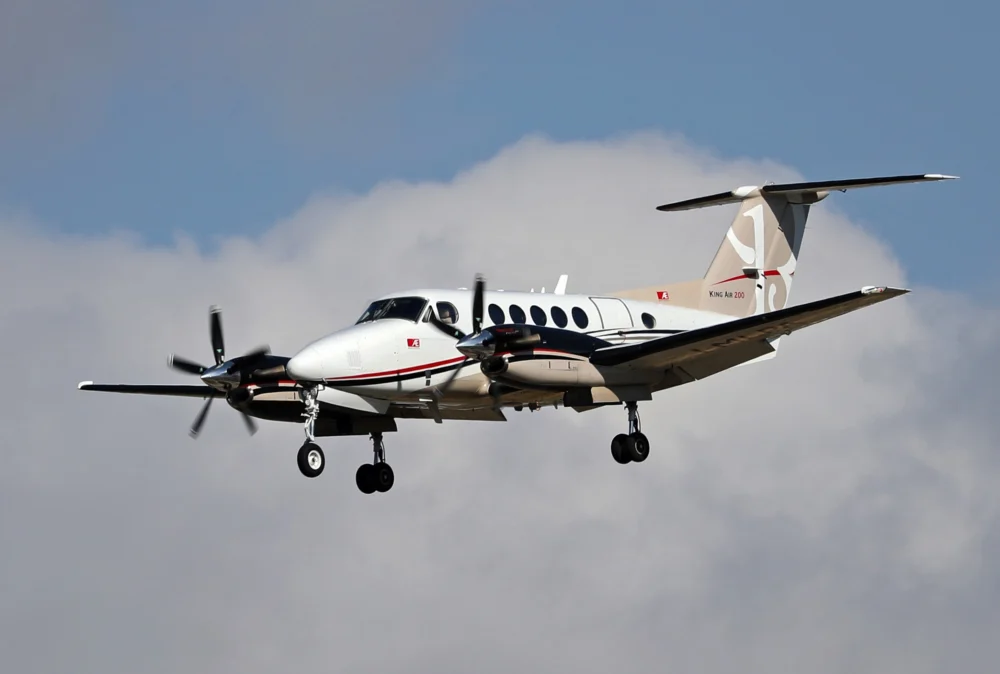
A landmark achievement in aviation safety unfolded on December 20, 2025, as an advanced autopilot system executed a flawless emergency landing of a twin-engine turboprop aircraft, marking the first successful "start-to-finish" autonomous intervention in a real-world emergency. This extraordinary event, which saw Garmin’s cutting-edge Emergency Autoland system take complete control, fly the plane, communicate with air traffic controllers, and land it safely, has sent ripples of optimism through the aerospace industry, heralding a new era of automated flight safety.
The incident began over the skies of Colorado when a Beechcraft Super King Air, a robust and widely used turboprop aircraft, suddenly experienced a catastrophic loss of cabin pressure. This critical malfunction, occurring at altitude, posed an immediate and severe threat to the two pilots on board. Cabin depressurization, particularly rapid or uncommanded, can quickly lead to hypoxia, a dangerous condition where the brain and other organs are deprived of adequate oxygen. Symptoms range from impaired judgment and disorientation to loss of consciousness, making it one of the most feared emergencies in aviation. The standard procedure calls for pilots to immediately don oxygen masks and initiate a rapid descent to a safer altitude. In this instance, the automated systems onboard detected the "rapid, uncommanded loss of pressurization" as the "cabin altitude exceeded the prescribed safe levels," prompting the activation of the Garmin Autoland system.
The Beechcraft Super King Air, specifically the model involved, is a versatile aircraft commonly utilized for corporate transport, regional flights, and specialized missions. Its dual turboprop engines offer reliability and performance, but like any pressurized aircraft, it is susceptible to structural integrity issues that can compromise cabin pressure. Upon recognizing the emergency, the pilots, trained professionals, instinctively donned their oxygen masks. However, in a testament to their proactive decision-making and trust in emerging technology, they "made the decision to leave the system engaged," as stated by Chris Townsley, CEO of Buffalo River Aviation, the plane’s operator. This choice was pivotal, demonstrating a conscious reliance on automation to manage a high-stakes scenario, rather than immediately attempting to regain full manual control.
Garmin’s Emergency Autoland system, part of the Autonomi™ family of autonomous flight technologies, represents a significant leap beyond conventional autopilots. While standard autoland systems are routinely used to assist pilots in challenging weather conditions, such as low visibility or strong crosswinds, they typically require significant pilot input and monitoring. Garmin’s emergency variant, however, is designed for a far more dire scenario: "where the pilot is unable to fly." It is engineered to take "complete control of the flight to land the airplane," autonomously managing all phases from initial assessment to touchdown. This includes critical functions like flight path planning, throttle management, flap deployment, landing gear extension, and braking. Its development has been a multi-year endeavor, involving rigorous testing and certification processes to meet stringent aviation safety standards. The system integrates data from various onboard sensors – GPS, altimeters, air data computers, and engine instruments – to create a comprehensive picture of the aircraft’s state and environment.
Once activated and entrusted with control, the autonomous system immediately began its sophisticated decision-making process. It analyzed crucial parameters to select the most suitable landing site. Key criteria included the aircraft’s current position, available fuel, real-time weather conditions at potential airports, runway length and condition, and terrain features. The system ultimately identified Rocky Mountain Metropolitan Airport (KBJC) near Denver as the optimal choice. It then initiated a controlled descent and began communicating its intentions to ground control. Air traffic controllers at KBJC received an unprecedented message: "Emergency autolanding, 19 minutes from runway 30R at KBJC." This automated voice, though clear and concise, initially caused some confusion, as it erroneously reported "pilot incapacitation" as the reason for its takeover. This miscommunication was later clarified, emphasizing that the pilots remained conscious and actively chose to allow the system to operate. The controllers, quickly grasping the gravity and uniqueness of the situation, swiftly cleared the airspace, prepared emergency services, and guided the autonomous aircraft through its final approach.
The landing at Rocky Mountain Metropolitan Airport occurred around 2:20 pm local time. Footage later released by emergency responders depicted the Beechcraft Super King Air making a smooth, uneventful touchdown, rolling down the runway, and coming to a complete stop. The two pilots then disembarked, visibly relieved but unharmed, a testament to the system’s precision and the pilots’ prudent decision. There were no passengers onboard, which simplified the emergency response, but the successful outcome highlighted the system’s potential to save lives in future scenarios involving passenger aircraft.
This incident transcends a mere technical success; it is a pivotal moment in the ongoing evolution of aviation automation. For decades, autopilots have augmented human pilots, reducing workload and enhancing precision. However, the idea of an entirely autonomous system taking over in a life-threatening emergency has been a complex challenge, both technologically and psychologically. This event proves the concept’s viability. It underscores the potential for artificial intelligence and advanced algorithms to act as a fail-safe, providing an unprecedented layer of safety when human capabilities are compromised or overwhelmed.
The implications for future aviation are profound. While commercial airliners already utilize highly sophisticated automation, the integration of fully autonomous emergency landing systems could significantly mitigate risks associated with pilot incapacitation, a rare but historically catastrophic event. It could also influence pilot training programs, shifting focus towards monitoring autonomous systems and making high-level strategic decisions, rather than solely relying on manual flight skills in every emergency. Furthermore, the successful deployment of Garmin’s Autoland may accelerate the development and adoption of similar systems across a wider range of aircraft, from general aviation planes to potentially even larger commercial jets.
However, challenges remain. The incident’s initial miscommunication regarding pilot incapacitation, though minor in the grand scheme, highlights the need for precise and unambiguous automated communication protocols. Further development will also focus on expanding the system’s capabilities to handle more complex scenarios, such as engine failures, adverse weather conditions, or navigating highly congested airspace during an emergency. Cybersecurity will also be a paramount concern, ensuring these critical systems are impervious to malicious interference. The FAA has confirmed it is investigating the incident, a standard procedure that will undoubtedly scrutinize every detail to extract maximum learning and inform future regulatory frameworks.
Ultimately, the autonomous landing of the Beechcraft Super King Air is more than a technological marvel; it is a beacon of hope for a safer future in air travel. It demonstrates that advanced automation, when meticulously designed and rigorously tested, can complement human expertise, providing an invaluable safety net that promises to transform the way we conceive of and experience flight. This December day over Colorado has undeniably etched its place in aviation history, marking the dawn of a new era where intelligent machines stand ready to safeguard the skies.