Faris Adani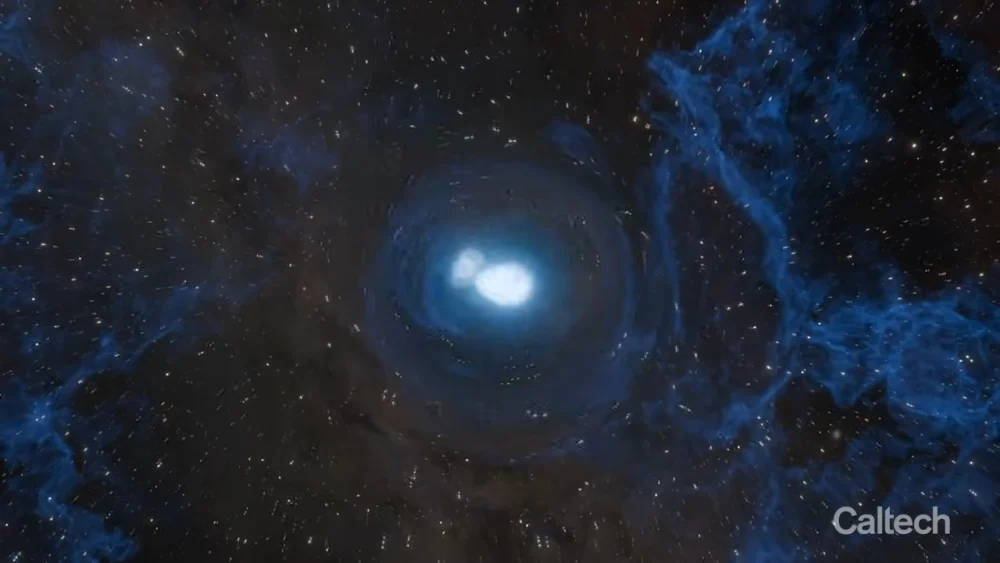
Astronomers Appear to Have Caught a Star Splitting In Half, With Catastrophic Results
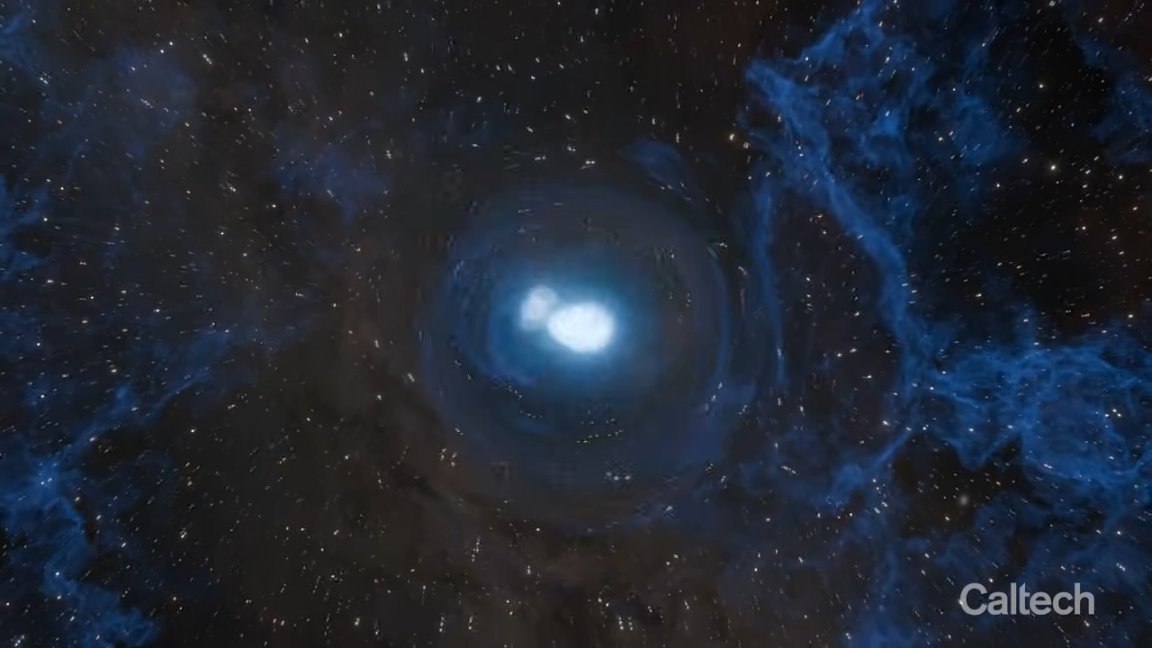
A team of astronomers, spearheaded by Caltech’s Mansi Kasliwa, believes they have witnessed, for the first time, an unprecedented cosmic spectacle: a single star undergoing an extraordinary sequence of events where it seemingly split in half, then merged back together, triggering an ungodly double explosion that’s sending seismic ripples through both the scientific community and the very fabric of spacetime. This incredible event, designated AT2025ulz and located a staggering 1.3 billion light-years away, may represent an entirely new class of astrophysical phenomena: a “superkilonova,” a hypothetical and even more spectacular iteration of the already elusive kilonova. While extraordinary claims necessitate extraordinary evidence, the findings detailed in a compelling study published in *The Astrophysical Journal Letters* offer tantalizing clues that point towards something truly strange and profound unfolding in the distant cosmos. This saga began on August 18, 2025, when the global network of gravitational wave observatories, including LIGO in the US and Virgo in Europe, registered powerful gravitational waves – ripples in spacetime itself – indicating a violent merger between two incredibly massive, compact objects. This signal was consistent with the collision of two neutron stars, the cataclysmic event known to produce a kilonova. Within hours, the Zwicky Transient Facility (ZTF) in California, alerted by the gravitational wave detection, pinpointed the source and observed a rapidly fading, distinctly red object. This optical signature strongly aligned with the expected aftermath of a kilonova, which glows red as it forges and disperses heavy elements like gold, platinum, and uranium in the blast’s immediate aftermath. However, just days later, the cosmic narrative took an unexpected turn. AT2025ulz defied expectations, brightening considerably, shifting its color to blue, and, most puzzlingly, exhibiting strong spectral lines of hydrogen – the unmistakable telltale sign of a supernova. This contradictory observational data left astronomers scratching their heads: was it a kilonova, a supernova, or something entirely new? The team, driven by an insatiable curiosity, refused to dismiss the event when others did. “Everybody was intensely trying to observe and analyze it, but then it started to look more like a supernova, and some astronomers lost interest. Not us,” lead author Mansi Kasliwa remarked, highlighting the tenacity required to pursue such an anomalous signal. This persistence led them to propose the groundbreaking “superkilonova” hypothesis, a two-stage cosmic ballet of destruction and creation. In this proposed scenario, the original massive star first exploded in a supernova, not in the typical manner that leaves behind a single neutron star or a black hole, but in a way that essentially split its core into *two* smaller, tightly bound neutron stars. These newly minted, ultra-dense remnants – each packing more mass than our Sun into a sphere roughly the size of a city – then found themselves trapped within the rapidly expanding supernova ejecta. Their immense gravitational attraction quickly drew them into a death spiral, culminating in a violent merger and a subsequent kilonova explosion. The initial kilonova signature, according to this theory, would have been temporarily obscured by the overwhelming brightness and material of the surrounding supernova remnant. As the supernova material expanded and faded, the kilonova’s distinct blue light and hydrogen features (likely from the outer layers of the initial star) became visible, creating the perplexing multi-messenger signature that baffled observers. The hypothesis gains crucial support from the gravitational wave data, which indicated that at least one of the merging objects was less massive than the Sun, a characteristic that fits well with the idea of neutron stars born from an unusual supernova rather than pre-existing, more massive neutron stars typically found in binary systems. The detection of GW170817 in 2017 marked the first confirmed observation of a kilonova, revolutionizing our understanding of how heavy elements like gold and platinum are forged in the universe. Prior to this, scientists largely theorized that supernovae were the primary source of all heavy elements, but kilonovae revealed a potent alternative factory. Kilonovae are incredibly rare; some studies suggest there are only about ten star systems in the entire Milky Way galaxy that will ever explode in this manner. If the AT2025ulz event truly represents a superkilonova, it pushes the boundaries of cosmic violence even further, suggesting a new pathway for the formation of neutron star binaries and the subsequent creation of super-heavy elements. This discovery would also challenge existing models of stellar evolution and collapse, requiring new theoretical frameworks to explain how a single star could produce two neutron stars in such a fashion. The implications extend beyond theoretical astrophysics. Multi-messenger astronomy, which combines observations from different cosmic messengers like gravitational waves and electromagnetic radiation, is still a nascent field. Events like AT2025ulz underscore its immense power and potential to uncover phenomena previously unimaginable. The conflicting signals – the gravitational waves, the initial red glow of a kilonova, the subsequent brightening, blue shift, and hydrogen lines characteristic of a supernova – serve as a testament to the complex and dynamic nature of the universe’s most extreme events. While the researchers readily admit, “We do not know with certainty that we found a superkilonova, but the event nevertheless is eye opening,” the persistence of Kasliwa’s team and their willingness to consider a radical new explanation has opened a new frontier in astrophysics. Future observations with more sensitive telescopes and gravitational wave detectors will be crucial in confirming or refuting this groundbreaking hypothesis. The search for other similar “superkilonovae” will undoubtedly become a high priority, potentially revealing a hidden population of these double-barreled cosmic explosions. This discovery, if confirmed, would not only add a new chapter to our cosmic dictionary but also profoundly deepen our understanding of how stars live, die, and ultimately shape the chemical composition of the universe, scattering the building blocks for planets and life across vast intergalactic distances. The universe, it seems, still holds countless surprises, and AT2025ulz is a vivid reminder that our cosmic narrative is far from complete.
More on space: James Webb Discovers Planet Shaped Like Lemon