Imroatul Nasiyah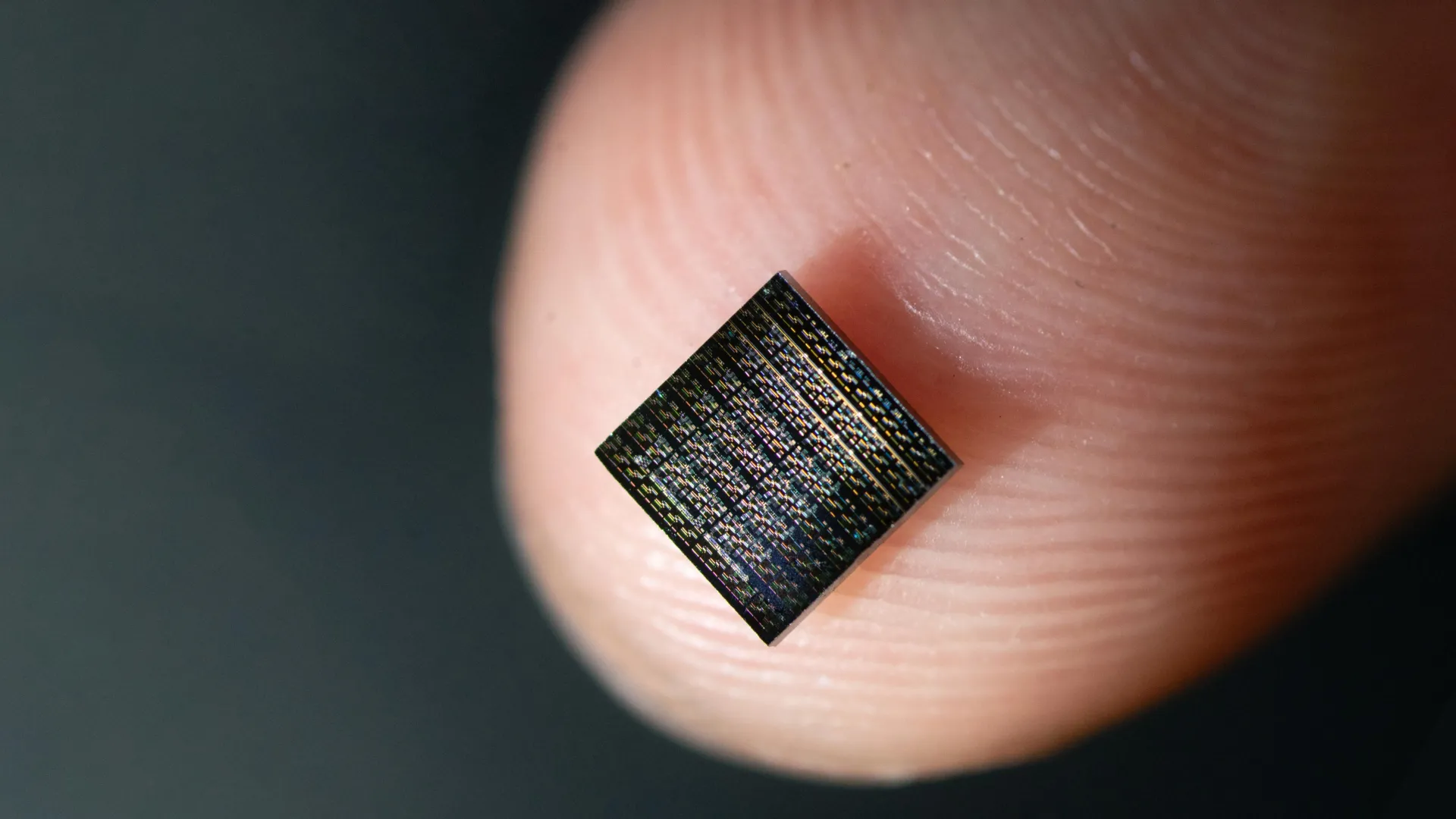
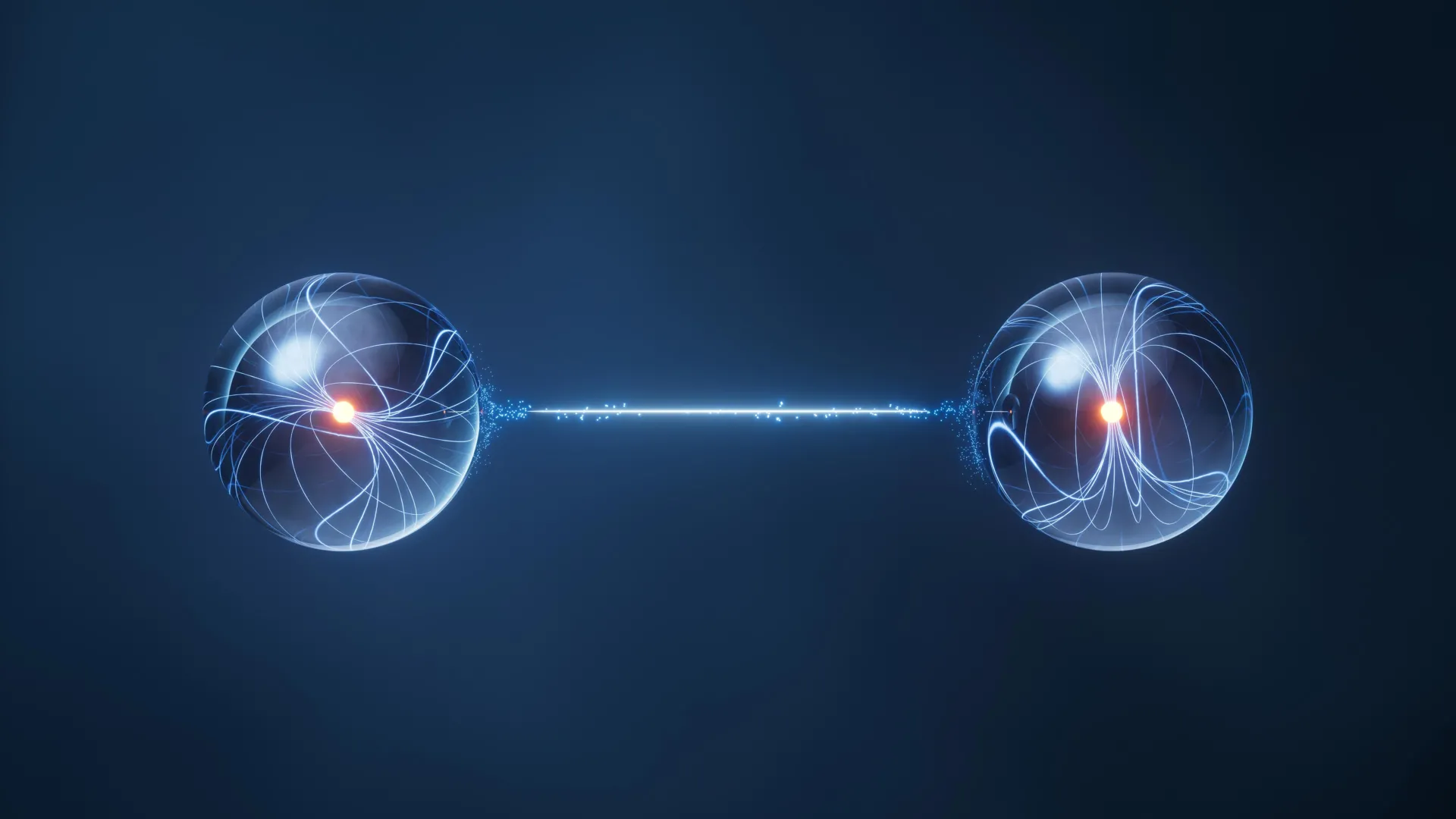
Unlike the conventional digital processors that underpin our current computing landscape, and even earlier iterations of neuromorphic chips that relied on abstract mathematical models to simulate brain activity, these newly developed artificial neurons achieve their remarkable capabilities through a fundamentally different approach. Instead of merely simulating brain functions, these innovative devices physically reproduce the precise electrochemical mechanisms that govern how biological neurons operate. The core of this innovation lies in the fact that, just as natural brain activity is initiated and propagated through a complex interplay of chemical signals, these artificial neurons leverage actual chemical interactions to trigger and execute computational processes. This distinction is critical, as it means these are not abstract representations or symbolic approximations of neural function; they are tangible, physical recreations of biological processes.
This breakthrough heralds the arrival of an entirely new class of brain-like hardware. The research, spearheaded by Professor Joshua Yang, a distinguished figure in USC’s Department of Computer and Electrical Engineering and the director of the USC Center of Excellence on Neuromorphic Computing, builds upon his decade-old pioneering work on artificial synapses. The team’s novel approach centers on a device they term a "diffusive memristor." Their published findings articulate how these unique components can serve as the foundation for a new generation of chips that not only complement but also substantially enhance traditional silicon-based electronics. While conventional silicon systems utilize the flow of electrons to perform computations, Yang’s diffusive memristors employ the physical movement of atoms to achieve the same end. This atom-based process more closely mirrors the sophisticated manner in which biological neurons transmit information. The resultant hardware is poised to be significantly smaller and more energy-efficient, processing information in a way that closely resembles the human brain, thereby accelerating the journey towards achieving artificial general intelligence.
The intricate communication network within the human brain relies on a dynamic interplay of both electrical and chemical signals. When an electrical impulse traverses a neuron and reaches its terminal, a junction known as a synapse, it undergoes a transformation into a chemical signal. This chemical signal then bridges the synaptic gap to transmit information to the next neuron. Upon reception by the subsequent neuron, this chemical signal is reconverted into an electrical impulse, allowing the signal to propagate further. Yang and his collaborators have succeeded in replicating this complex biological process within their artificial devices with an astonishing degree of accuracy. A significant advantage of their design lies in its remarkable compactness: each artificial neuron occupies a physical footprint equivalent to that of a single transistor. In stark contrast, earlier designs often required tens, if not hundreds, of transistors to achieve comparable functionality.
Within biological neurons, charged particles known as ions play a crucial role in generating the electrical impulses that underpin neural activity throughout the nervous system. The human brain, in its sophisticated design, relies on ions such as potassium, sodium, and calcium to facilitate these essential electrical signals.
The innovative research employs silver ions, strategically embedded within oxide materials, to precisely generate electrical pulses that exquisitely mimic the functions of natural brain dynamics. These emulated functions encompass fundamental cognitive processes such as learning, the execution of movements, and the complex act of planning. Professor Yang elaborates on the underlying principle: "Even though it’s not exactly the same ions in our artificial synapses and neurons, the physics governing the ion motion and the dynamics are very similar." He further explains the choice of silver: "Silver is easy to diffuse and gives us the dynamics we need to emulate the biosystem so that we can achieve the function of the neurons, with a very simple structure." The novel device enabling this brain-like chip functionality is thus aptly named the "diffusive memristor," a designation derived from the crucial role of ion motion and the dynamic diffusion facilitated by the use of silver.
Professor Yang articulates the team’s rationale for prioritizing ion dynamics in the construction of artificial intelligent systems: "because that is what happens in the human brain, for a good reason and since the human brain, is the ‘winner in evolution—the most efficient intelligent engine.’" He underscores the inherent superiority of this approach, stating, "It’s more efficient."
The critical importance of efficiency in AI hardware cannot be overstated. Yang emphasizes that the primary limitation of contemporary computing is not a lack of raw processing power but rather a pervasive inefficiency. "It’s not that our chips or computers are not powerful enough for whatever they are doing. It’s that they aren’t efficient enough. They use too much energy," he asserts. This issue is particularly pertinent given the immense energy demands of today’s large-scale artificial intelligence systems, which require vast amounts of power to process gargantuan datasets.
Yang further elucidates that, unlike the human brain, "Our existing computing systems were never intended to process massive amounts of data or to learn from just a few examples on their own. One way to boost both energy and learning efficiency is to build artificial systems that operate according to principles observed in the brain." While electrons offer superior speed for rapid operations, Yang posits that "Ions are a better medium than electrons for embodying principles of the brain. Because electrons are lightweight and volatile, computing with them enables software-based learning rather than hardware-based learning, which is fundamentally different from how the brain operates." In direct contrast, he notes, "The brain learns by moving ions across membranes, achieving energy-efficient and adaptive learning directly in hardware, or more precisely, in what people may call ‘wetware.’"
A compelling illustration of this efficiency difference can be observed in learning capabilities. A young child, for instance, can master the recognition of handwritten digits after encountering only a handful of examples of each. In contrast, conventional computers typically require thousands of examples to achieve the same level of proficiency. Remarkably, the human brain accomplishes this extraordinary feat of learning while consuming a mere 20 watts of power, a stark contrast to the megawatts of energy required by today’s most powerful supercomputers.
The potential impact of this technology is immense, representing a significant stride towards accurately replicating natural intelligence. However, Professor Yang acknowledges a current practical limitation: the silver utilized in these experimental devices is not yet compatible with the standardized manufacturing processes employed in the semiconductor industry. Consequently, future research will focus on exploring alternative ionic materials that can achieve comparable functional effects.
The diffusive memristors are distinguished by their exceptional efficiency in both energy consumption and physical size. A typical smartphone, for instance, houses approximately ten chips, each containing billions of transistors that tirelessly switch on and off to perform calculations. Yang envisions a future where "Instead [with this innovation], we just use a footprint of one transistor for each neuron. We are designing the building blocks that eventually led us to reduce the chip size by orders of magnitude, reduce the energy consumption by orders of magnitude, so it can be sustainable to perform AI in the future, with similar level of intelligence without burning energy that we cannot sustain."
Having successfully demonstrated the creation of capable and remarkably compact building blocks—artificial synapses and neurons—the critical next phase involves integrating vast numbers of these components. The team aims to rigorously test how closely they can replicate the brain’s inherent efficiency and its sophisticated capabilities. "Even more exciting," Yang concludes, "is the prospect that such brain-faithful systems could help us uncover new insights into how the brain itself works."