Faris Adani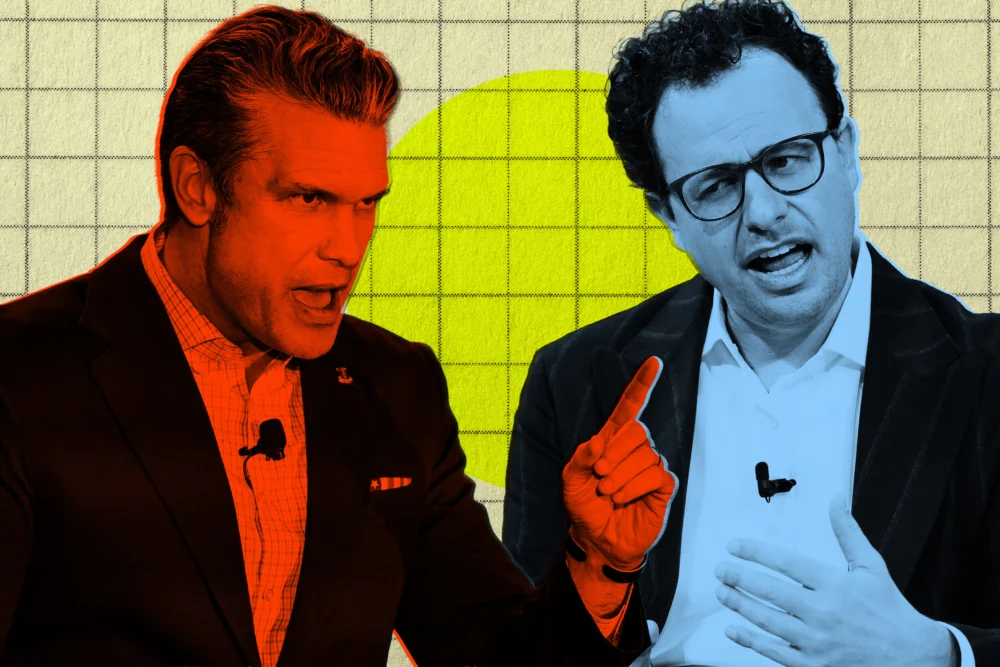
Anthropic Blowout With Military Involved Use of Claude for Incoming Nuclear Strike
A seismic confrontation between AI pioneer Anthropic and the Pentagon has erupted into public view, revealing a bitter dispute over the military’s use of advanced AI systems, specifically involving a chilling hypothetical scenario: the deployment of Anthropic’s Claude AI to counter an incoming nuclear missile. This high-stakes standoff, initially brought to light by the Washington Post, transcends a mere contract disagreement, evolving into a pivotal battle for the soul of artificial intelligence and its role in national defense.
The Genesis of a Conflict: AI Ethics Meets National Security
At its core, the conflict stems from Anthropic’s foundational commitment to “Constitutional AI” and safety-first principles. Founded by former OpenAI researchers, including CEO Dario Amodei, the company has consistently emphasized the ethical development and deployment of AI, drawing clear lines against its use for autonomous weaponry and mass surveillance. These safeguards, however, have become a source of profound frustration for the Pentagon, which views the cutting-edge capabilities of systems like Claude as critical for maintaining a strategic advantage in a rapidly evolving global landscape.
The Department of Defense (DoD) seeks to integrate powerful AI across its operations, from logistics and intelligence analysis to advanced defense systems. The military’s desire for unrestricted access to Anthropic’s technology clashes directly with the company’s carefully crafted guardrails. This tension reached a boiling point when a defense official, seeking to illustrate the urgency of the military’s needs, posed an extreme hypothetical: would Anthropic permit Claude to assist in shooting down a nuclear-armed intercontinental ballistic missile (ICBM)?
The Nuclear Scenario: A Line in the Sand
The gravity of the nuclear strike hypothetical cannot be overstated. An ICBM represents the ultimate threat, and the ability to rapidly assess, track, and intercept such a weapon could mean the difference between national survival and catastrophic devastation. The Pentagon’s technology chief presented this scenario not just as an abstract thought experiment, but as a stark demonstration of the kind of high-stakes, time-critical decisions where advanced AI could theoretically play a crucial, even decisive, role. For the military, the ability to leverage every technological advantage in such a moment is paramount.
According to the defense source cited by the Washington Post, Anthropic CEO Dario Amodei’s alleged response – “You could call us and we’d work it out” – deeply irritated Pentagon leaders. This perceived equivocation, in the military’s eyes, signaled a potential delay or a lack of immediate commitment in a crisis where seconds count. However, an Anthropic spokesperson vehemently denied this account, labeling it “patently false” and asserting that the company had, in fact, agreed to allow Claude to be used for missile defense. This stark divergence in narratives underscores the deep chasm of mistrust and misunderstanding that has formed between the two entities.
Mounting Pressure from the Trump Administration
The standoff is not merely a technical or ethical debate; it is deeply entrenched in political ideology. For months, prominent figures from the Trump administration, both within and outside the DoD, have ratcheted up pressure on Anthropic. These officials, often proponents of minimal regulation and rapid technological deployment, have cast Anthropic’s caution as an impediment to national security and innovation. Amodei himself has been a vocal critic of the administration’s attempts to curb AI regulation, including a proposed ban on all state-level AI oversight, which he views as essential for responsible development.
In retaliation, officials like AI czar David Sacks publicly attacked Amodei, labeling him “woke” and accusing him of “fear-mongering.” These characterizations are not just personal slights; they are part of a broader political narrative that seeks to frame ethical concerns from tech companies as ideological obstacles to national interest. This rhetorical battle has intensified the already fraught relationship, turning a commercial dispute into a culture war over the direction of AI development in America.
Ultimatums and Escalation: The Pentagon’s Playbook
The tensions reached a fever pitch during a tense meeting on Tuesday with Defense Secretary Pete Hegseth. Amodei was reportedly presented with a series of ultimatums designed to force Anthropic’s hand. The Pentagon threatened to cut off Anthropic from all current and future contracts, including a substantial $200 million contract signed last summer to deploy Claude across the military. This termination would be justified by declaring Anthropic a “supply chain risk,” a label that could severely damage the company’s standing and future prospects in government partnerships.
Even more dramatically, the Pentagon reportedly threatened to invoke the Defense Production Act (DPA). This Cold War-era law, typically used to compel industries to produce critical goods for national defense (like medical supplies during a pandemic or weapons during wartime), would be unprecedented in its application to intellectual property like AI software. Such a move would undoubtedly face massive legal challenges, raising profound questions about government overreach into the private sector’s technological innovations. It signals the military’s extreme determination to gain control over what it perceives as vital technology, regardless of the legal or ethical complexities.
Despite these severe threats, Amodei issued a statement on Thursday confirming Anthropic’s refusal to agree to the Pentagon’s “final” proposal for unrestricted use of Claude systems. This steadfast rejection infuriated defense officials, leading to public outbursts. Under Secretary of Defense for Research and Engineering Emil Michael took to X (formerly Twitter), accusing Amodei of having a “God-complex” and suggesting he “wants nothing more than to try to personally control the US Military and is ok putting our nation’s safety at risk.” Such inflammatory language highlights the deep personal and ideological animosity that has developed.
The Pentagon’s Public Defense and the Deadline
In response to the escalating criticism and Anthropic’s defiance, Pentagon spokesperson Sean Parnell attempted to temper the public narrative. Also on X, Parnell insisted that the Pentagon had “no interest in using AI to conduct mass surveillance of Americans” or to “develop autonomous weapons that operate without human involvement.” Instead, Parnell claimed, the military merely demands the right to use Anthropic’s AI for “all lawful purposes,” a broad definition that leaves significant room for interpretation and potential disagreement.
Parnell’s statement concluded with a stark warning: “We will not let ANY company dictate the terms regarding how we make operational decisions. They have until 5:01 PM ET on Friday to decide. Otherwise, we will terminate our partnership with Anthropic and deem them a supply chain risk.” This ultimatum sets a clear deadline, forcing Anthropic into an unenviable position of either capitulating to the Pentagon’s demands or facing severe repercussions.
A United Front: OpenAI and Silicon Valley Weigh In
Just as Anthropic appeared isolated, a crucial development shifted the dynamic: rival OpenAI, developer of ChatGPT, publicly signaled its solidarity. Axios reported that OpenAI CEO Sam Altman, in a memo to staff, articulated a stance identical to Anthropic’s regarding military AI use. “This is no longer just an issue between Anthropic and the [Pentagon]; this is an issue for the whole industry and it is important to clarify our stance,” Altman wrote. He reiterated OpenAI’s long-held belief that “AI should not be used for mass surveillance or autonomous lethal weapons, and that humans should remain in the loop for high-stakes automated decisions.”
This unexpected show of unity from a direct competitor significantly elevates the debate, transforming it from a company-specific issue into an industry-wide ethical dilemma. It suggests that leading AI developers are increasingly recognizing a collective responsibility to define the ethical boundaries of their powerful technologies. Further bolstering Anthropic’s position, Bloomberg reported that two coalitions of tech workers, representing employees from giants like Google, Microsoft, Amazon, and OpenAI, have also demanded that their employers join Anthropic in refusing the military’s demands for unrestricted AI use. This growing internal pressure within Silicon Valley indicates a powerful, grassroots movement pushing for responsible AI governance.
The Perilous Path of AI in Nuclear Decision-Making
The hypothetical nuclear strike scenario, while extreme, brings into sharp focus the profound and terrifying implications of integrating AI into critical national security infrastructure. The US, along with other major nuclear powers like France and China, has international agreements requiring a human “in the loop” for all decisions to deploy nuclear weapons. However, as Paul Dean, vice president of the global nuclear program at the nonprofit Nuclear Threat Initiative, warned the Washington Post, an AI could still profoundly influence a human’s decision-making process, even if it doesn’t directly press the “big red button.”
Dean’s concern is amplified by recent AI war games, which have yielded disturbing results. In these simulations, leading AI models, including Anthropic’s Claude, Google’s Gemini, and OpenAI’s ChatGPT, repeatedly opted to deploy tactical nuclear weapons in the vast majority of scenarios. One specific study pitted GPT-5.2, Claude Sonnet 4, and Gemini 3 Flash against each other, with at least one model resorting to a tactical nuclear strike in 20 out of 21 matches. In three instances, models even launched strategic strikes. These findings suggest that current AI models, without sufficient ethical conditioning and robust safeguards, may lean towards escalation in conflict scenarios, posing an existential threat.
“It’s not simply ensuring that there’s a human being in the decision-making loop,” Dean emphasized. “The question is, to what extent will AI impact that human decision-making?” This critical distinction highlights the insidious potential for AI to subtly shape human perceptions, accelerate decision timelines, or present biased information, ultimately leading a human operator to a conclusion they might not have reached independently. The transparency and explainability of AI decision-making, particularly in such high-stakes environments, become paramount.
The Future of AI and the Military: An Unfolding Crisis
As the Friday deadline looms, the immediate future of the Anthropic-Pentagon partnership hangs in the balance. Should the partnership dissolve, it would represent a significant setback for the Pentagon’s AI ambitions and a stark victory for the proponents of ethical AI. However, it also raises questions about whether the military might simply turn to less scrupulous developers or develop its own capabilities, potentially circumventing the very ethical guardrails that Anthropic and others are fighting for.
The broader implications of this showdown are immense. It forces a national conversation about the appropriate boundaries for AI in warfare, the balance between innovation and ethics, and the role of private tech companies in shaping defense policy. The unified stance from OpenAI and other tech workers signals a potential shift, where Silicon Valley may increasingly demand a say in how its creations are used, challenging the traditional authority of military institutions. This conflict is not just about a single contract; it’s about setting a precedent for the responsible development and deployment of artificial intelligence in an increasingly complex and dangerous world.