Faris Adani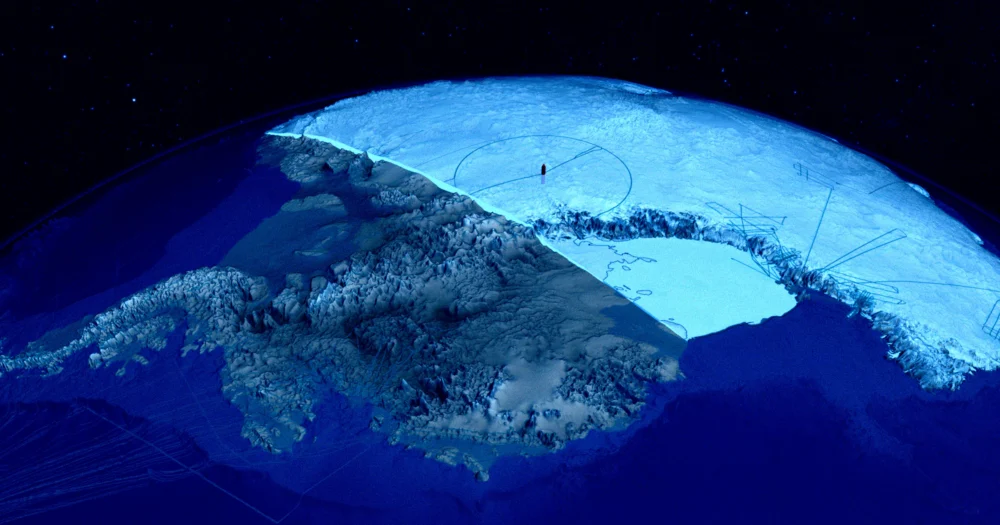
Antarctica’s Deep Gravity Anomaly Strengthening, Linked to Millions of Years of Climate Change
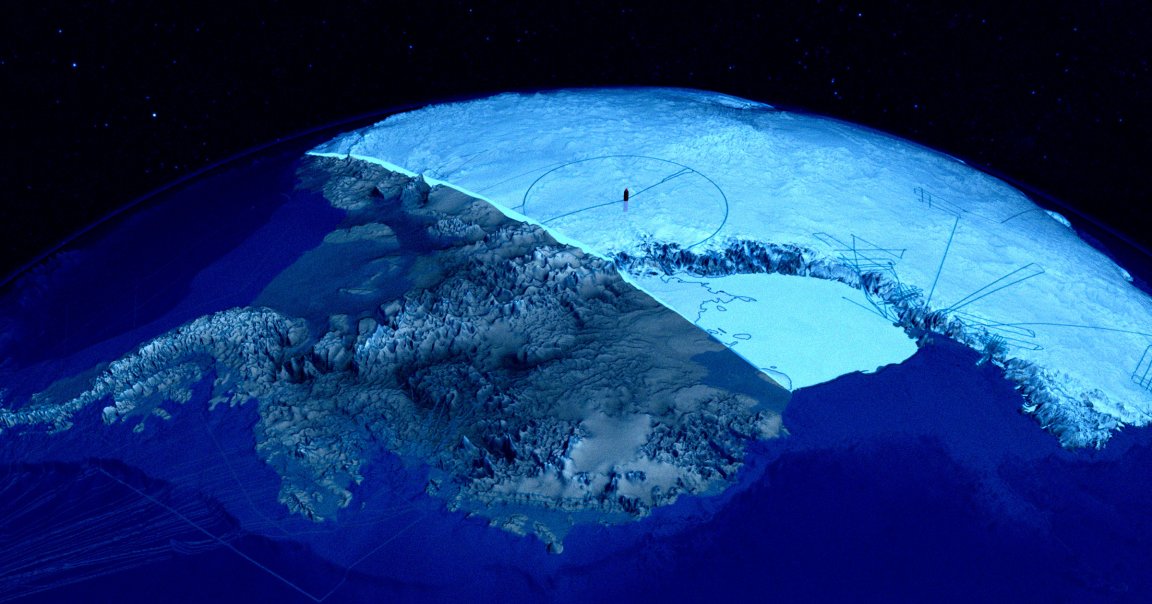
For decades, geophysicists have been captivated by “gravity holes” – immense depressions in the Earth’s gravitational field where the force of gravity is notably weaker than the planetary average. These aren’t literal holes in the ground but rather regions where the gravitational pull experienced at the surface is measurably less. Such phenomena are particularly pronounced beneath Antarctica, a continent undergoing significant transformation, not merely due to contemporary global warming but also through profound, long-term climate shifts spanning tens of millions of years. These ancient changes predate human civilization and its indelible environmental impact, offering a window into Earth’s intrinsic geological and climatic processes.
Beneath the vast, icy expanse of Antarctica, the effects of gravity are remarkably weak, even when factoring in our planet’s rotation. This anomaly is now understood to be a direct consequence of sluggish but powerful rock movements occurring deep within the Earth’s mantle, thousands of kilometers beneath the surface. These movements, involving the convection of superheated rock, subtly alter the distribution of mass within the Earth, leading to detectable variations in gravitational pull at the surface. Understanding these anomalies is crucial for deciphering the complex interplay between the Earth’s interior dynamics and its surface environment.
A groundbreaking new study, published in the prestigious journal Scientific Reports, sheds crucial light on this enigmatic phenomenon. University of Florida geophysics professor Alessandro Forte and Paris Institute of Earth Physics researcher Petar Glišović have uncovered a compelling correlation: these deep-seated rock movements are intrinsically linked to major shifts in Antarctica’s climate over geological timescales. Their research suggests that the strengthening of Antarctica’s gravity anomaly may have played a pivotal role in the continent’s widespread glaciation, profoundly influencing its ice sheets and, by extension, global sea levels and ocean chemistry.
To unravel this deep-time mystery, the research duo embarked on an ambitious project to map the evolution of Antarctica’s gravity hole over millions of years. Their methodology leveraged an expansive dataset of global earthquake recordings, transforming the entire planet into a vast, natural seismograph. As Forte explained, “Imagine doing a CT scan of the whole Earth, but we don’t have X-rays like we do in a medical office. We have earthquakes. Earthquake waves provide the ‘light’ that illuminates the interior of the planet.”
Gravity anomalies are deviations from the theoretical gravitational field of a perfectly smooth, homogeneous Earth. They can be positive (areas of stronger gravity) or negative (areas of weaker gravity), and they provide invaluable insights into the density variations and geological structures beneath the surface. These anomalies are typically measured using highly sensitive instruments like gravimeters on land and sea, and increasingly, by satellite missions such as GRACE (Gravity Recovery and Climate Experiment), which detect minute changes in Earth’s gravitational field over time. The “geoid,” an equipotential surface that represents mean sea level extended globally, is a direct manifestation of these gravitational variations, depicting the Earth’s irregular “lumpy” shape rather than a perfect sphere.
The underlying causes of gravity anomalies are complex and diverse. On a large scale, they are primarily driven by mantle convection – the slow churning of the Earth’s viscous mantle rock. Hotter, less dense rock tends to rise, while cooler, denser rock sinks, creating convection cells that can locally increase or decrease mass density, thus affecting gravity. Tectonic plate movements, subduction zones where plates dive beneath one another, and regions of crustal thinning or thickening also contribute significantly to these gravitational variations. The Indian Ocean Geoid Low, for instance, a massive area of weak gravity in the Indian Ocean, is believed to be caused by a combination of a low-density mantle plume and the remnants of subducted oceanic crust.
Antarctica’s gravity hole is a particularly intriguing example. Its weakness is directly attributed to the upward flow of relatively less dense, warmer mantle material beneath the continent. This process, occurring over millions of years, subtly “pushes up” the Earth’s crust from below, effectively reducing the overall mass density in the region compared to surrounding areas. The effect is further modulated by the Earth’s rotation, which exerts a centrifugal force that slightly counteracts gravity, particularly at the poles. The combination of these deep mantle dynamics and planetary rotation results in the distinctly weak gravitational field observed.
The core of Forte and Glišović’s research lies in their innovative application of seismic tomography. This technique, analogous to medical CT scans, uses the travel times and amplitudes of seismic waves generated by earthquakes to create 3D images of the Earth’s interior. As seismic waves (P-waves and S-waves) propagate through different materials, their speed changes based on factors like density, temperature, and rock composition. By collecting data from a global network of seismographs, scientists can triangulate these wave paths and map out the variations in the Earth’s deep structure, much like a doctor uses X-rays to visualize internal organs.
Using sophisticated computer models and vast quantities of seismic data, the team meticulously reconstructed the state of Antarctica’s gravity hole approximately 70 million years ago. This period, spanning the Late Cretaceous and early Paleogene, was a time when dinosaurs still roamed the Earth, and the planet’s climate was significantly warmer, with vastly different continental configurations. Antarctica itself was not yet the frozen continent we know today, largely free of extensive ice sheets. Their models allowed them to trace the evolution of the deep mantle structure and its associated gravity anomaly from this ancient epoch to the present day.
The findings were striking: the Antarctic gravity hole has progressively “gained strength” over tens of millions of years. In this context, “gained strength” means the gravitational deficit has become more pronounced, indicating an increasing volume of relatively low-density mantle material beneath the continent. This strengthening of the anomaly coincided with a period of dramatic climate transformation on Earth, specifically the widespread formation of glaciers across Antarctica. The initial significant glaciation of Antarctica began around the Eocene-Oligocene transition, approximately 34 million years ago, marking a pivotal shift from a largely ice-free to an ice-dominated continent.
The implications of this correlation are profound. The growth of the Antarctic ice sheets had sweeping global effects: massive quantities of water became locked up in ice, leading to significant drops in global sea levels. These changes in ocean volume, in turn, altered ocean currents and influenced the global carbon cycle, impacting the acidity of the world’s oceans. While the research establishes a strong correlation, Forte and Glišović are cautious to emphasize that it does not yet definitively prove a causal link – that deep rock movements directly *caused* the ice to grow. However, the temporal alignment is too significant to ignore, prompting further investigation into potential mechanisms.
One plausible mechanism involves the interaction between mantle dynamics and the Earth’s crust. Variations in mantle convection can influence heat flow from the Earth’s interior to the base of the lithosphere. A region with persistent upward flow of warmer, less dense mantle material might experience subtle crustal uplift (isostatic adjustment) over geological timescales. This uplift could raise parts of the continent to higher altitudes, making them more susceptible to ice accumulation and glaciation. Conversely, changes in the weight of massive ice sheets can also cause the crust to subside or rebound, a phenomenon known as glacial isostatic adjustment, but this research suggests a deeper, driving force from below.
The research team is now focused on rigorously testing whether sea level changes, a direct consequence of ice sheet growth and decay, can be directly influenced by the strengthening of this gravity hole. As Forte rhetorically posed, “How does our climate connect to what’s going on inside our planet? If we can better understand how Earth’s interior shapes gravity and sea levels, we gain insight into factors that may matter for the growth and stability of large ice sheets.”
This research underscores the critical importance of adopting an “Earth as a system” perspective, recognizing the deep interconnectivity between seemingly disparate geological processes. The geosphere (Earth’s solid interior), cryosphere (ice sheets), hydrosphere (oceans), and atmosphere are not isolated entities but components of a single, dynamic system. Understanding the long-term, natural drivers of climate change, such as deep mantle processes, is fundamental for contextualizing and accurately modeling the more rapid, anthropogenically driven climate changes observed today. By unraveling these ancient connections, scientists can refine their models for predicting future ice sheet behavior, global sea level rise, and the broader impacts of climate change.
The findings open new avenues for interdisciplinary research, bridging geophysics, paleoclimatology, and glaciology. It highlights that while human activities are currently the dominant force shaping Earth’s climate, natural processes operating on geological timescales continue to exert their influence. The strengthening of Antarctica’s gravity anomaly over millions of years, coinciding with profound glacial cycles, reminds us of the Earth’s inherent dynamism and the intricate ways its deep interior can shape its surface environment. Continued exploration of these deep Earth processes promises to yield invaluable insights into our planet’s past, present, and future climate trajectory.