Faris Adani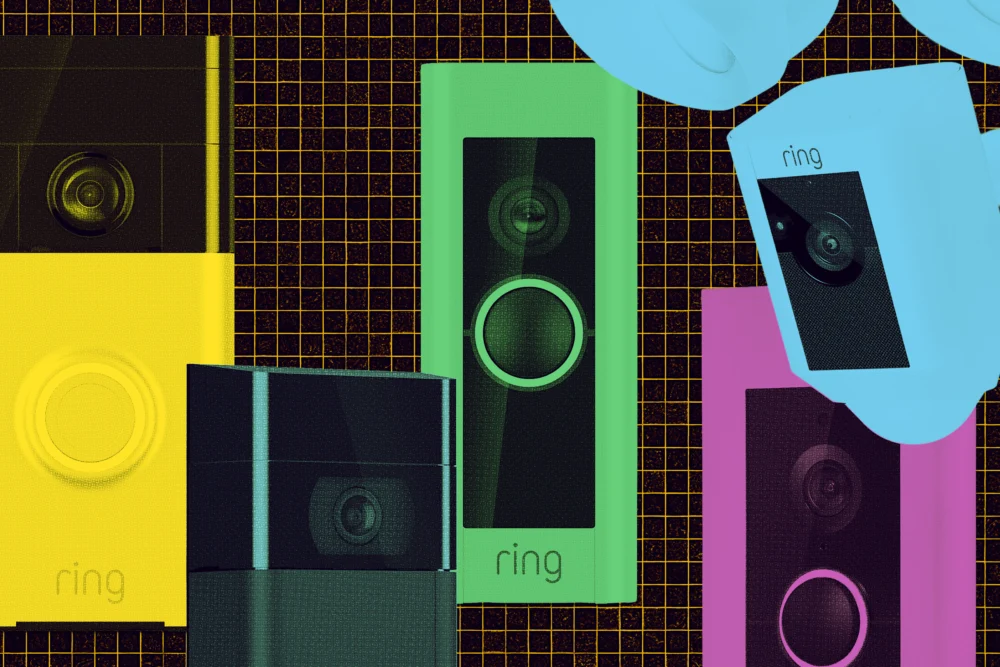
What if the biggest threat to your safety and privacy isn’t a person, but a ubiquitous device millions of Americans have willingly installed in their homes, turning their neighborhoods into a sprawling, privately-operated surveillance network? That is the profound and increasingly urgent contention of tech critics at the Electronic Frontier Foundation (EFF), a prominent digital rights advocacy group. They assert that Amazon’s wildly popular Ring doorbell devices, along with its associated suite of security cameras, constitute nothing less than a "surveillance nightmare"—a phenomenon they are boldly labeling the largest civilian surveillance panopticon in the history of the United States. This declaration paints a chilling picture of a society where the lines between public and private are blurred, and where convenience comes at the staggering cost of fundamental civil liberties.
The initial appeal of Ring doorbells is undeniably strong. Their marketing pitch is simple and compelling: these devices offer homeowners a vigilant eye, promising to protect against the anxiety-inducing threat of "porch pirates" stealing packages, to provide peace of mind regarding unexpected visitors, and even to capture the joyful arrival of trick-or-treaters on Halloween night. They offer a sense of control and security in an unpredictable world, allowing users to monitor their property from anywhere via a smartphone app. However, the EFF and other digital rights advocates argue that this perceived security is a Trojan horse, concealing a systemic erosion of privacy that impacts not just the homeowner, but entire communities. The digital rights advocacy group charges that this convenience comes at a staggering, often unacknowledged, cost to individual and collective privacy, fostering an environment of pervasive monitoring that has far-reaching societal implications.
Evidence supporting these concerns is not anecdotal. Ring has a documented history of privacy infractions, notably having been sued by the Federal Trade Commission (FTC) for what the agency described as "egregious privacy failures." Between 2017 and 2020, Ring was found to have illegally collected and stored sensitive audio and video data, often without adequate security measures. This particular issue culminated in a significant FTC settlement in 2023, driven by revelations that the company had given employees extensive and largely unfettered access to footage captured by Ring devices. Disturbingly, this access wasn’t limited to outdoor cameras; it extended to cameras installed inside people’s homes, raising alarms about potential abuse and the profound breach of trust inherent in such practices. The very idea that employees could view intimate moments within private residences underscored the lax security protocols and the company’s apparent disregard for user privacy.
One might attempt to mitigate these concerns by arguing that such issues wouldn’t arise if one simply confined the company’s devices to outdoor use, like on a porch. Yet, even this seemingly cautious approach doesn’t guarantee privacy. Back in 2022, a critical investigation by Consumer Reports revealed a troubling capability: Ring doorbells were found to be capable of recording ambient audio from an astonishing distance of 20 feet away. This technical capability means that these devices aren’t just capturing the sounds directly in front of the camera; they are actively listening in on pedestrians passing by, conversations between neighbors, and in some cases, even private discussions of homeowners who might have their doors or windows open. The scope of this audio surveillance extends far beyond the homeowner’s property line, inadvertently (or perhaps intentionally) turning public spaces and neighboring private properties into zones of perpetual eavesdropping, often without the knowledge or consent of those being recorded. This raises significant legal and ethical questions, particularly in states with "two-party consent" laws for audio recording.
All these individual facets—the pervasive cameras, the extensive data collection, the ambient audio recording, and the ease of footage sharing—coalesce into what the EFF aptly terms the "digital porch-to-police pipeline." This pipeline, facilitated by Ring’s ecosystem, empowers homeowners, sometimes fueled by paranoia or unconscious biases, to make swift and often unverified judgments about who "belongs" or "doesn’t belong" in their neighborhood. The platform then provides an alarmingly easy mechanism to dispatch law enforcement to confront individuals based on these snap judgments. This shifts the dynamic of community policing, moving from reactive responses to what can become proactive, citizen-initiated surveillance, often driven by subjective interpretations of "suspicious" behavior. The consequences can be severe, leading to unnecessary police interventions, racial profiling, and heightened tensions within communities.
Indeed, since at least 2016, Ring has made a deliberate strategic effort to integrate law enforcement agencies, such as the Los Angeles Police Department (LAPD), into its business model. This integration wasn’t merely cooperative; it was actively fostered through various initiatives, including "free giveaways" of Ring devices to police departments, effectively seeding communities with surveillance infrastructure. More controversially, Ring also facilitated "warrantless access" for law enforcement to user footage. This meant that police departments could, for a significant period, request video recordings from Ring users via the "Neighbors" app without needing to obtain a traditional warrant, bypassing established legal protocols designed to protect privacy. While Ring announced in January 2024 that it would no longer facilitate direct police requests for footage via the Neighbors app, requiring law enforcement to use a public request tool or obtain a warrant, critics argue this change, though a step in the right direction, doesn’t fully dismantle the underlying "pipeline" or address the vast amount of footage already available through other means.
The societal implications of such pervasive surveillance are not evenly distributed. As research fellow at Harvard Kennedy School, Chris Gilliard, sagely observed to Consumer Reports, any widespread surveillance technology will disproportionately impact those communities who already face the highest amount of repression and scrutiny from law enforcement. This includes, but is not limited to, Black and immigrant communities, low-income neighborhoods, and other marginalized groups. "That’s a truism of surveillance: It’s going to fall earliest and most often on the marginalized," Gilliard stated. The increased visibility provided by Ring cameras can exacerbate existing biases, leading to more frequent and often unwarranted police encounters for individuals who are already targets of systemic discrimination, thereby undermining efforts towards social justice and equitable policing.
Adding another layer of dystopian concern is Ring’s recently announced "Search Party" function. This feature purports to help users track down lost dogs by leveraging Ring’s vast network of interconnected devices, chaining multiple cameras together to follow a pet’s movement. While presented as a benevolent tool for pet owners, critics quickly saw the alarming implications. Ring, in a statement, claimed to have "built the feature with strong privacy protections from the start," allowing owners to "choose on a case-by-case basis whether they want to share videos with a pet owner to support a reunion." However, as the EFF incisively points out, the devices already possess a baked-in facial recognition feature for humans. It is not a stretch of the imagination to envision a future where a system designed to track a lost dog could easily be repurposed or expanded to track people, linking identities and movements across an ever-growing network of private surveillance cameras. The ostensibly benign "Search Party" could represent a critical step down a slippery slope where privacy in public spaces becomes virtually impossible. The pressing question, then, is not whether Ring will build such an invasive system, but whether society will recognize and resist its implications before this ubiquitous digital panopticon becomes an irreversible reality.
The pressure exerted by privacy advocates and the public is, however, starting to yield some results, albeit limited ones. The company faced significant backlash following a widely criticized Super Bowl ad, which further fueled public awareness of its surveillance practices. In a more substantive move, Ring announced that it is canceling its partnership with Flock Safety, a controversial surveillance startup. Flock Safety specializes in automated license plate readers (ALPRs) and other forms of community-wide surveillance, aiming to create an even larger, interconnected network of cameras that could feed into law enforcement databases and potentially aid agencies like ICE (Immigration and Customs Enforcement). The termination of this partnership, while a victory for privacy advocates, doesn’t fundamentally alter Ring’s core business model or its existing "porch-to-police pipeline." It merely prevents an acceleration of its integration into a broader, more centralized surveillance ecosystem. Yet, it demonstrates that public scrutiny and advocacy can, at times, push back against the relentless expansion of digital surveillance.
Ultimately, the proliferation of Ring cameras and similar smart home security devices represents a critical juncture for society. The convenience and perceived safety they offer must be weighed against the profound and often unseen costs to privacy, civil liberties, and community trust. As officials are already deploying AI surveillance devices in school bathrooms, the trend towards pervasive monitoring shows no sign of abating. The "surveillance nightmare" envisioned by critics is not a distant dystopia but a present reality, one that demands ongoing vigilance and robust advocacy to ensure that technology serves humanity, rather than turning our neighborhoods into open-air prisons of constant observation.