isnaini azizah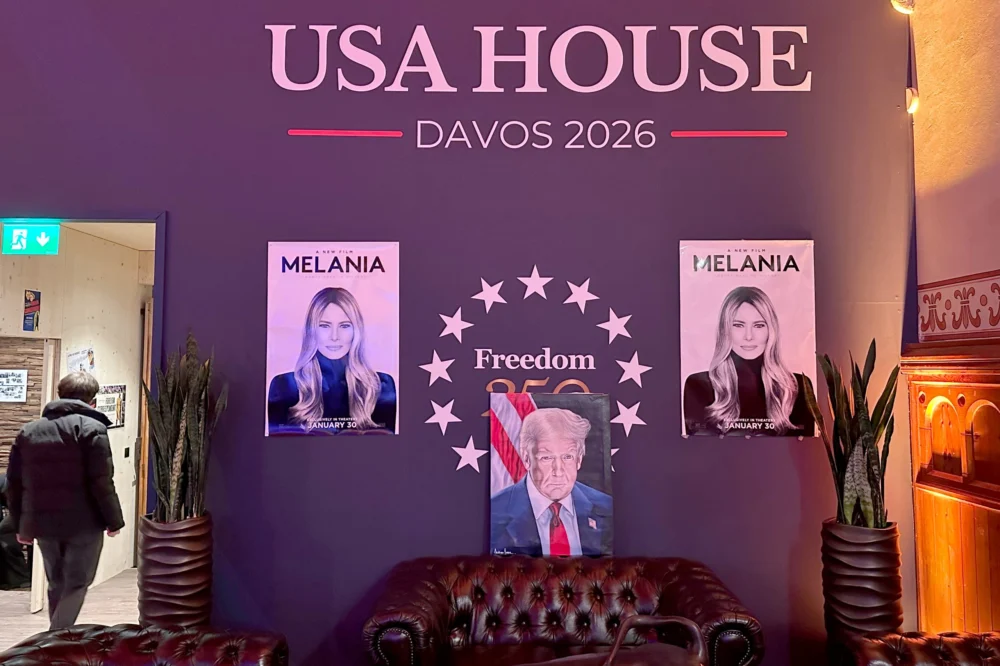
Davos, Switzerland – The air at the World Economic Forum’s annual meeting in Davos is thick with discussions, but two overarching themes have emerged as the dominant forces: Artificial Intelligence (AI) and the looming shadow of Donald Trump. For two days, amidst the sleek "houses" converted into corporate and national meeting hubs and the official sessions within the Congress Center, the conversations have been relentlessly steered by these twin titans.
The physical landscape of Davos itself underscores the pervasive influence of technology. The Promenade, the town’s main artery, is lined with temporary venues sponsored by a veritable who’s who of the tech industry. From Palantir and Workday to Infosys, Cloudflare, and C3.ai, tech companies have transformed retail spaces into sophisticated networking hubs. The presence of dedicated "AI Houses" and the sheer volume of tech representatives on stages, at parties, and in informal gatherings serve as a stark reminder of how thoroughly technology has permeated and now largely dictates the global economic landscape.
Within the Congress Center, the official heart of the WEF, AI’s impact is being explored with tangible results. A panel moderated by Mat Honan, Editor in Chief of The Debrief, featured CEOs from Accenture, Aramco, Royal Philips, and Visa, all of whom have moved beyond pilot projects to large-scale internal AI implementations. While acknowledging the prevailing narrative of AI hype, the discussion revealed its substantive effects on major corporations.
Aramco CEO Amin Nasser, for instance, detailed how the energy giant has achieved cost savings of $3-5 billion through AI-driven operational efficiencies. Royal Philips CEO Roy Jakobs highlighted AI’s role in freeing up healthcare practitioners to spend more time with patients by automating tasks like note-taking, a point that resonated deeply with Honan, whose wife, a pediatric nurse, frequently laments the time consumed by administrative duties. Visa CEO Ryan McInerney elaborated on the company’s ambitious push into "agentic commerce," envisioning a future where AI agents not only fulfill explicit requests but also proactively manage shopping based on individual preferences and past spending habits. This evolution, McInerney explained, will necessitate robust trust and authentication mechanisms to safeguard both consumers and merchants, signaling a significant leap beyond the nascent stages of agentic commerce witnessed in 2025. A senior executive from Mastercard, in a separate conversation, echoed these sentiments, reinforcing the magnitude of the impending changes in the payments industry.
The sentiment that truly crystallized the societal relationship with AI, according to Accenture CEO Julie Sweet, was the simple yet profound statement: "It’s hard to trust something until you understand it." This sentiment, Honan observed, neatly encapsulates the current societal juncture with artificial intelligence. The overwhelming attendance at AI-related events, such as the packed AI House panel where Honan himself participated in a discussion on "Creativity and Identity in the Age of Memes and Deepfakes," further underscored the intense global interest and the palpable desire for understanding this transformative technology.
However, the intellectual ferment surrounding AI is juxtaposed with a palpable sense of unease and anxiety concerning Donald Trump. His impending arrival at Davos on Wednesday, amidst pronouncements of potentially seizing Greenland and anxieties about fracturing the NATO alliance, has cast a long shadow over the proceedings. While AI dominates the official stages and strategic discussions, Trump is the undisputed king of the informal, yet intensely significant, side conversations. The atmosphere is punctuated by nervous laughter, outright anger, and visible fear, creating a "wild" and unpredictable undercurrent.
These apprehensions are beginning to seep into public discourse. Following Honan’s AI panel, a pavilion in the Congress Center became a focal point of attention when Gavin Newsom, the Governor of California, emerged with a small entourage and was immediately mobbed by cameras and phones. This scene followed a similar surge of press interest around David Beckham, highlighting the celebrity status that permeates Davos. Honan, who had just encountered Eric Schmidt in line at a coffee bar, wryly noted the peculiar blend of captains of industry and public figures that defines the event.
Newsom, increasingly viewed as a leading voice of opposition to Trump and a potential contender for the presidency, appeared visibly agitated. He launched a scathing critique of Trump, labeling him a narcissist who operates by "the law of the jungle, the rule of Don" and drawing a stark comparison to a T-Rex, stating, "you mate with him or he devours you." His criticism extended to world leaders gathered at Davos, whom he deemed "pathetic" and suggested he should have brought knee pads for them.
This sentiment, albeit expressed in more measured terms, was echoed by Canadian Prime Minister Mark Carney in his address. While Honan missed Carney’s remarks, they generated significant buzz, particularly the powerful analogy: "If we’re not at the table, we’re on the menu." This phrase encapsulates the broader concern among global leaders about the potential consequences of Trump’s policies and his impact on international stability and cooperation, a concern that looms as large as the technological revolution unfolding around them.