isnaini azizah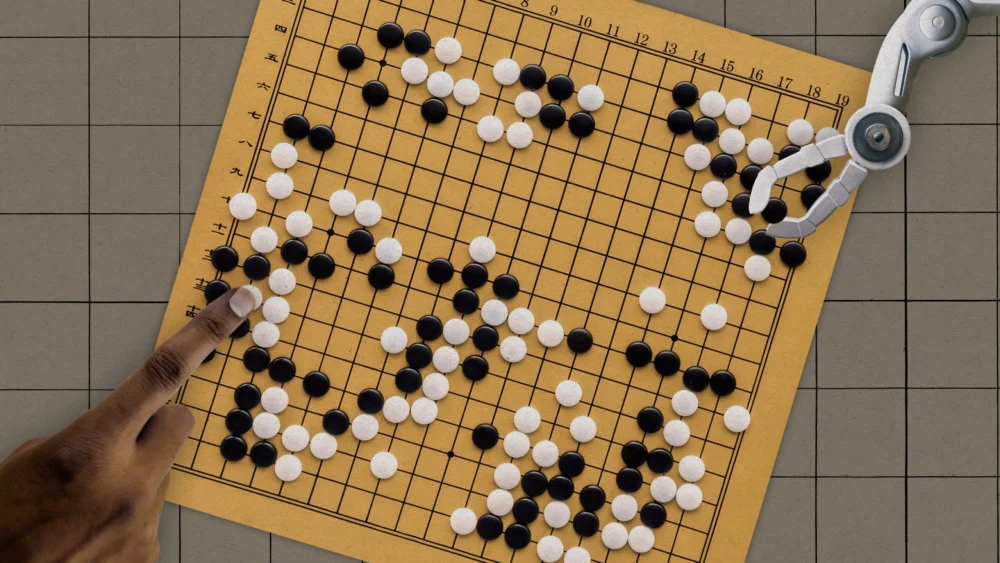
Ten years after AlphaGo’s groundbreaking victory over Lee Sedol, the ancient game of Go, deeply ingrained in South Korean culture, is undergoing a profound transformation, driven by the pervasive influence of Artificial Intelligence. The hallowed halls of the Korea Baduk Association, once echoing with the gentle sounds of stones being placed, now reverberate with the clicks of mice and the hushed debates over AI-generated strategies. Professional players, from the world’s top-ranked Shin Jin-seo to rising stars like Kim Chae-young, are dedicating their waking hours to understanding and emulating the moves of AI programs like KataGo. This shift has overturned centuries-old principles, introduced novel strategies, and fundamentally altered the training regimen of elite players, making it virtually impossible to compete professionally without embracing AI. While some lament a perceived loss of creativity, others see new avenues for human ingenuity and a democratization of training, which is notably empowering female players to ascend the ranks.
Shin Jin-seo, known for his uncanny ability to mirror AI’s play, dedicates his mornings to KataGo, tracing the "blue spot" of its suggested moves and meticulously analyzing the machine’s reasoning. He states, "I constantly think about why AI chose a move." His training is described as an "ascetic practice," with a 2022 study revealing his moves align with AI 37.5% of the time, significantly higher than the average player’s 28.5%. Shin acknowledges, "My game has changed a lot, because I have to follow the directions suggested by AI to some extent." The Korea Baduk Association has even expressed interest in a rematch between Shin and a more advanced AI, potentially to mark the anniversary of AlphaGo’s historic win, a testament to the progress made in AI’s Go-playing capabilities.
Go, an abstract strategy game dating back over 2,500 years, involves two players placing black and white stones on a 19×19 grid to surround territory. Its complexity is staggering, with an estimated 10170 possible board configurations, far exceeding the number of atoms in the universe. Training AI for Go initially involved feeding vast datasets of human moves into neural networks. AlphaGo, trained on 30 million moves, evolved into AlphaGo Zero, which learned the game from scratch by playing against itself, unburdened by human preconceptions. This "blank-slate" approach proved remarkably powerful, leading AlphaGo Zero to defeat its predecessor 100-0.
Though Google DeepMind retired AlphaGo in 2017, its legacy inspired a wave of open-source models. KataGo, the current standard for professional Go players, is faster and more sophisticated, capable of predicting not only win probabilities but also territorial ownership at any given moment. Unlike earlier AIs that analyzed small board sections, KataGo developed a holistic understanding, improving its long-term strategic judgment and focusing on score maximization rather than just winning.
This AI integration has drastically reshaped Go’s strategic landscape. For centuries, players relied on heuristics and established opening strategies to navigate the game’s immense complexity. Elegant opening sequences and principles like avoiding early corner invasions were considered sacrosanct. However, as Go commentator Park Jeong-sang observes, "AI has changed everything. Fundamental moves that were once considered common sense aren’t played at all today, and techniques that didn’t exist before have become popular." The initial 50 moves, once a canvas for individual expression and philosophical depth, are now often dictated by AI’s efficient and calculated recommendations. Players like Lee Sedol and Ke Jie, known for their innovative and imaginative styles, have seen their approaches overshadowed by a homogenization of opening play. Ke Jie has expressed weariness, stating, "I feel the exact same way as the fans watching. It’s very tiring and painful to watch." Studies indicate that over a third of moves by top players now replicate AI suggestions, with the opening stages of games frequently mirroring AI’s prescribed patterns.
Lee Sedol, reflecting on his post-AlphaGo career, views the game as having transitioned from an art form to a "mind sport." He laments, "Before AI, we sought something greater. I learned Go as an art. But if you copy your moves from an answer key, that’s no longer art." For him, the pursuit of innovation and the thrill of discovering new paradigms have diminished, leading to a sense of lost purpose in the game. The challenge for players has shifted from charting new frontiers to deciphering the moves of a "superhuman oracle."
Despite the AI’s dominance, players like Kim Chae-young, a top female professional, are adapting. She speaks of the necessity to "abandon everything I had learned before," as her previously honed intuition proved to be incorrect in the face of AI’s superior play. She describes the AI’s reasoning as if it’s "thinking in a higher dimension," and learning from it has become less about rational deduction and more about developing a new form of intuition. Researchers are actively working to decipher the complex strategies embedded within AI programs. A 2024 study from Google DeepMind successfully extracted and taught new chess concepts from AlphaZero to grandmasters. However, extracting general principles from AI’s Go strategies remains a significant challenge, with top players yet to fully grasp the underlying logic, leaving Go in a state of "epistemic limbo."
Yet, AI’s influence extends beyond strategy, acting as a democratizing force. It has significantly enhanced training opportunities for female Go players, who have historically faced systemic disadvantages. Traditionally, training involved studying under prominent male players, with competitive arenas largely inaccessible to women. "Female players never had access to that experience," notes Nam Chi-hyung, a Go professor. "But now they can study with AI, which has made their training environment much more favorable." This widespread access to advanced training has narrowed the skill gap, allowing more players to refine their opening moves.
This newfound accessibility has propelled female players to greater prominence. Choi Jeong, formerly the top female player, reached the finals of a major international tournament in 2022, a landmark achievement. More recently, Kim Chae-young’s victory in the Korean Go League’s postseason playoffs, as the sole female participant, highlights this progress. Kim expresses newfound confidence, stating that analyzing male players’ moves with AI has dispelled their aura of invincibility. "Before, I couldn’t gauge just how strong top male players were—they felt invincible. Now, I know that they make mistakes, and their moves aren’t always brilliant. AI broke the psychological barrier."
While AI may have surpassed human capabilities in Go, human players remain the focus of fan engagement. Go commentator Park observes, "A Go game between AI programs is not very fun for fans to watch." The abstract perfection and unfathomable complexity of AI matches, unlike the compelling narratives of human struggle, comebacks, and personality expressed through each stone, fail to captivate audiences. Fans cherish the moments when players deviate from AI’s script, injecting their own judgment and flair into the middle game, where strategic possibilities become too vast to memorize. Shin Jin-seo finds meaning in this human element, stating, "I can play a kind of Go that tells a story that only a human can."
Lee Sedol, having retired from professional play, now seeks new avenues where human strengths can shine, developing board games and teaching. Yet, he holds a glimmer of hope for the game he left behind, envisioning AI as a potential tool to help players achieve the elusive "masterpiece game" – a technically brilliant, error-free contest between evenly matched opponents. Shin Jin-seo views AI as an indispensable teacher and companion, a constant impetus for improvement. "I may be one of the strongest human players, but with AI around, I can’t be so arrogant," he concludes. "AI gives me a reason to keep improving."