
 Faris Adani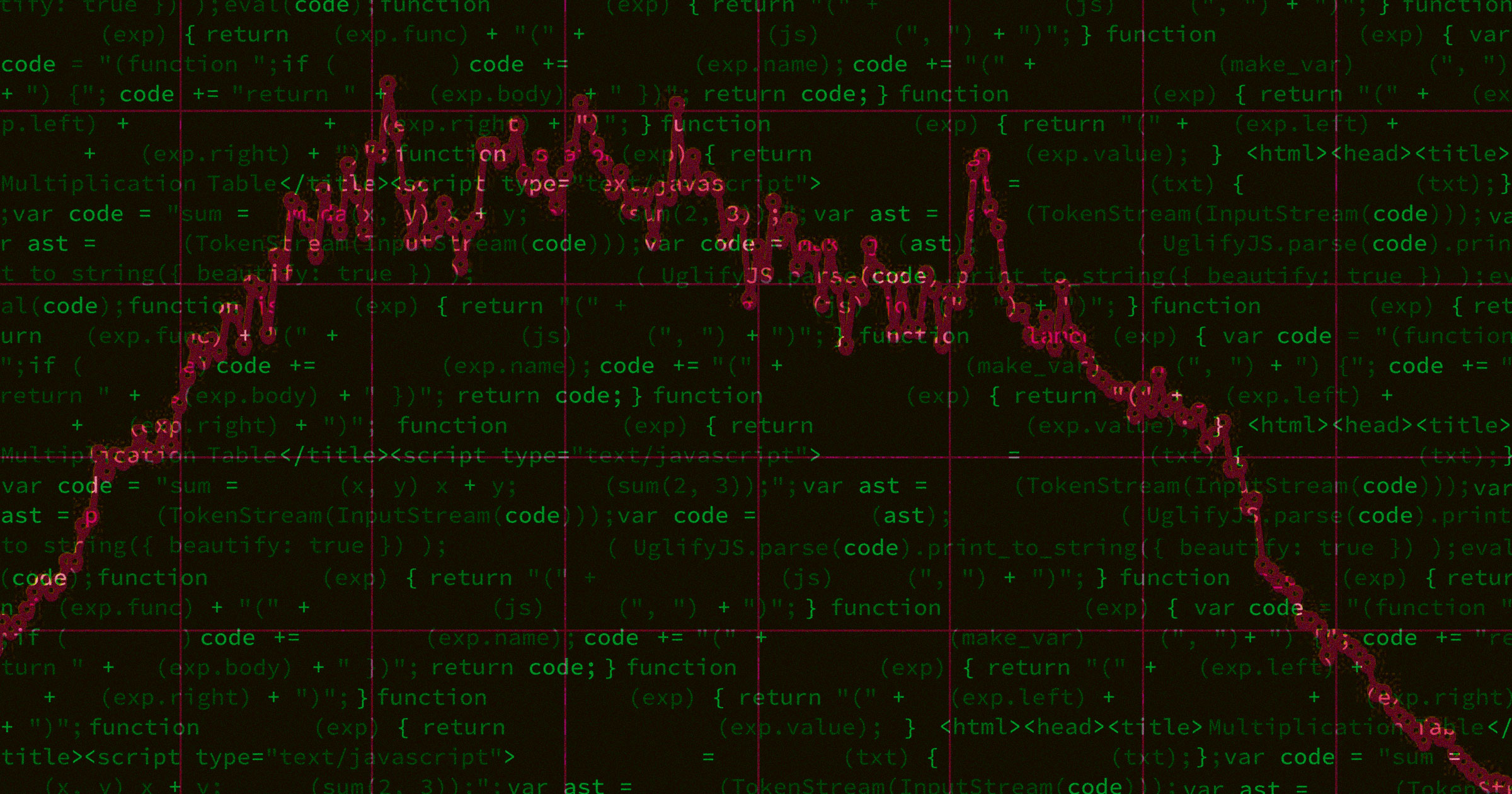
The advent of generative artificial intelligence appears to have caused an extinction-level event for crowdsourced question-and-answer platform Stack Overflow, marking a dramatic shift in how developers seek and share coding knowledge, and raising profound questions about the future of technical information. For nearly two decades, Stack Overflow has stood as an indispensable pillar in the developer community, a digital town square where programmers from all corners of the globe could pose their thorniest coding challenges and receive solutions, often within minutes, from a vast network of peers. Launched in 2008, it rapidly evolved into an immense online repository, a living encyclopedia of code, algorithms, and debugging strategies that became the first port of call for countless developers navigating the complexities of software creation. Its success was built on the premise of collective intelligence: a system of upvotes, downvotes, and accepted answers that incentivized high-quality contributions and curated reliable information.
However, the landscape began to irrevocably change with the emergence of advanced large language models (LLMs) like OpenAI’s ChatGPT, which burst onto the scene in late 2022. These sophisticated AI tools offered a revolutionary new paradigm for problem-solving. Instead of navigating forums, posting questions, and awaiting human responses, developers could now simply type a natural language prompt into an AI chatbot and receive an instant, often functional, code snippet or solution. This immediate gratification, coupled with the AI’s ability to synthesize information from vast datasets, began to erode the fundamental utility of traditional Q&A platforms.
The data charting Stack Overflow’s decline is stark and paints a dramatic picture of this technological disruption. According to insights gleaned from Stack Overflow’s own Data Explorer, the number of monthly questions posted on the platform plummeted precipitously. While the platform was fielding approximately 100,000 questions per month at the start of 2023, a critical turning point occurred between January and December of 2025. In January 2025, the platform still recorded over 21,000 new questions, but by December of the same year, this figure had collapsed to a mere 3,607. This steep, near 83% drop within a single year underscores the rapid displacement of Stack Overflow as the primary resource for immediate coding assistance, directly correlating with the widespread adoption and increasing sophistication of generative AI tools. The data suggests that what began as a gradual shift quickly accelerated into an existential threat.
In a move that could be interpreted as either a strategic embrace of the inevitable or a desperate measure that inadvertently hastened its own demise, Stack Overflow announced a significant partnership with OpenAI in 2024. The stated goal of this collaboration was to "strengthen the world’s most popular large language models" by licensing Stack Overflow’s extensive and high-quality data to train OpenAI’s models. While this provided a new revenue stream and acknowledged the growing influence of AI, it simultaneously positioned Stack Overflow as a data provider for the very technology that was undermining its core user engagement. This partnership created a meta-twist: the platform was effectively feeding the beast that was devouring its user base.
The situation is further complicated by a set of perplexing internal policies. Stack Overflow introduced an "AI Assist" feature just last month, touted as a "new way for users to access our 17 years of expert knowledge" — an apparent attempt to integrate AI into its own ecosystem. Yet, strikingly, the platform continues to strictly prohibit the use of generative AI to answer questions posted by users. This contradictory stance leaves many within the developer community confused and frustrated, highlighting an internal struggle to adapt to the new reality without compromising the integrity of its traditional crowdsourced model. On one hand, the company acknowledges AI’s utility and commercial potential; on the other, it clings to human-generated expertise as the only valid form of contribution.
Beyond the external pressure from AI, Stack Overflow has long grappled with internal community issues that many believe contributed significantly to its vulnerability. Disillusioned users frequently describe the platform’s community as often hostile and "toxic." Critics point to rigid and sometimes arbitrary moderation practices, particularly concerning the handling of "duplicate" queries. Many users have expressed deep frustration at having their questions immediately shut down or marked as duplicates, often with little guidance or an overly critical tone, leading to a feeling of being "punished for trying to participate." As one Reddit user powerfully articulated, "Of course, one could point to 2022 and say ‘look, it’s because of AI,’ and yes, AI certainly accelerated the decline, but this is the result of consistently punishing users for trying to participate in your community. People were just happy to finally have a tool that didn’t tell them their questions were stupid." This sentiment underscores a critical differentiator: AI offers a non-judgmental, infinitely patient assistant, a stark contrast to a human community sometimes perceived as unwelcoming or overly critical.
Another compelling argument for the decline, which predates but converges with the rise of AI, is the natural saturation of a mature knowledge base. As one user on Reddit observed, "I very rarely find that I need to ask new questions on Stack Overflow. A problem is either trivial enough that I can find the answer myself, common enough that someone’s already asked before, or so difficult and so niche that asking other people for help is fruitless." This perspective suggests that over nearly two decades, the most common and frequently encountered programming problems have likely already been asked and thoroughly answered. New, genuinely unique problems requiring novel solutions are increasingly rare, leaving a diminishing pool of questions that genuinely warrant a new post and human interaction. In this scenario, AI simply provides a more efficient way to access the already existing, vast archive of solutions.
However, the rapid shift towards AI-generated code and solutions is not without its own significant concerns, particularly among experienced programmers. The well-documented shortcomings of AI remain a major issue. "Hallucinations," where AI models confidently present factually incorrect or nonsensical information, are still prevalent. This can lead to "bug-filled messes" in AI-generated code, forcing developers to spend significant amounts of time debugging and fixing errors that might have been avoided with human-curated solutions. While AI offers speed, it often sacrifices accuracy and reliability, turning developers into diligent proofreaders rather than pure creators. The cost-benefit analysis of using AI for initial code generation versus the time spent correcting its flaws is an ongoing debate.
Perhaps the most critical and unsettling question for the future revolves around the source of knowledge itself. If Stack Overflow, once "by far the leading source of high quality answers to technical questions," becomes a mere "husk," a relic of a bygone era, where will the next generation of LLMs — and indeed, human developers — obtain their coding information? As one user on Hacker News pointedly asked, "What do LLMs train off of now?" The current crop of AI models has largely been trained on the vast corpus of human-generated data, including the very content from Stack Overflow. If the creation of new, high-quality, human-validated technical content dwindles, there is a risk of creating a feedback loop where future AIs are trained on increasingly outdated, less diverse, or even AI-generated (and potentially flawed) data. This could lead to a stagnation or even degradation of the collective technical knowledge base, making it harder to solve truly novel problems or to innovate in emerging fields.
The implications extend beyond just code snippets. Stack Overflow fostered a culture of peer learning, critical thinking, and nuanced discussion, where multiple perspectives on a problem could be explored, and the "why" behind a solution was as important as the "what." The absence of such a vibrant, human-centric forum could impact developer education, problem-solving methodologies, and the evolution of technical discourse. While AI offers unparalleled efficiency, it lacks the human element of mentorship, debate, and the serendipitous discovery of new approaches that often emerged from community interaction.
In conclusion, Stack Overflow’s dramatic decline is a multifaceted phenomenon, driven primarily by the transformative power of generative AI, but exacerbated by internal community challenges and the natural maturation of its knowledge base. The rapid adoption of AI tools has irrevocably altered the landscape of developer support, offering instant answers but introducing new concerns about accuracy and the origin of knowledge. As the tech industry hurtles forward, the story of Stack Overflow serves as a powerful testament to the disruptive potential of AI, forcing a critical re-evaluation of how technical communities function, how knowledge is created and disseminated, and where the foundational data for future intelligent systems will truly come from. The future of coding assistance, and indeed, the very fabric of digital knowledge, hangs in the balance.