Faris Adani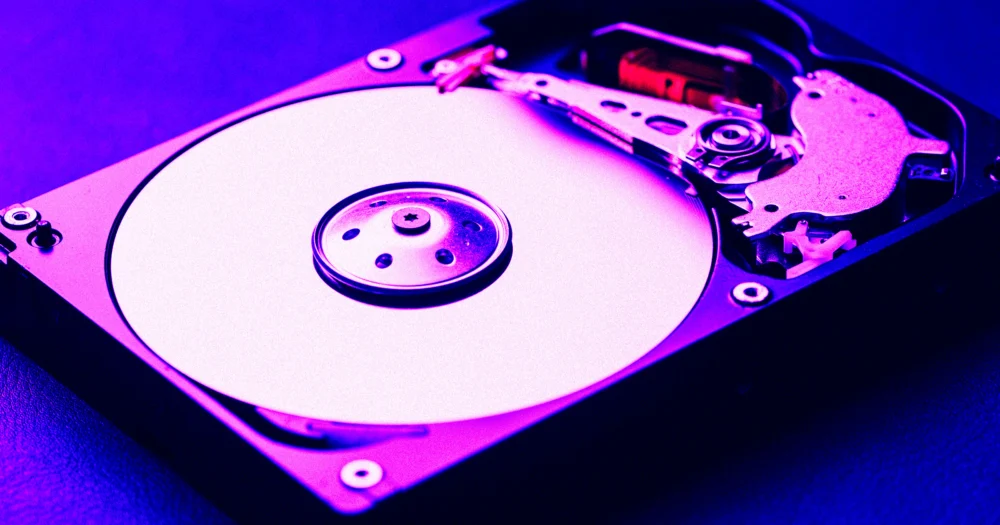
The relentless expansion of the artificial intelligence industry, fueled by an insatiable hunger for data and processing power, is systematically reshaping the global hardware market, driving up costs across the board. After causing prices for RAM and graphical processing units (GPUs) to skyrocket, a new critical component is now feeling the immense pressure: hard drives. This shift is turning what were once routine hardware purchases into significant financial considerations for consumers, businesses, and even major tech players.
For months, the AI industry’s aggressive build-out of vast, costly data centers has sent ripples through the tech supply chain. Dynamic Random Access Memory (RAM), essential for the high-speed processing AI models demand, saw its prices surge, transforming a simple computer upgrade into a surprisingly expensive endeavor. While there are recent glimmers of hope, with reports indicating RAM prices are beginning to fall in European markets, this relief appears to be localized and potentially temporary, as the underlying demand from AI infrastructure remains robust. Now, the spotlight has shifted to storage, with hard drives emerging as the next hardware casualty in AI’s relentless march.
The stark reality of the situation was recently laid bare by Irving Tan, the CEO of hard drive manufacturing giant Western Digital. During a candid company earnings call, Tan admitted, "we’re pretty much sold out for calendar 2026." As industry analysts, including PCWorld, quickly clarified, this statement refers not to an immediate emptying of retail shelves but rather to Western Digital’s entire production capacity being allocated well into the future. The company is strategically dedicating its manufacturing output to its most significant customers, primarily the hyperscale cloud providers. While this doesn’t mean consumers won’t find Western Digital drives for sale, it signals a severely constrained supply environment that almost invariably leads to significant price increases, echoing the trajectory seen with RAM and GPUs. Indeed, between September and January alone, average hard drive prices had already surged by a staggering 46 percent, a clear indicator of the brewing storm.
At the heart of this escalating demand is the sheer volume of data required to train, deploy, and operate modern AI models, particularly large language models (LLMs) and sophisticated generative AI systems. These models don’t just consume data; they feast on it. Training datasets can span terabytes, petabytes, or even exabytes of information, encompassing everything from vast corpuses of text and code to billions of images, videos, and sensor readings. This raw data must be stored, pre-processed, and made rapidly accessible for model training. Once trained, the models themselves, with their billions or even trillions of parameters, also require significant storage space. Furthermore, the inference process – where the AI generates responses or performs tasks – produces massive amounts of new data, which often needs to be logged, stored, and analyzed for performance monitoring, fine-tuning, and future training iterations. The rise of multimodal AI, which processes and generates data across different modalities like text, images, and audio simultaneously, only exacerbates these storage requirements, pushing the boundaries of what data infrastructure can handle.
Western Digital’s financial reporting underscores this AI-driven shift, with nearly 90 percent of the company’s revenue now stemming from cloud storage solutions. The "hyperscalers" Tan referred to are the titans of cloud computing – companies like Amazon Web Services (AWS), Microsoft Azure, Google Cloud, Meta, and OpenAI – which operate colossal data centers that form the backbone of the internet and, increasingly, the AI revolution. These entities require access to unimaginable quantities of high-capacity, high-reliability storage for both data processing and long-term archival. Western Digital’s strategy to focus on these hyperscale customers is a logical business move, prioritizing high-volume, high-margin contracts. However, this prioritization inevitably squeezes the supply available for the broader market, including smaller businesses, independent data centers, and individual consumers.
The market dynamics are clear: unprecedented demand meeting finite supply. In November, Tom’s Hardware reported that enterprise-grade hard drives were facing backorders extending up to two years, directly linking this scarcity to major investments in AI data centers. This isn’t just about Western Digital; other major HDD manufacturers like Seagate and Toshiba are facing similar pressures, albeit with varying degrees of public transparency. While Solid State Drives (SSDs) offer superior speed, their cost per terabyte still makes them prohibitive for the truly massive, cold, and warm data storage needs of AI data centers. Hard Disk Drives (HDDs) remain the workhorses for bulk storage due to their significantly lower cost per gigabyte, making them indispensable for building vast data lakes and archival systems that feed AI. Even as advancements in Quad-Level Cell (QLC) SSDs aim to bridge this cost gap, the sheer scale of data necessitates the continued reliance on high-capacity HDDs.
The economic ripple effects of this hard drive crunch will be felt far beyond the balance sheets of tech giants. Consumers looking to upgrade their personal computers, build home servers, expand their Network Attached Storage (NAS) systems, or simply purchase external drives for backup will likely face higher prices and potentially limited choices. Small and medium-sized businesses that rely on local storage for their operations, data analytics, or content creation will also see their hardware costs rise. This situation draws parallels to previous hardware shortages, such as the impact of cryptocurrency mining on GPU prices or the infamous 2011 Thailand floods that severely disrupted HDD manufacturing. In each instance, a sudden surge in demand or a catastrophic supply shock led to market volatility and inflated prices, leaving consumers and businesses scrambling.
Looking ahead, the critical question is whether supply can eventually catch up with this unprecedented demand. Expanding manufacturing capacity for hard drives is a complex, capital-intensive, and time-consuming process, often requiring years from conception to full-scale production. Manufacturers are investing heavily in research and development to increase storage density, with technologies like Heat-Assisted Magnetic Recording (HAMR) and Microwave-Assisted Magnetic Recording (MAMR) promising to push drive capacities well beyond current limits. However, these innovations take time to mature and deploy at scale. The industry is in a race to innovate faster, produce more efficiently, and manage an ever-growing deluge of data.
The spiking hard drive prices are merely another symptom of a much larger phenomenon: the fundamental reordering of the global technology landscape by AI. The build-out of AI infrastructure is not just about storage and processing; it also encompasses vast energy consumption, complex cooling systems, and specialized network hardware. Each component of this ecosystem is under immense pressure, leading to a domino effect of price hikes and supply chain strain. As AI capabilities expand and permeate every sector, the demand for underlying hardware will only intensify, making the cost of computing, storage, and data management a critical concern for investors, businesses, and individuals alike. This era of AI-driven demand signals a sustained period of volatility and adaptation, where strategic hardware procurement and efficient data management will become paramount.