Imroatul Nasiyah
A groundbreaking development, spearheaded by a dedicated team of physicists at Stanford University, has unveiled a novel kind of optical cavity designed to efficiently capture single photons – the fundamental particles of light – emitted by individual atoms. These atoms, acting as the fundamental building blocks of a quantum computer, are responsible for storing qubits, the quantum counterparts to the binary zeros and ones that form the basis of traditional computing. This pioneering approach, for the first time in the field, facilitates the simultaneous collection of information from all qubits within a quantum system, a critical bottleneck that has long hampered the scalability of quantum computing.
Optical Cavities: The Key to Unlocking Rapid Qubit Readout
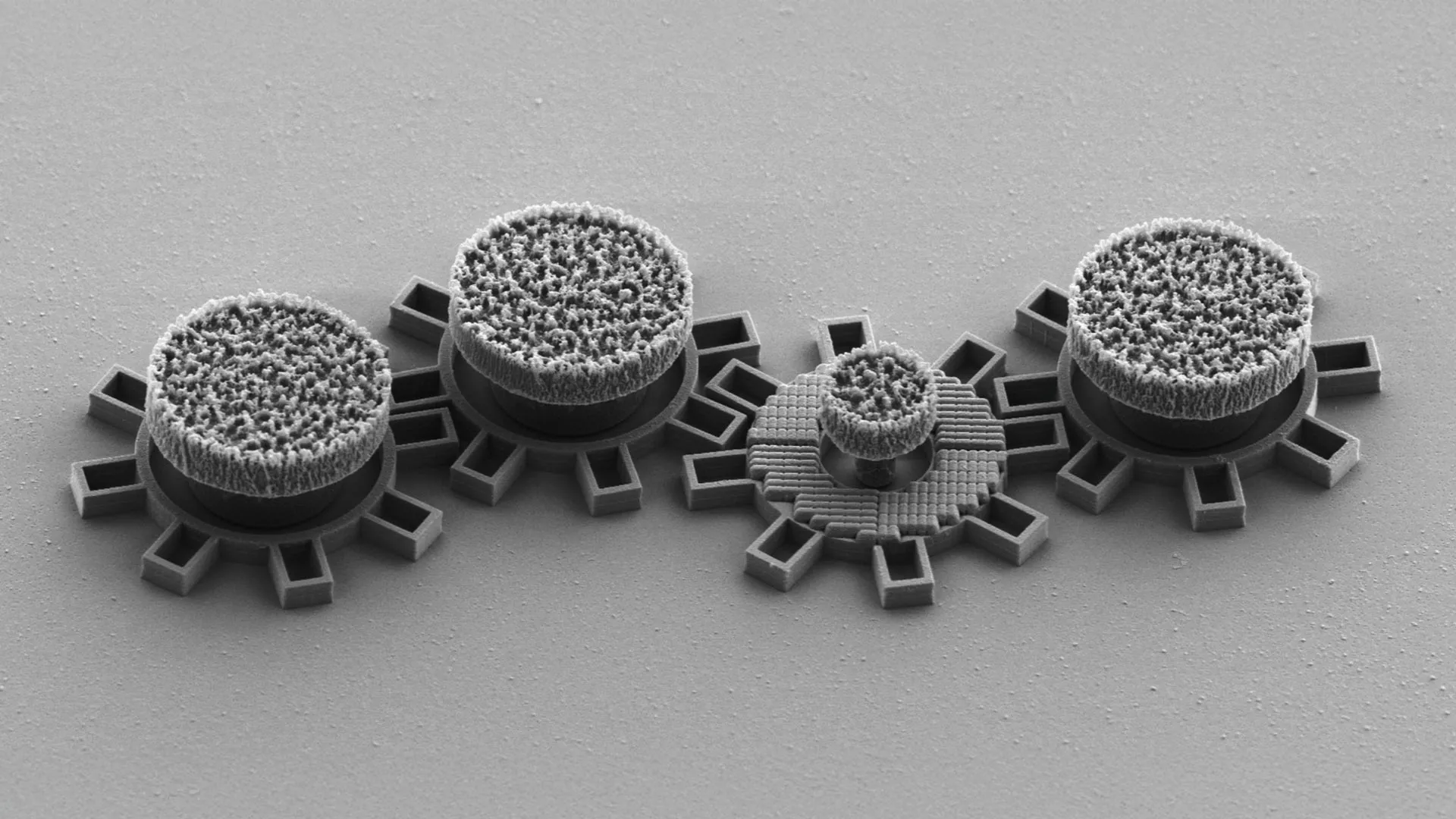
The findings of this transformative research, meticulously documented and published in the prestigious scientific journal Nature, detail a sophisticated system comprising 40 individual optical cavities, each meticulously engineered to house a single atom qubit. Furthermore, the team has successfully constructed a larger prototype demonstrating the potential of this technology, featuring an impressive array of over 500 cavities. These remarkable results strongly suggest a practical and realistic pathway toward the realization of robust quantum computing networks that could, in the not-too-distant future, encompass an astonishing scale of up to a million qubits.
Jon Simon, the senior author of the study and an esteemed associate professor of physics and applied physics at Stanford University’s School of Humanities and Sciences, emphasized the critical need for rapid information extraction from quantum bits. "If we want to make a quantum computer, we need to be able to read information out of the quantum bits very quickly," he stated. "Until now, there hasn’t been a practical way to do that at scale because atoms just don’t emit light fast enough, and on top of that, they spew it out in all directions. An optical cavity can efficiently guide emitted light toward a particular direction, and now we’ve found a way to equip each atom in a quantum computer within its own individual cavity." This ingenious solution directly addresses the inherent inefficiencies of atomic light emission, a major impediment to large-scale quantum computation.
The Ingenious Mechanics of Optical Cavities in Controlling Light
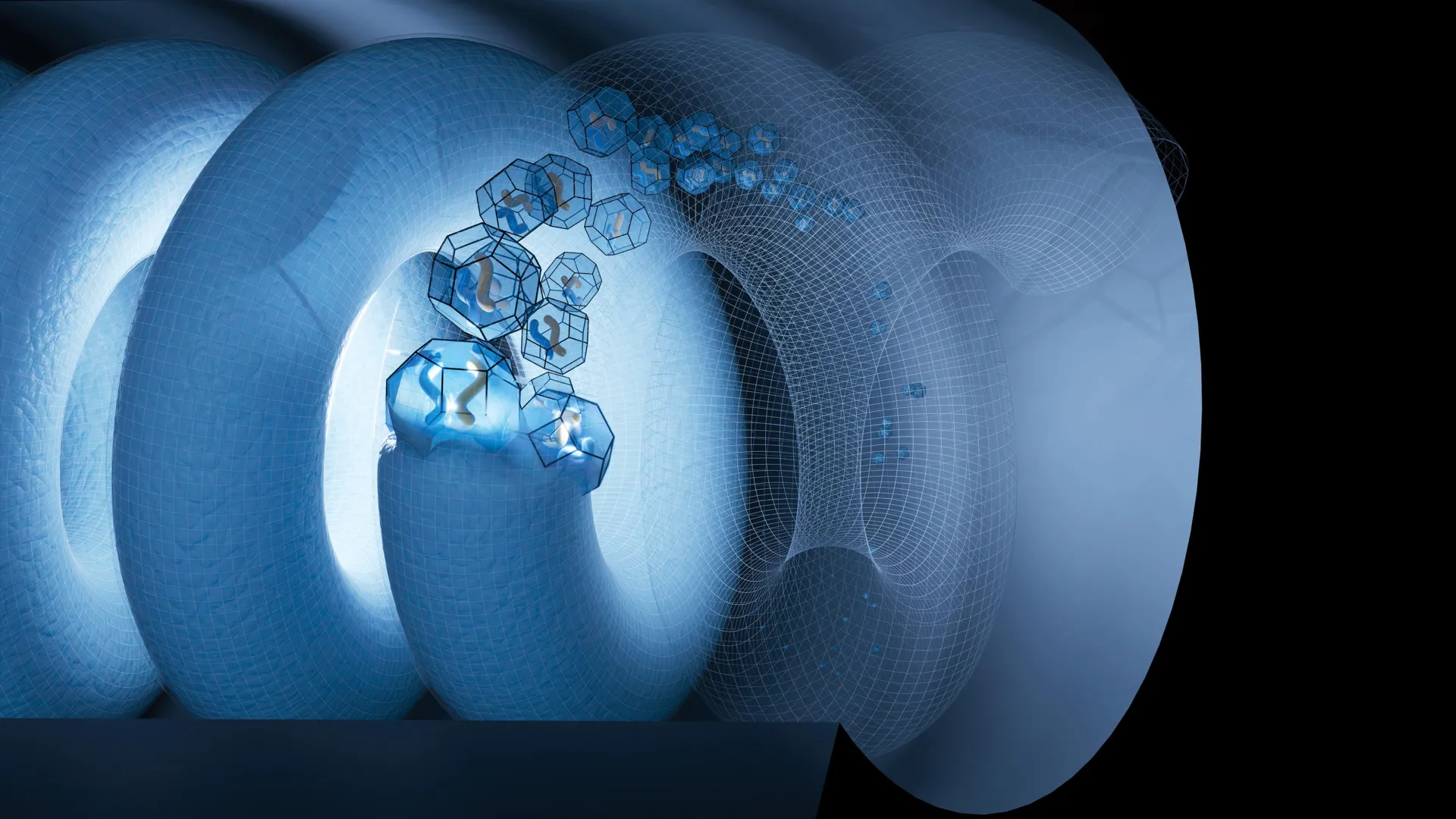
At its core, an optical cavity operates by strategically trapping light between two or more highly reflective surfaces. This confinement causes the light to repeatedly bounce back and forth, creating an amplified and directed beam. The effect can be intuitively understood by imagining standing between two parallel mirrors in a fun house, where the reflections appear to stretch infinitely. In scientific applications, these cavities are engineered at microscopic scales and utilize the repeated passes of a precisely controlled laser beam to efficiently extract vital information encoded within atoms.
Despite decades of study, the integration of optical cavities with individual atoms has presented significant challenges. Atoms, being infinitesimally small and largely transparent, make it difficult to achieve a strong and consistent interaction with light. This persistent hurdle has limited the effectiveness of previous approaches in reliably capturing the quantum information stored within them.
A Novel Design Revolutionized by Microlenses
In a significant departure from conventional methods that relied on numerous reflective bounces, the Stanford team introduced a groundbreaking innovation: the incorporation of microlenses directly within each optical cavity. These tiny lenses are expertly designed to tightly focus the light onto a single atom. Remarkably, this innovative design proved to be significantly more effective at extracting quantum information from the atom, even with fewer light bounces.
Adam Shaw, a Stanford Science Fellow and the lead author of the study, elaborated on the novel architecture. "We have developed a new type of cavity architecture; it’s not just two mirrors anymore," he explained. "We hope this will enable us to build dramatically faster, distributed quantum computers that can talk to each other with much faster data rates." This architectural shift opens up exciting possibilities for interconnected quantum systems with enhanced communication speeds.
Transcending the Binary Limitations of Classical Computing
The fundamental difference between classical and quantum computing lies in their information processing units. Conventional computers rely on bits, which can represent either a zero or a one. Quantum computers, however, utilize qubits, which leverage the peculiar principles of quantum mechanics. A qubit can exist in a superposition of states, meaning it can represent zero, one, or a combination of both simultaneously. This inherent capability allows quantum systems to tackle certain types of calculations with vastly superior efficiency compared to their classical counterparts.
Professor Simon further illustrated this advantage: "A classical computer has to churn through possibilities one by one, looking for the correct answer," he said. "But a quantum computer acts like noise-canceling headphones that compare combinations of answers, amplifying the right ones while muffling the wrong ones." This analogy highlights the parallel processing power and error-reduction capabilities that are central to quantum computation.
Scaling Towards the Era of Quantum Supercomputers
Estimates from the scientific community suggest that to surpass the capabilities of today’s most powerful supercomputers, quantum computers will necessitate the integration of millions of qubits. Professor Simon posits that achieving this monumental scale will likely involve the intricate networking of numerous individual quantum computers. The parallel light-based interface demonstrated in this study provides a robust and efficient foundation for scaling up quantum systems to meet these ambitious requirements.
The researchers have already showcased a functional 40-cavity array in their current study, alongside a proof-of-concept system containing over 500 cavities. Their immediate objective is to expand this array to tens of thousands of cavities. Looking further into the future, the team envisions the creation of quantum data centers where individual quantum computers are interconnected through these advanced cavity-based network interfaces, ultimately forming comprehensive quantum supercomputers.
Far-Reaching Scientific and Technological Ramifications
While significant engineering challenges undoubtedly remain, the researchers are confident that the potential benefits of this technology are profound and far-reaching. Large-scale quantum computers hold the promise of catalyzing breakthroughs in fields such as materials design and chemical synthesis, with direct applications in drug discovery and the development of novel materials. Furthermore, their computational prowess could revolutionize cryptography, potentially leading to advancements in code-breaking and enhanced cybersecurity measures.
Beyond the realm of computing, the ability to efficiently collect and manipulate light at the single-photon level has exciting implications for other scientific disciplines. These cavity arrays could significantly enhance biosensing capabilities, leading to more sensitive diagnostic tools and improved microscopy techniques, thereby accelerating progress in medical and biological research. Quantum networks may even play a pivotal role in astronomy, enabling the development of optical telescopes with unprecedented resolution. This enhanced observational power could potentially allow scientists to directly image exoplanets orbiting distant stars, opening new windows into the universe.
"As we understand more about how to manipulate light at a single particle level, I think it will transform our ability to see the world," Shaw concluded, underscoring the transformative potential of this research.
The research team, comprising distinguished scientists from Stanford University, Stony Brook University, the University of Chicago, Harvard University, and Montana State University, has been supported by grants from the National Science Foundation, the Air Force Office of Scientific Research, the Army Research Office, the Hertz Foundation, and the U.S. Department of Defense. Notably, some members of the research team hold patents and consultancy roles related to the technology developed, further indicating its commercial and practical potential.