Imroatul Nasiyah
At the heart of this innovation lies the concept of tensor operations, a sophisticated branch of mathematics far removed from the arithmetic most people are familiar with. To conceptualize tensor operations, imagine not just manipulating a single Rubik’s cube, but simultaneously juggling multiple, multi-dimensional versions of it, rotating, slicing, and rearranging their layers with an almost unimaginable dexterity. Humans and even our most powerful conventional computers, like the graphic processing units (GPUs) that currently power AI, are forced to break down these intricate tasks into a sequential series of steps. This sequential processing, while effective, becomes a bottleneck as the demands of AI continue to escalate. The sheer volume and complexity of data being processed today places an immense strain on existing digital hardware, pushing the boundaries of speed, energy consumption, and scalability.
The international research team, spearheaded by Dr. Yufeng Zhang from the esteemed Photonics Group at Aalto University’s Department of Electronics and Nanoengineering, has conceived a paradigm shift. Their revolutionary approach bypasses the limitations of sequential processing by enabling complex tensor calculations to be executed within a single, unified movement of light as it traverses an optical system. This method, aptly termed "single-shot tensor computing," operates at the absolute speed of light, the fastest possible speed in the universe.
"Our method performs the same kinds of operations that today’s GPUs handle, like convolutions and attention layers, but does them all at the speed of light," Dr. Zhang explained, highlighting the transformative nature of their work. "Instead of relying on electronic circuits, we use the physical properties of light to perform many computations simultaneously." This fundamental shift from electronic to optical computation is what unlocks the immense potential for speed and efficiency.
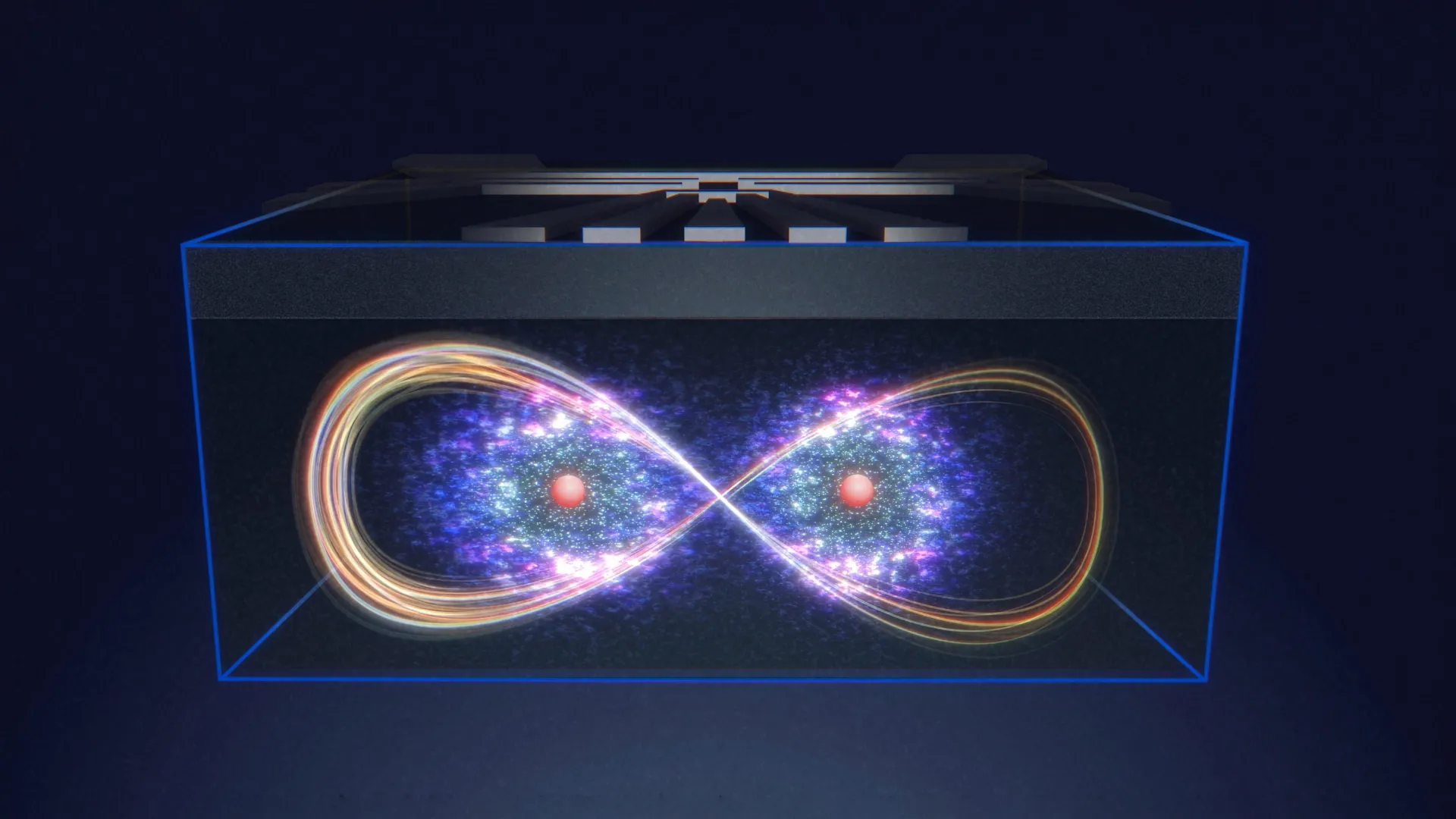
The ingenious mechanism behind this breakthrough involves encoding digital information directly into the very fabric of light itself. Specifically, the researchers manipulate the amplitude and phase of light waves. Amplitude refers to the intensity or brightness of the light, while phase describes the position of a point in time on a waveform. By subtly altering these properties, numerical data is effectively transformed into physical variations within the optical field. As these intricately encoded light waves interact within the optical system, they automatically and intrinsically perform the complex mathematical procedures that are essential for deep learning and other AI applications, such as matrix and tensor multiplication.
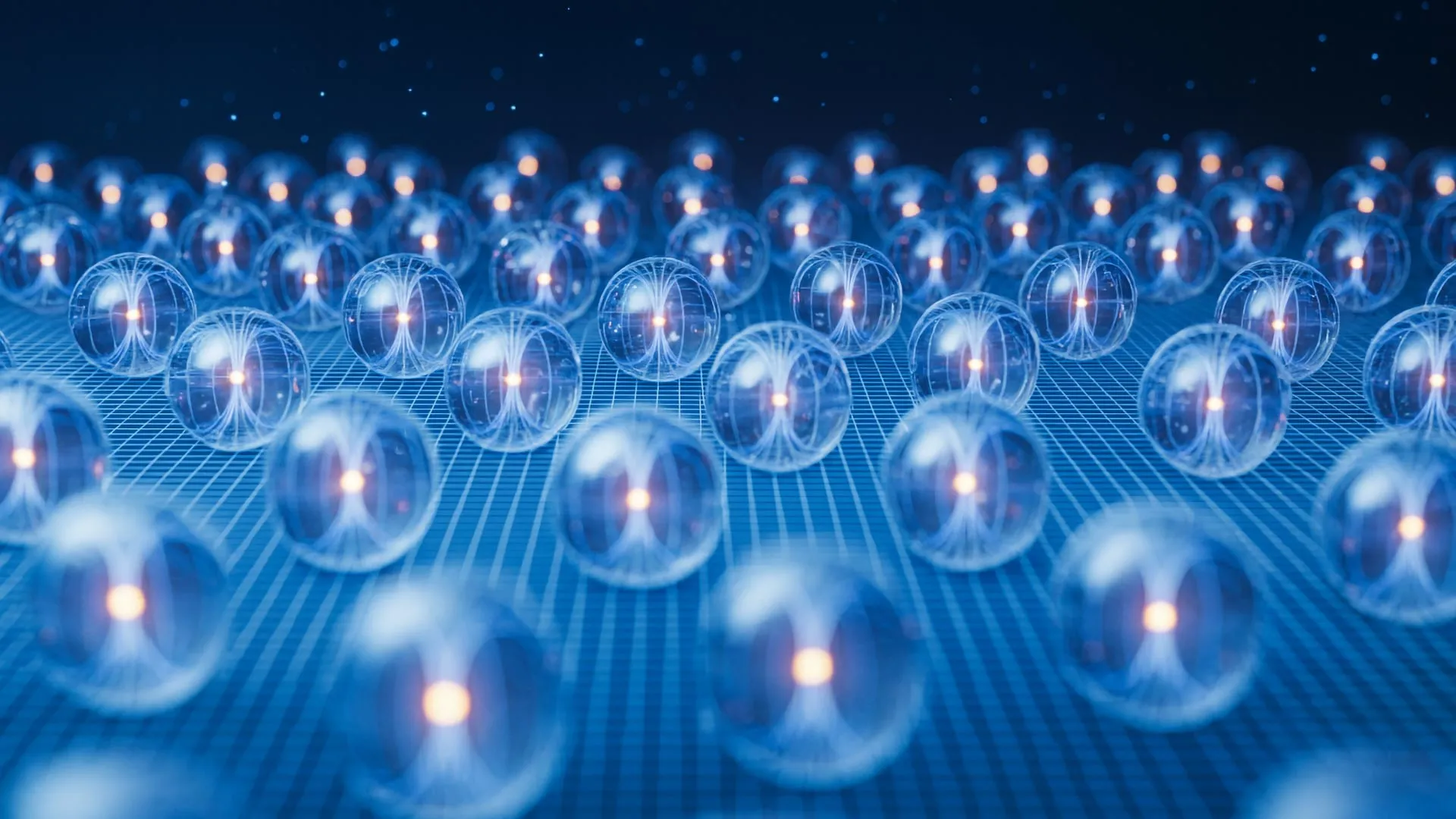
To further amplify the capabilities of their system, the researchers ingeniously employed multiple wavelengths of light. Each wavelength can be independently modulated and used to carry distinct sets of information. This multi-wavelength approach significantly expands the technique’s capacity, allowing it to support even more complex, higher-order tensor operations, which are crucial for tackling the most demanding AI challenges.
Dr. Zhang offered a vivid analogy to illustrate the profound implications of their method: "Imagine you’re a customs officer who must inspect every parcel through multiple machines with different functions and then sort them into the right bins. Normally, you’d process each parcel one by one. Our optical computing method merges all parcels and all machines together – we create multiple ‘optical hooks’ that connect each input to its correct output. With just one operation, one pass of light, all inspections and sorting happen instantly and in parallel." This analogy powerfully conveys the simultaneous, parallel processing that is the hallmark of optical computing and its departure from sequential, step-by-step digital processing.
A particularly compelling advantage of this novel approach is its inherent simplicity and minimal need for external intervention. The complex mathematical operations are not "performed" in the traditional sense by external logic gates or processors. Instead, they emerge naturally as a consequence of the physical interactions of light itself. As the light propagates through the designed optical system, the required tensor operations occur spontaneously. This "passive optical processing" means that the system does not require active control or complex electronic switching during the computation phase, further contributing to its efficiency and speed.
Professor Zhipei Sun, the distinguished leader of Aalto University’s Photonics Group, emphasized the broad applicability of this technology. "This approach can be implemented on almost any optical platform," he stated, underscoring its versatility. He further elaborated on the future trajectory of this research: "In the future, we plan to integrate this computational framework directly onto photonic chips, enabling light-based processors to perform complex AI tasks with extremely low power consumption." The integration onto photonic chips signifies a crucial step towards practical, miniaturized AI hardware.
The ultimate ambition for Dr. Zhang and his team is to ensure that this cutting-edge technique can be seamlessly integrated into the existing hardware and platforms currently utilized by major technology corporations. This strategic goal aims to accelerate the adoption of optical computing for AI and ensure its widespread impact. Dr. Zhang estimates that the method could be incorporated into such industrial systems within a remarkably short timeframe of three to five years, a testament to the maturity and robustness of their research.
"This will create a new generation of optical computing systems, significantly accelerating complex AI tasks across a myriad of fields," Dr. Zhang concluded with optimism. The implications are far-reaching, promising to unlock new capabilities and accelerate progress in virtually every sector that relies on advanced computation, from scientific research and engineering to finance and entertainment. This breakthrough represents a significant leap forward in the quest for more powerful, efficient, and sustainable AI, powered by the elegant and potent force of light.