Imroatul Nasiyah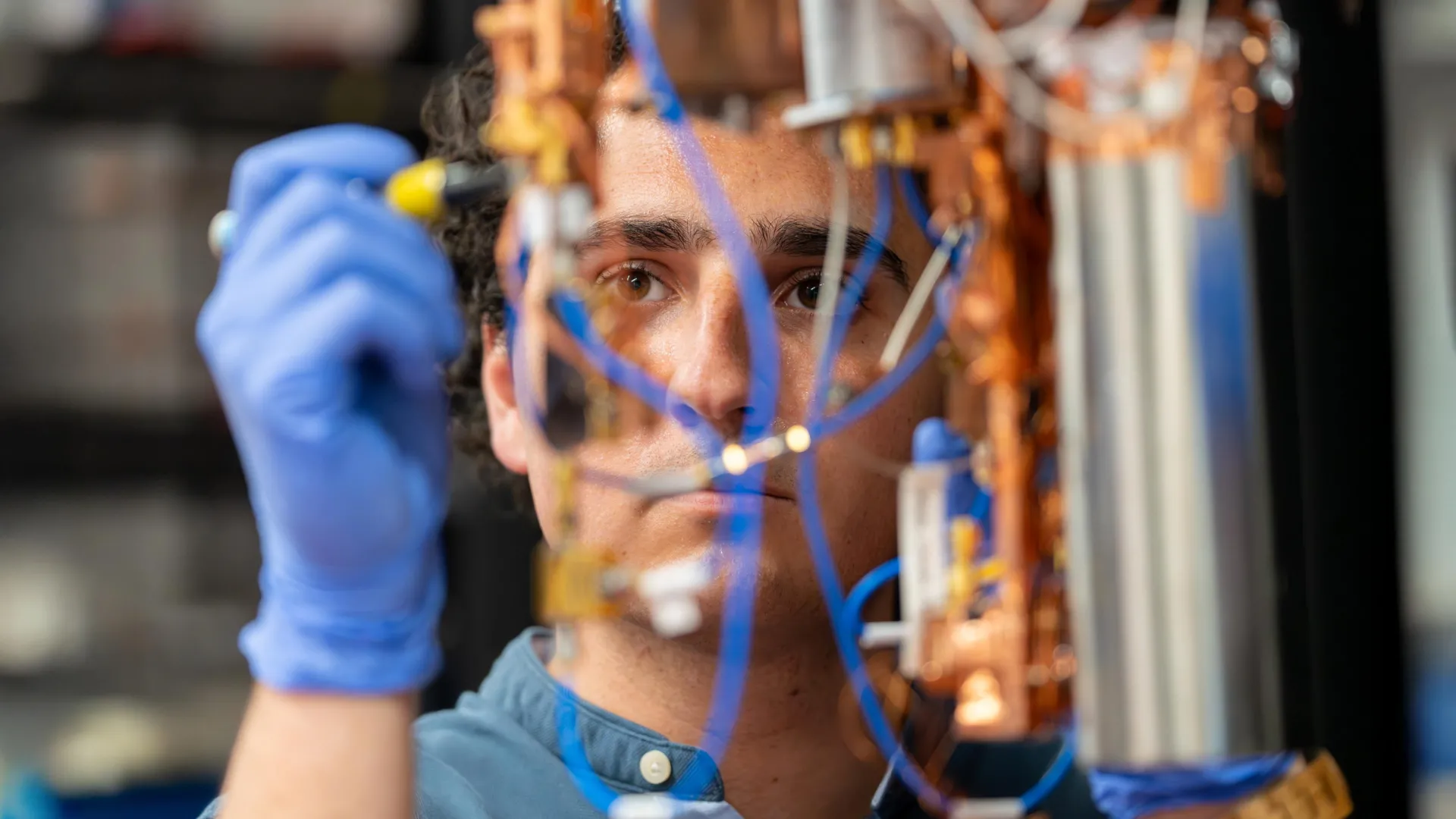
The quest to connect widely separated quantum bits, or qubits, has been a central challenge in the field of quantum information science. Entanglement, a cornerstone of quantum physics, describes a profound correlation between particles or systems, defying classical explanations. The ability to establish and maintain entanglement between physically distinct qubits is considered indispensable for scaling up quantum computers and for building robust quantum networks capable of secure communication and distributed quantum computation.
Historically, two primary strategies have been employed to achieve distributed entanglement. The first involves sending a single, actively controlled photon from one qubit to another, requiring precise manipulation and timing. The second strategy, which garnered the 2022 Nobel Prize in Physics, involves each qubit emitting a photon, with subsequent efforts to "match" these photons to induce entanglement. While this latter approach has shown promise, it has been hampered by its reliance on iterative measurements and a process called post-selection, where only successful entanglement events are kept. Even with these measures, the success rate for generating entanglement has often been suboptimal, representing a significant hurdle for practical applications.
The pioneering work at ISTA, led by PhD student Alejandro Andrés-Juanes and Professor Johannes Fink, alongside international collaborators, offers a compelling alternative. Their system utilizes a unique "quantum bath" that, through its inherent properties, guides separated qubits into a synchronized, entangled state. In their experimental prototype, the researchers ingeniously employed a shared source of correlated light particles. This setup effectively allowed them to entangle two physically separated qubits, realizing a concept that had remained largely theoretical for more than twenty years. This achievement signifies a paradigm shift in how distributed entanglement can be generated, moving away from active intervention towards a more passive, yet profoundly effective, method.
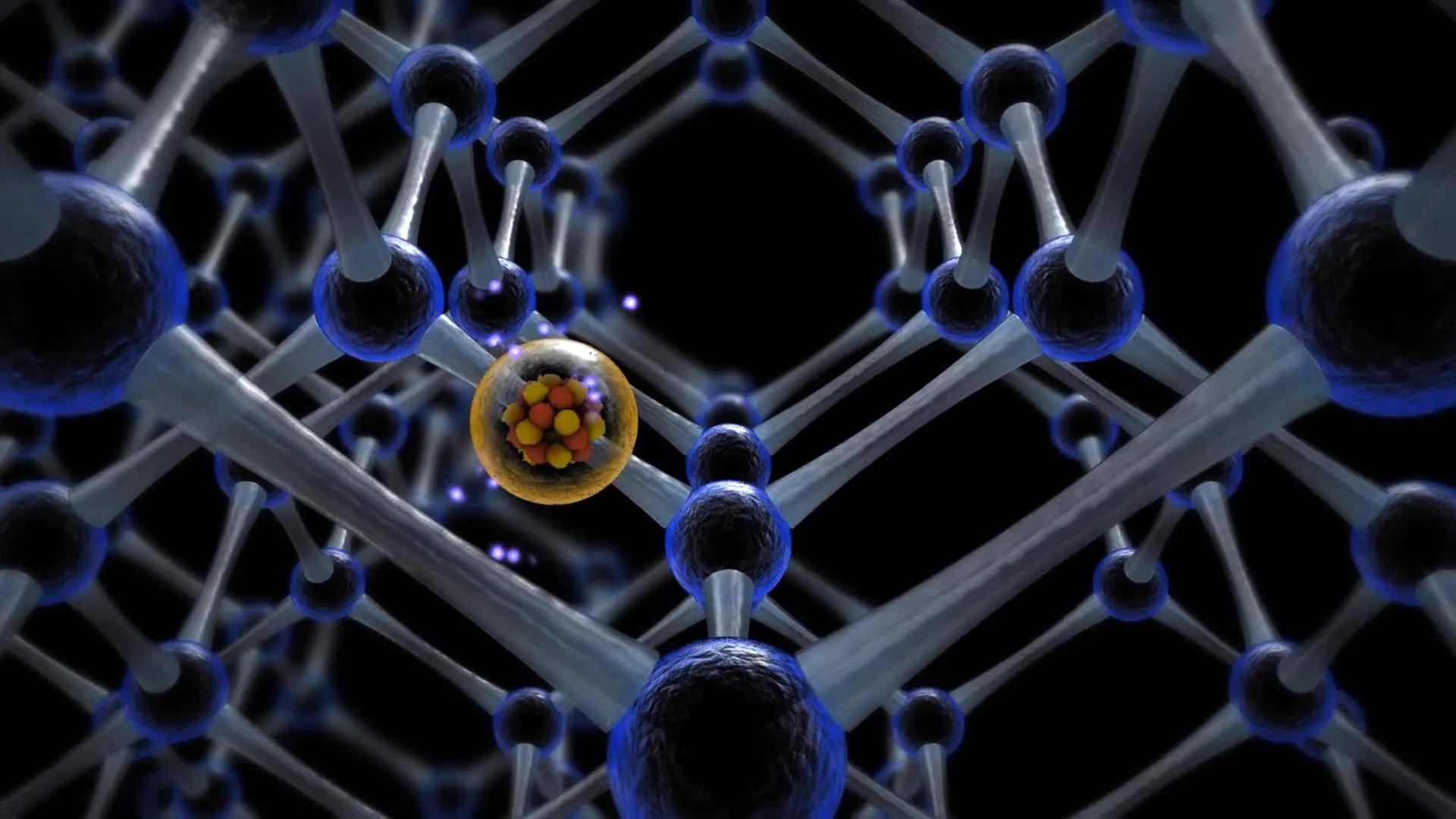
Quantum entanglement manifests in various forms, with continuous-variable (CV) entangled states being relatively accessible due to their efficient production. These CV states can be conceptualized akin to a pendulum, where continuous properties like position and momentum are intrinsically linked. However, many of the most promising quantum technologies, particularly those aiming for fault tolerance and complex computation, rely on "discrete-variable" (DV) systems. These systems utilize the distinct, ‘all-or-nothing’ states of stationary qubits, which are more amenable to logical operations. The core challenge that the ISTA team set out to address was bridging this gap – finding a way to elegantly connect the readily available and efficiently produced CV entanglement with the practically essential DV entanglement required for advanced quantum applications.
"In this work, we aimed to overcome this mismatch between the readily available and the practically useful forms of entanglement," states Andrés-Juanes. "By stabilizing the entangled states remotely, our approach is fully autonomous and requires no active control or measurement." This autonomy is a key differentiator, promising to simplify the complex infrastructure currently associated with quantum entanglement generation.
One of the most persistent challenges in advancing quantum computing is the delicate nature of quantum states, which are susceptible to decoherence – the loss of quantum properties due to interaction with the environment. Maintaining both entanglement and quantum coherence is paramount. The ISTA researchers tackled this problem by ingeniously making the qubits’ surrounding environment, the quantum bath itself, the primary agent for producing and stabilizing entanglement.
"In our method, the quantum bath — meaning the qubits’ environment — is the source of entanglement. It creates a new ground state through a continuous stream of correlated photons," explains Fink. "This way, the entangled qubit state is stabilized, even beyond the qubits’ own ‘lifetime’, and remains always available as a resource for further quantum processing. This makes the approach conceptually significant." The implication of a continuously available entangled state is profound. Unlike transient entanglement that must be utilized within a fleeting window of existence, this stabilized entanglement can be accessed on demand, offering a more robust and flexible resource for quantum computations.
The coupling of the qubits to this entangled photon source was achieved using microwave photons. These low-energy light particles are exceptionally well-suited for manipulating quantum information and are already integral to the leading superconducting-qubit technologies. This choice of microwave photons aligns seamlessly with existing experimental platforms, potentially accelerating the integration of this new entanglement generation method into current quantum computing architectures. While optical photons, commonly used in optics and atomic physics, are also being investigated for carrying quantum information over long distances through fiber optics, the ISTA team’s focus on microwave photons for intra-system entanglement highlights a strategic approach to leveraging existing quantum hardware.
To definitively confirm that the two separated qubits were indeed synchronized within the quantum bath, the researchers employed quantum tomography. This powerful technique involves reconstructing the quantum state of a system by performing a series of measurements from various perspectives, effectively creating a detailed "map" of the quantum state. "Qubits can be in a superposition of states, but all these states collapse when we measure them, leaving us with a 0 or 1 state," notes Andrés-Juanes. Quantum tomography allows scientists to circumvent this collapse during the measurement process, enabling them to infer the underlying quantum states from brief, albeit numerous, measurements. The ISTA team successfully used quantum tomography with measurements lasting a mere 20 to 80 nanoseconds – billionths of a second – to investigate the qubits’ hidden quantum states.
The successful demonstration of entangling two isolated qubits through a quantum bath represents a significant experimental validation of a theoretical proposal that has been on the books for over two decades. "We present a relatively simple method that could be scaled up to synchronize multiple distant qubits," says Andrés-Juanes, underscoring the potential for broader application. While this new approach holds immense promise, it’s important to acknowledge its current limitations. The method currently transfers approximately 10% of the bath’s available entanglement, indicating that its efficiency is not yet on par with actively controlled methods.
The researchers suggest that the long gestation period for this theoretical idea to become an experimental reality might be attributed to the idealized conditions under which the original theory was formulated, conditions that are inherently difficult to replicate in a laboratory setting. "Our experiments helped us reveal several factors that may have prevented scientists from designing a functional quantum bath using a single source of correlated photons for distributed entanglement," says Fink. These insights are invaluable for future research and development in this area.
The prototype developed at ISTA is more than just a proof of concept; it opens up new avenues for quantum optics experiments and could play a pivotal role in efforts to expand the scale and capabilities of quantum processors. Ultimately, this work moves the field closer to realizing fault-tolerant quantum computation, a milestone that would unlock unprecedented computational power for scientific discovery and technological innovation. The "quantum bath" approach represents a significant stride towards making the promise of quantum computing a widespread reality.