Faris Adani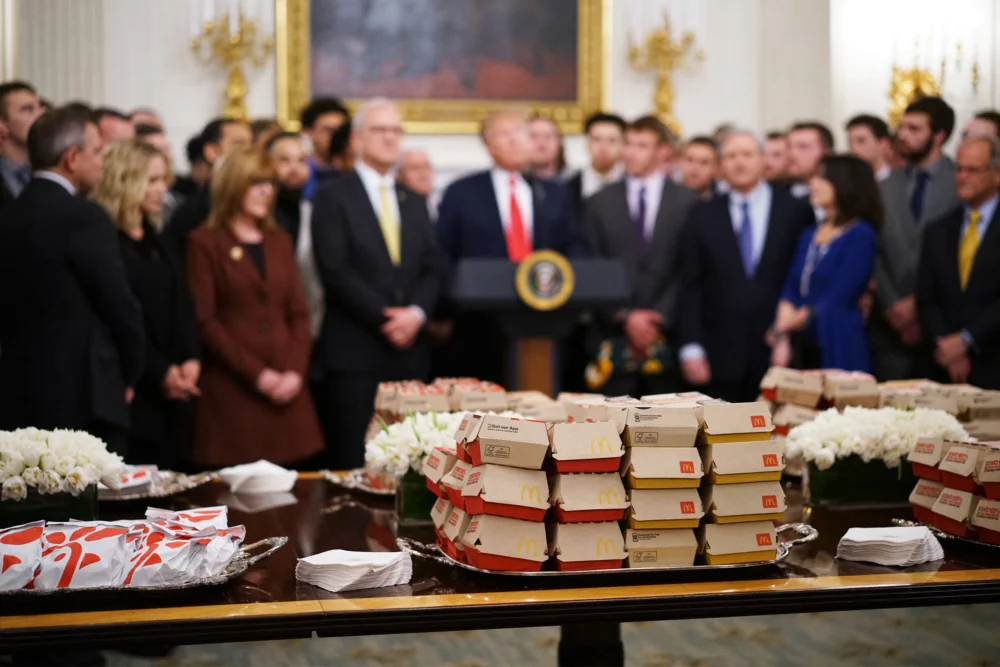
The political landscape is often a stage for unexpected alliances and peculiar revelations, but few could have predicted the health secretary, Robert F. Kennedy Jr., a figure synonymous with alternative wellness theories and controversial health stances, expressing profound astonishment at the dietary habits and seemingly miraculous constitution of his boss, President Donald Trump. Kennedy, whose own public image is interwoven with discussions of anti-vaccine conspiracy theories, a past brain parasite, the use of nicotine pouches, and the consumption of the synthetic dye methylene blue, recently voiced his bewilderment over how President Trump maintains his vitality despite a diet Kennedy describes as "pumping himself full of poison."
Kennedy’s own journey into the public consciousness has been marked by a blend of ancestral political legacy and deeply unconventional, often scientifically disputed, health advocacy. Descended from one of America’s most storied political dynasties, RFK Jr. has, in recent years, carved out a niche as a vocal proponent of vaccine skepticism, a position that has drawn sharp criticism from mainstream medical and public health organizations. His personal health regimen has also raised eyebrows, including a widely publicized revelation about a cyst in his brain, which he attributed to a parasitic infection, and his endorsement of practices like ingesting methylene blue, an industrial dye sometimes used off-label for various health claims but without broad scientific backing for self-treatment. This backdrop of his unique and often controversial health philosophy makes his observations on President Trump’s diet particularly striking, presenting a fascinating intersection of contrasting wellness paradigms within the highest echelons of government. His reported use of nicotine pouches, a smokeless tobacco product, and even past allegations of smoking DMT (Dimethyltryptamine), a powerful psychedelic, further cement his image as a figure far removed from conventional health norms, lending a certain ironic weight to his commentary on others’ dietary choices.
The candid remarks from the health secretary emerged during a recent appearance on the Katie Miller Podcast, hosted by the wife of Stephen Miller, who serves as the homeland security advisor to the White House. This platform, often favored by conservative voices, provided the unexpected setting for Kennedy to pull back the curtain on the President’s daily sustenance. With a mix of concern and grudging admiration, Kennedy recounted his observations, articulating a sentiment that many, both allies and critics of Trump, have privately pondered. "He eats really bad food," Kennedy bluntly stated, detailing a regimen heavily reliant on "McDonald’s, and, you know, candy and Diet Coke. But he drinks Diet Coke at all times." The sheer volume and consistency of this intake evidently left Kennedy dumbfounded, leading him to a striking conclusion: "He has the constitution of a deity — I don’t know how he’s alive, but he is." This statement, delivered by a man who champions "clean" living and often rails against industrial food, underscores the extraordinary nature of Trump’s apparent resilience.
President Trump’s affinity for fast food, particularly McDonald’s, is not a newfound revelation; it has been a well-documented aspect of his public persona for years. Reports from his first term detailed a White House kitchen stocked with an array of McDonald’s and KFC offerings, a stark contrast to the farm-to-table ethos often associated with presidential residences. This preference, according to Kennedy, is not merely a matter of taste but a calculated choice, especially when traveling. Kennedy elaborated that while Trump might partake in "really good food" when ensconced in familiar, controlled environments like his Mar-a-Lago estate, these habits conspicuously vanish on the road. "If you travel with him you get this idea that he’s just pumping himself full of poison all day," Kennedy explained to Miller. He attributed this paradoxical behavior to a specific rationale: "He wants to eat food from big corporations because he trusts it and he doesn’t want to get sick when he’s on the road." This explanation suggests a unique form of food safety protocol for the President, where the standardized, mass-produced nature of corporate fast food is perceived as a safer bet against potential contamination or sabotage than local, perhaps less regulated, alternatives. This reliance on globally recognized brands like McDonald’s, with their consistent production lines and ingredient sourcing, offers a predictable, if nutritionally questionable, option that Trump seemingly prioritizes for security and consistency above all else. The ubiquitous presence of Diet Coke, an artificial sweetener-laden beverage, further compounds the picture of a diet that defies conventional nutritional wisdom, raising questions about its long-term impact on metabolic health, bone density, and gut microbiome, especially for an individual in his late seventies.
The conversation about President Trump’s diet inevitably converges with the broader, and often heated, debate surrounding his overall health, particularly since he embarked on his second term in office. At 79, Trump is the oldest person to ever be elected president in US history, a superlative that naturally invites increased scrutiny of his physical and cognitive well-being. This age factor has, according to various reports and observations from critics, been accompanied by several concerning complications. Public appearances have occasionally featured instances of what observers describe as daytime fatigue, with the President appearing less energetic or focused than might be expected. More visibly, unexplained bruising on his left hand has sparked medical speculation and public concern, with experts pondering causes ranging from minor trauma to potential side effects of blood thinners, common in older adults. Perhaps most contentious are the persistent claims from his political adversaries and some media outlets regarding observable cognitive decline. These criticisms often point to instances of verbal missteps, apparent memory lapses, or convoluted speech patterns during rallies and interviews, fueling a narrative of diminished capacity.
Further adding to the mystique surrounding Trump’s health was a mysterious CT scan, the results of which the President himself has reportedly "struggled to explain." This lack of transparency only served to deepen public apprehension and fuel speculation, creating a void that critics were quick to fill with their own interpretations. While the administration steadfastly insists that Trump remains "perfectly fit" and in excellent health, these public observations and unanswered questions continue to cast a shadow over their assurances. The juxtaposition of a presidential diet rich in fast food, candy, and diet soda against the demanding, high-stress realities of the nation’s highest office creates a complex health narrative. While the administration dismisses scrutiny of his age and fitness as politically motivated, the medical community broadly agrees that such a diet is generally detrimental to cardiovascular health, contributes to inflammation, and can exacerbate issues like fatigue and cognitive function, especially in older individuals.
The irony of RFK Jr.’s astonishment is palpable. Here is a man whose own health practices exist on the fringes of conventional medicine, yet he expresses genuine bewilderment at the longevity of a president whose diet represents the antithesis of "clean" eating. This paradox highlights the subjective and often contradictory nature of health beliefs, even among those who position themselves as authorities on well-being. Kennedy’s remarks, while anecdotal, offer a rare glimpse into the private observations of a high-ranking official concerning the President’s personal habits, inadvertently reigniting the perennial public fascination with presidential health. The demands of the presidency are immense, and the physical and mental toll they exert on incumbents is a subject of continuous public interest.
Ultimately, Kennedy’s comments serve as more than just a passing observation; they underscore a fundamental disconnect between prevailing health recommendations and the lived reality of one of the world’s most powerful figures. While the administration maintains a facade of unwavering health, the health secretary’s candid admission of astonishment at Trump’s ability to thrive on what he perceives as a "poisonous" diet speaks volumes. It leaves the public to ponder whether the President truly possesses a "constitution of a deity," or if his remarkable resilience is simply defying, for now, the expected consequences of a diet that, by almost any health standard, is far from ideal. The Big Macs, candies, and incessant Diet Cokes, by Kennedy’s own account, certainly aren’t contributing positively to his longevity, making his survival a perplexing enigma to even the most unconventional of health secretaries.