Faris Adani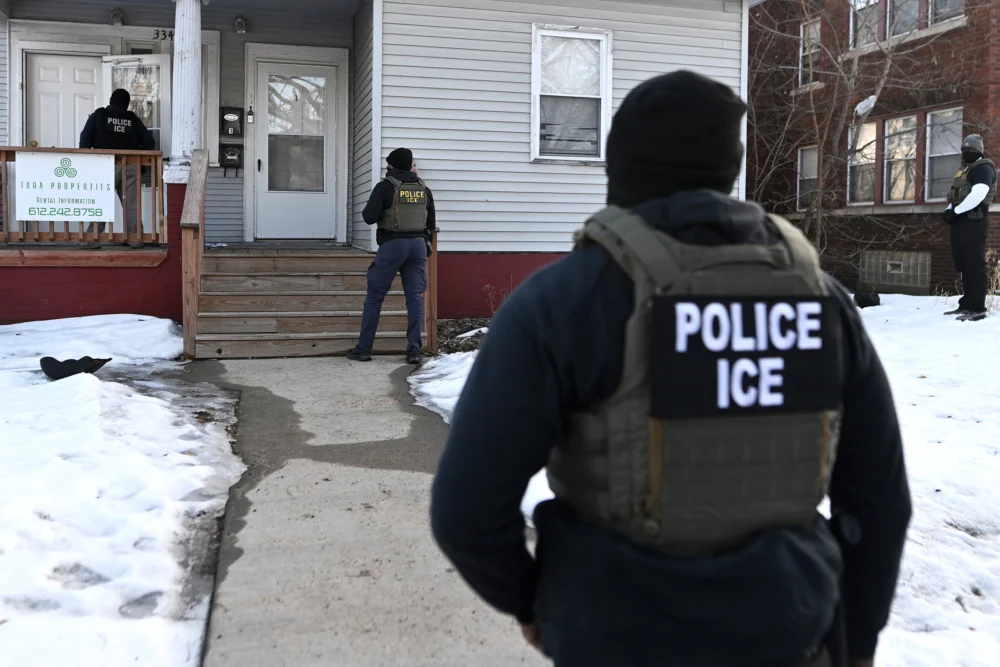
ICE Reportedly Stole a 10th Grader’s Phone, Then Seemingly Sold It for Cash.
In a chilling development that underscores growing concerns about the conduct of Immigrations and Customs Enforcement (ICE) agents, new investigative reporting by ProPublica has revealed an alarming incident where federal agents not only subjected a teenage boy to a suffocating chokehold but also appeared to have stolen and subsequently sold his confiscated mobile phone for profit. This egregious act is part of a broader pattern of documented abuses, including the use of excessive force and tactics that obstruct breathing, against civilians, as detailed in ProPublica’s extensive findings that outline over forty such cases.
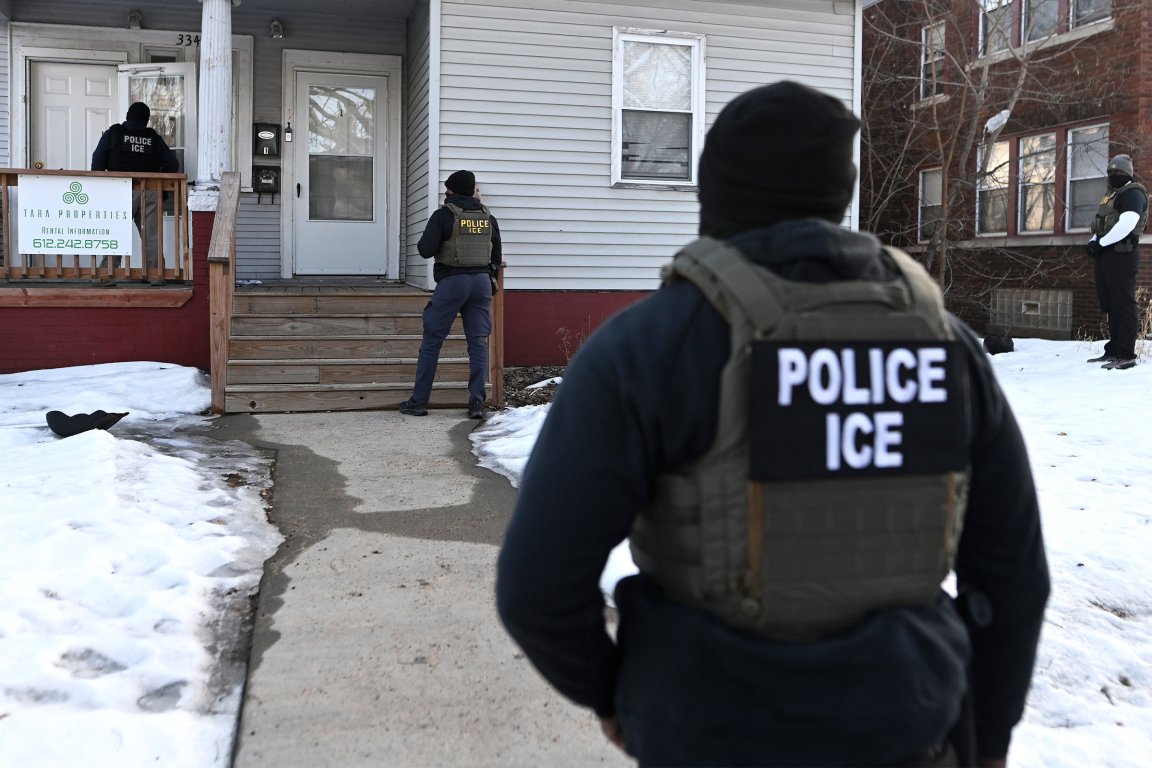
The incident at the heart of this particular revelation involved Arnoldo Bazan, a 16-year-old tenth grader, and his father, Arnulfo Bazan Carrillo. The pair was simply grabbing a meal at McDonald’s when their lives were violently disrupted. Masked ICE agents initiated a stop, quickly escalating the situation. Arnulfo Bazan Carrillo, who is undocumented, was reportedly tackled to the ground with brutal force, an agent pressing a knee into his neck, a maneuver widely recognized for its potential to cause severe injury or death. As his father was being apprehended, Arnoldo, a U.S. citizen, attempted to document the encounter on his phone. In response, an agent allegedly placed the minor in a chokehold, cutting off his airway. Arnoldo recounted to ProPublica the terrifying moments, stating, “I started screaming with everything I had, because I couldn’t even breathe. I felt like I was going to pass out and die.” Despite his desperate cries and his assertion of being a citizen and a minor, the agent did not release him.
Following his detention, Arnoldo’s phone, which contained crucial footage of the incident, was confiscated by ICE agents. What happened next speaks volumes about the alleged culture within some segments of the agency. After his release, Arnoldo used his device’s “Find My” feature, a common tool for locating lost or stolen electronics. To his astonishment, the feature led him not to an ICE evidence locker or a federal facility, but to a vending machine specializing in used electronics, located several miles away and notably close to an ICE detention center. The implication was stark and disturbing: someone, presumably the agents who had confiscated it, had sold Arnoldo’s phone for cash. This act transforms what might have been perceived as a standard confiscation into an alleged theft for personal gain, an act typically associated with common criminality rather than federal law enforcement.
The sheer audacity of such an act immediately drew sharp reactions. Tech journalist Mike Masnick, commenting on the report, succinctly captured the public’s disbelief: “Not the key part of this story, obviously, but they *sold* his phone?” ProPublica itself underscored the gravity of this detail, clarifying that “immigration agents not only took Arnoldo’s phone, the 10th grader had to use Find My Phone to locate it — in a vending machine for used electronics, close to an ICE detention center.” This detail, while perhaps not the most physically violent aspect of Arnoldo’s ordeal, serves as a stark metaphor for a perceived lack of accountability and ethical boundaries within ICE.
This incident involving Arnoldo Bazan is not isolated but rather fits into a disturbing mosaic of ICE actions that have recently garnered significant public and media attention. Just a week prior to these revelations, the agency faced intense scrutiny following the fatal shooting of 37-year-old Renee Good by veteran ICE agent Jonathan Ross in Minneapolis. Good was shot in her car after she reportedly began turning her vehicle away from the officer. In the immediate aftermath, the agent’s callous disregard for human life was laid bare when he was heard on video calling Good a “f**king b**ch.” This tragedy ignited widespread protests and intensified calls for accountability for ICE’s increasingly visible and often brutal presence in several U.S. cities, where agents have been documented brutalizing civilians, wantonly detaining both citizens and non-citizens, and clashing with onlookers and protestors. The incident became a flashpoint, highlighting the perceived militarization of ICE and its agents’ often aggressive tactics.
The political response to the Minneapolis shooting further exacerbated public outrage. President Trump openly defended the agent’s actions, going so far as to accuse Good of behaving “horribly” and falsely asserting that she had not simply tried to run the agent over, but had “actually done so.” This claim directly contradicted every available shred of video evidence, which showed Good turning away from the agent, not attempting to strike him. Such a strong presidential endorsement of an agent’s controversial actions, despite clear evidence to the contrary, was seen by many as emboldening federal agents and eroding public trust in institutions meant to uphold justice and truth. It underscored a concerning trend where political rhetoric appeared to sanction, rather than condemn, excessive force.
The aftermath of the encounter was devastating for Arnoldo and his family. After being detained and subsequently released by ICE, Arnoldo was immediately taken to Texas Children’s Hospital. The medical staff, identifying clear signs of the chokehold, swiftly moved him to a trauma unit. Hospital records obtained by ProPublica indicate that doctors ordered dozens of CT scans and X-rays, specifically targeting his head, neck, and spine, to assess the extent of his injuries. The physical trauma was compounded by severe emotional distress. Furthermore, Arnoldo’s family revealed a shocking coercive tactic employed by the agents: they allegedly threatened to charge Arnoldo with assaulting an officer if his father did not agree to be deported. Under immense pressure, Arnulfo Bazan Carrillo ultimately conceded, and he is now in Mexico, leaving his family separated and Arnoldo grappling with the physical and psychological scars of the encounter.
These incidents raise critical questions about the ethical and legal boundaries of federal immigration enforcement. The alleged theft and sale of a minor’s personal property by federal agents is a profound breach of public trust and potentially a criminal act. It suggests a disturbing level of impunity and a fundamental disregard for the rights of individuals, including U.S. citizens. For a federal agency tasked with upholding laws, engaging in what appears to be petty theft undermines its legitimacy and fuels arguments for greater oversight and reform. The use of chokeholds, especially on a minor citizen, represents a severe violation of human rights and established police protocols, which generally ban such dangerous techniques due to their high risk of fatality.
The overarching narrative painted by ProPublica’s investigation is one of an agency operating with considerable latitude, often employing aggressive and potentially unlawful tactics against a vulnerable population, sometimes with devastating consequences for families and individuals. The incidents with Arnoldo Bazan and Renee Good serve as potent examples of a system that appears to lack sufficient accountability, where agents are seemingly emboldened by political rhetoric and operate under what many perceive as a veil of immunity. The implications extend beyond individual cases, affecting the broader discourse on civil liberties, the rule of law, and the role of federal agencies in a democratic society. The call for thorough investigations, disciplinary actions, and systemic reforms within ICE grows louder with each new revelation of alleged misconduct, aiming to restore trust and ensure justice for those impacted by such abuses of power.