isnaini azizah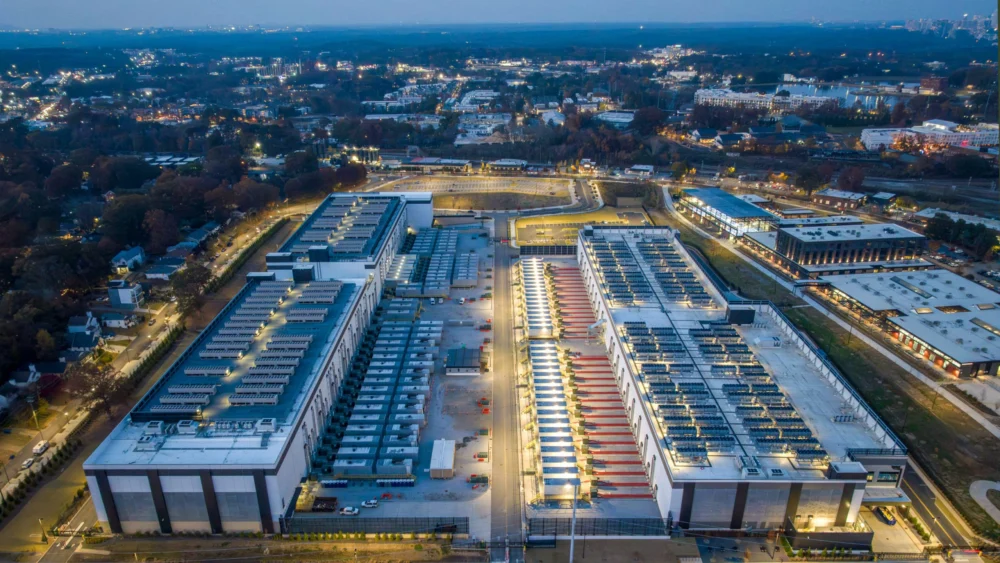
Behold, the hyperscale data center, a monumental testament to the burgeoning era of artificial intelligence. These aren’t just buildings; they are colossal engines of computation, housing thousands of specialized computer chips meticulously engineered to perform the intricate calculations demanded by advanced AI models. A single facility can sprawl across millions of square feet, a concrete and steel behemoth weighing millions of pounds, interlaced with hundreds of miles of wiring that connect hundreds of thousands of high-end Graphics Processing Units (GPUs). The sheer computational power generated is staggering, consuming hundreds of megawatt-hours of electricity and generating immense heat that necessitates cooling systems of unparalleled engineering complexity. At the heart of this technological marvel are the chips themselves, processors that can command prices upwards of $30,000 each. When orchestrated in vast arrays, these processors work in concert to process hundreds of thousands of tokens – the fundamental building blocks of AI models – every second. The raw power and potential are undeniable.
Yet, a paradox is emerging: the very communities that stand to benefit from these technological advancements are increasingly voicing their opposition. Consider Georgia, a state characterized by its diverse political landscape, from its progressive urban centers to its conservative rural areas. Here, a surprising consensus seems to have formed: a collective exhaustion with the proliferation of data centers. This sentiment became palpably evident in the state’s Public Service Commission elections, which saw a stunning upset of incumbent Republican commissioners. While national political tides undoubtedly played a role, the escalating cost of electricity emerged as a central, unifying issue for voters. This surge in power bills was widely attributed to a data center construction boom, a phenomenon rivaled only by that in Virginia.
This data center surge was not accidental. Georgia’s political leadership, at one point, actively courted these facilities. In 2018, the state’s General Assembly enacted legislation offering substantial incentives, including tax breaks on computer systems and cooling infrastructure, additional breaks for job creation, and even property tax reductions. The intention was clear: to foster a thriving data center industry. And foster it they did, leading to a rapid and widespread expansion.
However, the reality on the ground has not aligned with the optimistic projections of state lawmakers and elected officials. Take the case of Bolingbroke, Georgia, a small town near Atlanta in Monroe County. County commissioners were considering rezoning a significant tract of 900 acres to accommodate a new data center close to Bolingbroke, a town with a population of just 492. While data centers have been appearing across the state, their concentration has been particularly noticeable in areas surrounding Atlanta. Often, public opinion has been a secondary consideration. In nearby Twiggs County, despite vocal and organized opposition, officials approved a 300-acre data center. But in Bolingbroke, the tide of public sentiment was undeniable. At a packed meeting to discuss the proposed development, an estimated 900 residents turned out to express near-unanimous opposition, according to local reporting. Faced with this overwhelming outcry, the Monroe County Commission ultimately rejected the rezoning proposal in August of the previous year.
The developers of the Bolingbroke site had presented a compelling case, touting millions of dollars in county revenue, promises of the facility being hidden from view, adherence to stringent environmental standards, and the creation of jobs and prosperity. Despite these assurances, the community’s response was overwhelmingly negative. This raises a crucial question: Why, in an era of rapid technological advancement, has there been such a visceral backlash against these seemingly beneficial infrastructure projects?
What is it about these engineering marvels, capable of unlocking AI’s potential to cure diseases, foster unprecedented prosperity, and even, as some proponents suggest, cheat death, that so ignites the ire of their prospective neighbors? The reasons are multifaceted, encompassing both practical concerns and deeper societal anxieties.
The sheer speed and scale of data center construction have had a tangible impact on power grids. Residents are acutely aware of rising electricity bills, often viewing these escalating costs as a direct consequence of the data centers, a perceived imposition by distant, wealthy corporations benefiting at their expense. In Wyoming, for instance, a planned Meta data center is projected to consume more electricity than every household in the state combined. Utilities, tasked with meeting this insatiable demand, are compelled to expand grid capacity. While this expansion may serve the interests of tech companies, the financial burden is ultimately shared by local consumers.
Environmental concerns are also a significant driver of opposition. To meet their immense energy needs, data centers frequently rely on less-than-ideal energy sources. xAI, for example, controversially deployed polluting methane-powered generators at its Memphis facility. While nuclear energy is often touted as a cleaner alternative, traditional plants require over a decade to build, and even next-generation reactors will take years to come online. Furthermore, data centers are notoriously water-intensive, though the exact quantities are often obscured by corporate secrecy, prompting legislative efforts in several states to mandate disclosure of water usage. Beyond these resource-related issues, data centers introduce another environmental consequence: noise. A constant, low, mechanical hum, operating 24 hours a day, 365 days a year, has been described by residents as "a highway that never stops."
The economic benefits, specifically job creation, also fall short of expectations. Once construction is complete, data centers tend to employ a remarkably small number of people relative to their resource footprint. This discrepancy between promised prosperity and actual employment opportunities fuels further disillusionment.
These are all logical, quantifiable reasons to oppose data center development. However, I suspect there’s an additional, more visceral, emotional undercurrent at play, one that echoes historical sentiments of resistance against technological upheaval.
Over a decade ago, the tech giants of Silicon Valley began operating shuttle buses to transport their employees from San Francisco and surrounding Bay Area cities. Much like data centers today, these buses utilized shared public resources like roads without, in the public’s view, contributing their fair share. This sparked protests. While the protests certainly addressed issues of resource allocation, they tapped into something far more profound.
The early 2010s were a period of rapid gentrification in San Francisco, driven in no small part by the burgeoning tech industry, which was fundamentally reshaping society. The ubiquity of smartphones and the transformative impact of new technologies on daily life left many feeling powerless to resist the sweeping changes. The sentiment was palpable: "You couldn’t stop Google."
But, crucially, "you could stop a Google bus." The buses became a tangible symbol of the tech industry’s pervasive influence and a focal point for public frustration. People could physically block their path, confront the passengers, and demand action from their elected officials. In San Francisco, these efforts led to the regulation of these tech buses.
The current backlash against data centers bears a striking resemblance to this historical episode. We are told that AI is revolutionizing society, becoming an omnipresent force. Even if individuals consciously avoid direct engagement with AI tools like ChatGPT or Claude, generative AI is increasingly embedded in the applications and services they use daily. Concerns about AI’s potential to displace jobs, or even pose existential threats, are widespread. And for what, many ask? So far, the tangible returns on this societal transformation have, for many, failed to live up to the initial hype.
The feeling of powerlessness persists: "You can’t stop Google." Yet, perhaps, "you can stop a Google data center." This sentiment of localized resistance against a larger, seemingly unstoppable technological force is a powerful motivator.
However, history also offers a cautionary note. The tech buses in San Francisco, while regulated, remain a common sight, and the city has continued its trajectory of gentrification. Similarly, in Monroe County, life moves on. In October, Google confirmed its acquisition of 950 acres of land adjacent to the interstate, with plans to construct a data center. The tide of technological advancement, while met with local resistance, often proves remarkably persistent.