Faris Adani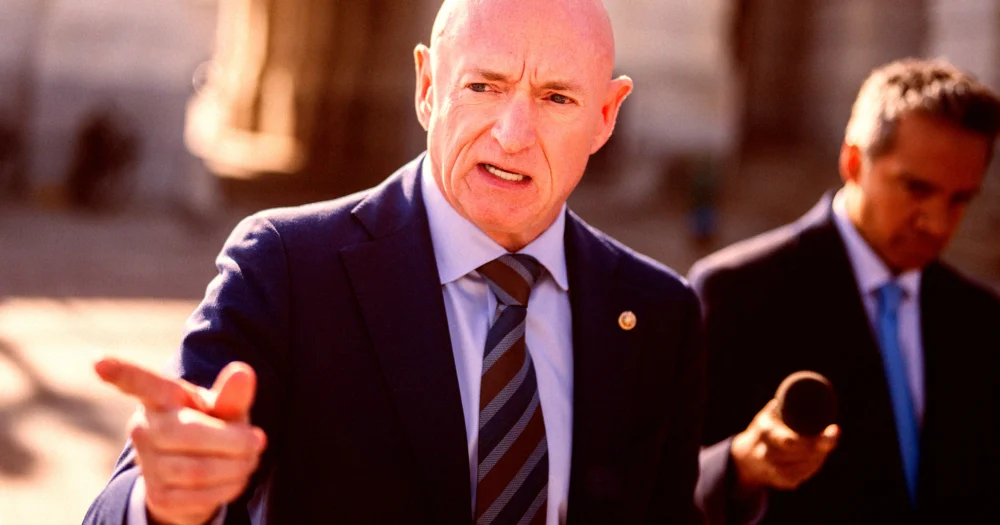
In a dramatic escalation of an already contentious political and legal battle, Senator and former NASA astronaut Mark Kelly has officially filed a lawsuit against Defense Secretary Pete Hegseth, accusing him of a profound violation of the US Constitution. This legal challenge comes in the wake of Hegseth’s move to demote Kelly and significantly cut his retirement pay, actions taken in retaliation for a video Kelly co-published, which encouraged military members to refuse what he termed "illegal orders." The dispute has ignited a fierce debate about free speech, military conduct, and the civil-military relationship, with profound implications for retired service members and the nation’s democratic principles.
The genesis of this high-stakes confrontation can be traced back to a 90-second video released on social media in November. In this video, Senator Kelly, alongside five other Democratic lawmakers, issued a stark warning and a call to action for military personnel. The message was unequivocal: members of the military should not comply with orders deemed illegal or unconstitutional. This video was directly linked to a broader and highly controversial context: ongoing US military operations against Venezuela. These operations, initially described as "attacks on individual boats," had, by the time of the video’s release, reportedly escalated into a full-scale invasion, encompassing strikes on the Venezuelan capital of Caracas and, critically, the alleged kidnapping of its president, Nicolás Maduro. The Democratic lawmakers behind the video framed their intervention as a defense of the Constitution, asserting that the administration was "pitting our uniformed military and intelligence community professionals against American citizens" and reminding service members of their oath to protect and defend the Constitution.
Defense Secretary Pete Hegseth’s reaction to the video was immediate and vociferous. He publicly denounced Kelly’s actions, accusing him of "seditious behavior." This condemnation was quickly amplified by President Donald Trump, who not only echoed Hegseth’s sentiments but went further, ominously "warning" that such behavior was "punishable by death" and even "implying" through reshared posts that figures like Kelly could face execution by hanging. The rhetoric from the highest echelons of government was stark, painting Kelly’s appeal to constitutional principles as an act of treason.
Initially, Hegseth had threatened "court-martial proceedings" against Kelly. Such a move would have been unprecedented for a sitting senator and retired officer, requiring Kelly to be recalled to active duty solely for the purpose of being prosecuted in a military court, as reported by the Wall Street Journal. While this specific threat has not yet materialized, Hegseth did take concrete punitive action. Just last week, he announced that Senator Kelly would be demoted and that his retirement pay, a significant component of his post-service income, would be "significantly cut." This decision served as the direct catalyst for Kelly’s legal counter-offensive.
Today, Mark Kelly delivered his response, filing a comprehensive lawsuit against Secretary Hegseth. The core of Kelly’s legal argument is that Hegseth’s actions constitute a direct violation of the US Constitution. In a powerful statement released shortly after filing the suit, Kelly articulated the profound implications of Hegseth’s decision. "His unconstitutional crusade against me sends a chilling message to every retired member of the military," Kelly stated. He elaborated on the chilling precedent this sets: "If you speak out and say something that the President or Secretary of Defense doesn’t like, you will be censured, threatened with demotion, or even prosecuted." This sentiment underscores the senator’s belief that Hegseth’s actions are an attempt to silence dissent and undermine the fundamental rights of free speech, even for those who have dedicated their lives to military service.
Senator Mark Kelly’s distinguished career provides a compelling backdrop to his current stand. He is not merely a politician but a decorated veteran and a celebrated astronaut. Kelly served for decades as an aviator in the US Navy, flying 39 combat missions and demonstrating exceptional bravery under fire. His transition to NASA saw him achieve the pinnacle of space exploration, flying on three Space Shuttle missions in the early 2000s, including commanding the final mission of Space Shuttle Endeavour in 2011. His retirement from NASA was prompted by a deeply personal tragedy: his wife, former Arizona Representative Gabby Giffords, was critically wounded in a 2011 assassination attempt. Since then, Kelly and Giffords have become prominent and outspoken advocates for stricter gun control measures, showcasing a consistent commitment to public service and principled advocacy. This history of service, both in uniform and in the public sphere, lends significant weight to his challenge against Hegseth.
Kelly further emphasized the long-term ramifications of Hegseth’s actions. "Pete Hegseth wants our longest-serving military veterans to live with the constant threat that they could be deprived of their rank and pay years or even decades after they leave the military just because he or another Secretary of Defense doesn’t like what they’ve said," Kelly asserted. He unequivocally rejected this precedent, stating, "That’s not the way things work in the United States of America, and I won’t stand for it." This highlights the core constitutional argument at play: whether the government can retrospectively punish retired military personnel for exercising their First Amendment rights, especially when those rights are exercised in a political capacity as a civilian.
The original video, which sparked this entire controversy, was carefully crafted to remind soldiers of their sworn duty to the Constitution. The Democratic lawmakers involved explicitly stated, "Like us, you all swore an oath to protect and defend this Constitution." They argued that the administration was creating a dangerous division between the military and American citizens, implying that the orders related to the Venezuela operations might transgress constitutional boundaries. The video was a direct appeal to the conscience of military professionals, urging them to prioritize their constitutional oath over potentially illegal directives from political leaders.
In response to Hegseth’s initial accusations of "despicable, reckless, and false" behavior, Senator Kelly had already issued a defiant statement in November. He recounted his extensive military and NASA service, emphasizing the sacrifices he had made for his country. "In combat, I had a missile blow up next to my jet and flew through anti-aircraft fire to drop bombs on enemy targets," he recalled. "At NASA, I launched on a rocket, commanded the space shuttle, and was part of the recovery mission that brought home the bodies of my astronaut classmates who died on Columbia." He concluded with a powerful declaration of his commitment and refusal to be intimidated: "I did all of this in service to this country that I love and has given me so much. I’ve given too much to this country to be silenced by bullies who care more about their own power than protecting the Constitution." This statement underscored his conviction that his actions were rooted in patriotism and a deep respect for the rule of law, not sedition.
The lawsuit filed by Senator Kelly against Defense Secretary Hegseth is poised to become a landmark legal battle. The stakes are extraordinarily high, touching upon fundamental principles of American democracy, including freedom of speech, the rights of retired military personnel, the separation of powers, and the delicate balance between civilian control of the military and the military’s adherence to the Constitution. Given Hegseth’s influential position within the White House and the administration’s strong stance on the Venezuela operations, the legal proceedings are expected to be protracted, contentious, and closely watched. The outcome of this case could redefine the boundaries of political speech for veterans and significantly impact the civil-military relationship for years to come. Regardless of the final verdict, Senator Kelly’s decision to fight back against what he perceives as an unconstitutional overreach has already sparked a critical national conversation about accountability, dissent, and the enduring power of an oath to the Constitution.
More on the fight: Former Astronaut Fires Back After Trump Threatens Him With Execution