Faris Adani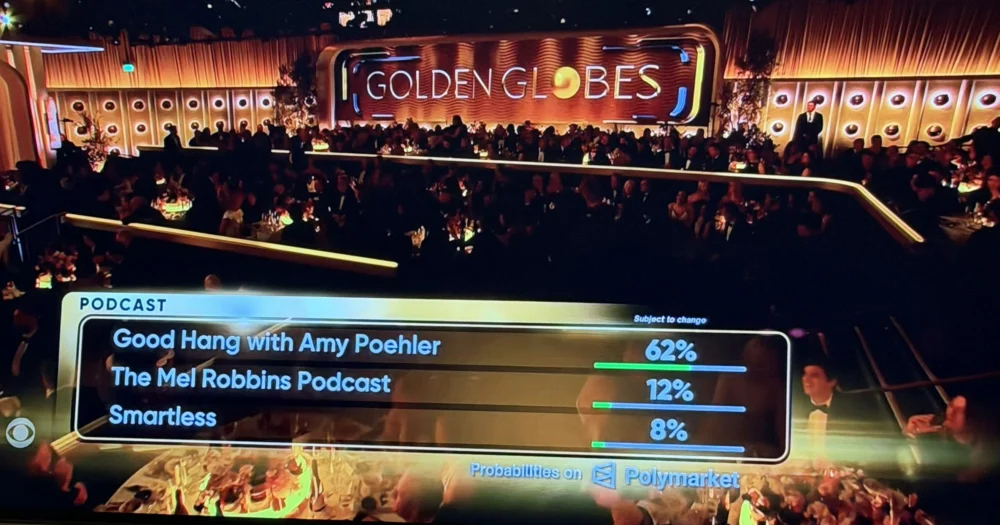
Golden Globes’ Desperate Embrace of Polymarket Bets Ignites Fury Amidst Economic Woes and Gambling Epidemic
In a troubling convergence of economic precarity and the burgeoning, unregulated world of online gambling, the 83rd Golden Globe Awards broadcast by CBS found itself at the epicenter of a storm of controversy. Despite official reports painting a picture of economic buoyancy, a stark reality of middle-class erosion persists, as economists issue stark warnings about a “jobless expansion” where job creation lags far behind job displacement. This unsettling economic backdrop, characterized by stagnant wages, escalating living costs, and an increasingly competitive job market, creates fertile ground for risky ventures, making the timing of the Golden Globes’ audacious partnership with the prediction market platform, Polymarket, particularly egregious.
The economic narrative, often presented through aggregate data, belies the lived experience of millions. While GDP figures might soar, and unemployment rates might appear low on paper, the underlying truth for many is a “K-shaped recovery.” This phenomenon sees the wealthy thrive, while the middle and lower classes struggle under the weight of inflation and a precarious labor market. Automation and technological advancements, rather than creating widespread new opportunities, often displace existing jobs, leaving a significant portion of the workforce feeling insecure and desperate. This struggle to make ends meet, a quiet crisis brewing beneath the surface of official optimism, primes individuals for quick-fix solutions, including the allure of high-stakes gambling.
It is within this volatile economic climate that the landscape of gambling has exploded. The repeal of the Professional and Amateur Sports Protection Act (PASPA) in 2018 unleashed a torrent of legalized sports betting across the United States, transforming what was once a fringe activity into a mainstream form of entertainment. Revenues have skyrocketed, with Reuters reporting a staggering 236% increase in US sports betting. However, this financial boom has a dark underbelly: a parallel surge in gambling addiction. Experts in public health and psychology are sounding alarms, noting the ease of access to online platforms, the aggressive marketing tactics, and the psychological hooks designed to foster compulsive behavior. The societal costs, ranging from personal financial ruin and mental health crises to family breakdown and increased crime, are immense and growing.
Taking this trend to an even more problematic extreme are online “prediction market” platforms like Polymarket and Kalshi. These platforms transcend traditional sports betting, allowing users to wager real money on an astonishing array of speculative events, from political outcomes and scientific breakthroughs to, controversially, geopolitical events like whether the US will invade Venezuela. What distinguishes these platforms, and amplifies their danger, is their relative lack of meaningful regulatory oversight. Unlike traditional financial markets or even regulated sportsbooks, prediction markets often operate in a legal grey area, leaving participants vulnerable to scams, market manipulation (including insider trading), and the very real prospect of financial ruin with little to no consumer protection. Their crypto-based infrastructure further complicates regulation and tracing, adding another layer of risk.
The entertainment industry, seemingly oblivious or perhaps complicit in these mounting concerns, has begun to embrace this worrying trend. The most prominent and recent example occurred during CBS’s broadcast of the 83rd Golden Globe Awards. During its Sunday evening telecast, the storied awards show featured a live ticker displaying Polymarket predictions for various award categories. This was not a subtle product placement but an explicit, on-screen integration, actively encouraging millions of viewers to gamble on the platform. For an awards ceremony that purports to celebrate artistic achievement, this overt promotion of speculative betting represented a profound commercialization and a shocking departure from its perceived mission.
The predictions themselves offered a mixed bag of outcomes, illustrating the inherent unpredictability and speculative nature of such markets. For instance, “Sinners” took a clear front lead on Polymarket for Best Drama, only for “Hamnet” to ultimately seize the coveted prize, demonstrating the potential for significant losses for those who had wagered heavily. Conversely, a majority of users correctly bet on Paul Thomas Anderson winning Best Director for “One Battle After Another,” offering a taste of the fleeting success that fuels further engagement. However, the closing time for these bets was 7 AM Sunday morning on Polymarket, meaning live viewers, watching the event unfold, were deliberately excluded from participating in real-time betting, transforming the ticker into a mere advertisement rather than an interactive feature.
The public reaction was swift and overwhelmingly negative. Onlookers, both within and outside the entertainment industry, expressed widespread dismay and outrage at the pointed inclusion, viewing it as a desperate and cynical move that debased the awards show. Many were quick to highlight the Golden Globes’ already precarious standing. The ceremony had struggled with declining viewership in recent years, largely due to a series of scandals that had severely tarnished its reputation. Allegations of corruption, racism, and even sexual assault within the Hollywood Foreign Press Association (HFPA), the organization historically responsible for the awards, had led to boycotts from major studios and talent, and even caused NBC to drop the broadcast for a year. In this context, actively encouraging crypto-based gambling was seen not just as a misstep, but as a deliberate embrace of commercial exploitation, adding a particularly sour “cherry on top” to its existing woes.
Social media platforms became a hotbed of criticism. Josh Billinson, a senior social media editor for Semafor, tweeted with palpable disgust, “‘The Golden Globes Best Podcast odds presented by Polymarket’ is a new low for this humiliating awards show.” Online personality Matt Bernstein echoed this sentiment, writing, “The Golden Globes incorporating Polymarket betting ON SCREEN is genuinely disgusting, and we need to push back on these pocket casinos at every opportunity.” Another user encapsulated a feeling of resignation, stating, “We’re so deep into capitalism that the Golden Globes are showing [P]olymarket betting odds on award winners… we’re so cooked.” These reactions highlighted a pervasive sense of exasperation with the increasing commercialization of every aspect of public life, especially when it touches upon potentially exploitative practices like unregulated gambling.
The decision to partner with Polymarket was not a last-minute whim. Penske Media Corp. (PMC), the powerful media conglomerate that acquired the Golden Globes, formally announced the “eyebrow-raising pairing-up” last week. This partnership linked the Donald Trump Jr.-funded prediction platform with the Larry Ellison-run broadcaster, CBS. Craig Perreault, President of Penske Media Corp., lauded the collaboration in a statement, claiming, “Our partnership with Polymarket unlocks a groundbreaking new frontier, redefining how audiences engage with and connect to the content they love.” He further asserted that “Deepening the connection between fans and their favorite films, shows, and actors strengthens the entertainment industry and highlights the award-winning content celebrated at the Golden Globes.” This corporate rhetoric, framed as enhancing “fan engagement,” was widely perceived as a thinly veiled justification for revenue generation, irrespective of ethical considerations.
The extent of Penske Media Corp.’s influence and potential conflict of interest became even clearer through the enthusiastic promotion of this partnership by PMC-owned publications. Esteemed industry outlets such as Variety, Deadline, and The Hollywood Reporter, all under the Penske umbrella, “breathlessly promoted the partnership,” as The Wrap reports. This suggested a troubling degree of editorial influence, where journalistic integrity might be compromised in favor of promoting a corporate venture. It raised serious questions about the separation of church and state in media, further eroding public trust in both the awards show and the publications meant to cover it impartially.
The timing of this controversial partnership could not have been worse for Polymarket itself. The announcement and broadcast came just days after the platform became embroiled in a major insider trading scandal. A mystery trader allegedly made over $400,000 by placing incredibly well-timed bets on the United States’ attacks on Venezuela. These bets were reportedly placed just hours before the US reportedly invaded the South American country. This incident highlighted the profound dangers of unregulated prediction markets, where privileged information could be leveraged for massive, illicit gains without fear of legal repercussion, unlike traditional stock markets where insider trading is a serious felony. The scandal underscored the very real potential for exploitation and unfair practices, making the Golden Globes’ endorsement of such a platform appear not just tone-deaf but morally bankrupt.
For many long-time observers, the Golden Globes flap was, in a certain sense, fitting. The awards show has long garnered a reputation for being “pay-to-play,” where preferential treatment, nominations, and even awards were allegedly influenced by lavish gifts, junkets, and financial incentives provided by studios and publicists to the often-less-than-rigorous HFPA voters. This history of alleged corruption and transactional relationships set a precedent for commercial exploitation, making the direct encouragement of gambling feel like a natural, albeit alarming, evolution of its problematic past. The partnership with Polymarket, therefore, wasn’t an aberration but a logical extension of a deep-seated culture of commercialism that has long overshadowed artistic merit.
To a vast segment of the public, directly encouraging users to bet on awards during an awards ceremony was not merely irritating; it was a disturbing sign of the times. It signaled a profound shift in societal norms, where gambling is rapidly becoming not just normalized, but actively promoted as a mainstream, everyday activity. The blurring lines between entertainment, news, and speculative financial activity represent a dangerous trend, especially when coupled with economic anxieties. As one user lamented, “This is like watching a car crash in real time.” Another, expressing a profound sense of despair, wrote, “Polymarket odds on the telecast of the Golden Globes. Just push me in front of a bus at this point.” These sentiments underscore a growing unease about the direction society is heading, where every event, no matter how prestigious, is being monetized through speculative betting.
Others resorted to dark humor and mockery, poking fun at Penske Media Corp. for achieving what many saw as a new nadir in media ethics. Author Mark Harris, on Bluesky, wrote mockingly, “Heartfelt congratulations to Penske Media for achieving its highest state of being.” Such sarcastic remarks captured the prevailing mood of cynicism and disgust, highlighting the widespread perception that the Golden Globes, under PMC’s stewardship, had finally shed any pretense of artistic integrity in favor of raw commercialism. The partnership with Polymarket stands as a stark symbol of this decline, raising critical questions about the ethical boundaries of entertainment, media ownership, and the insidious creep of unregulated gambling into the fabric of everyday life.