isnaini azizah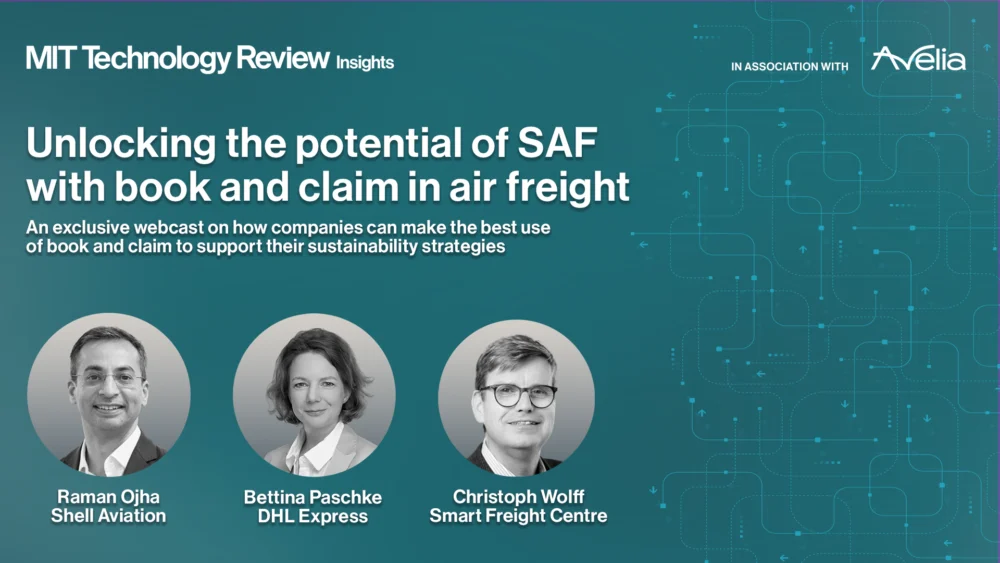
Emissions from air freight have surged by a concerning 25% since 2019, reaching 93.8 million tons of carbon dioxide annually, according to a stark 2024 analysis by environmental advocacy group Stand.Earth. This dramatic increase, equating to nearly 20 million tons per year, is largely attributed to the expansion of cargo-only fleets during the pandemic. As global air travel was curtailed, and other freight modes faced disruptions, the demand for rapid delivery of goods soared, leading to an intensified reliance on air cargo. This surge in activity, despite ongoing efforts by freight operators to modernize fleets and improve operational efficiencies, underscores the urgent need for more impactful decarbonization strategies.
While fleet modernization and operational improvements contribute to the sector’s ongoing decarbonization, Sustainable Aviation Fuel (SAF) is emerging as the pivotal element for achieving long-term emissions reduction ambitions. When utilized in its pure form, SAF can slash the life cycle greenhouse gas emissions of aviation by up to an impressive 80% compared to conventional jet fuel, according to the International Air Transport Association (IATA). IATA further estimates that SAF could be responsible for as much as 65% of the total emissions reductions needed for the aviation sector.
Christoph Wolff, CEO of the Smart Freight Centre, unequivocally states that "SAF is the main pathway" to decarbonization for both air freight and the broader aviation ecosystem. He highlights the significant advantage of SAF: "The great thing about SAF is it’s chemically identical to Jet A fuel." This inherent characteristic allows for blending with conventional fuel, providing a scalable solution that can start small and gradually increase in volume. Wolff expresses hope that this scaling will eventually lead to a reduction in SAF’s current prohibitive price.
However, cost remains a formidable barrier, with SAF currently priced at least twice that of conventional jet fuel. This economic hurdle is not the sole impediment to wider SAF adoption. A substantial challenge lies in bridging the significant gap between the concentrated supply of SAF and its global demand. While the number of verified SAF dispensing locations has grown from fewer than 20 in 2021 to 114 as of April 2025, according to 4Air, this still represents a tiny fraction, serving only 92 airports worldwide out of more than 40,000.
Raman Ojha, president of Shell Aviation, emphasizes SAF’s centrality to aviation’s decarbonization, but acknowledges that "adoption and penetration of SAF hasn’t really picked up massively." He points out that the issue is not a lack of production capacity, but rather a complex interplay of factors, and that the "book and claim" system is instrumental in addressing this disparity.
Bridging the gap with book and claim
The book and claim mechanism is a sophisticated chain of custody model, defined by ISO 22095:2020, where the flow of administrative records is decoupled from the physical movement of the product through the supply chain. This innovative approach empowers airlines and corporations to realize the life cycle greenhouse gas emissions reduction benefits of SAF, even when the fuel isn’t physically available at their immediate location. It acts as a crucial bridge, connecting the concentrated supply of SAF with global demand, until SAF availability becomes more widespread.
Bettina Paschke, vice president of ESG accounting, reporting, and controlling at DHL Express, boldly asserts that "Without book and claim, no short-term science-based target will be achieved." She reiterates its essential role, explaining that SAF production facilities are geographically concentrated. If a customer requires fulfillment of a mass balance obligation, transporting SAF globally to a specific airport for that customer would be "very complicated, and very unrealistic," and counterintuitively, would increase overall emissions. The book and claim system, therefore, allows air freight operators to immediately unlock the environmental benefits of SAF without the logistical and environmental drawbacks of physical transportation. Paschke anticipates that the need for book and claim may diminish in the future as SAF production becomes more localized, but for now, it is an indispensable tool.
At DHL, the book and claim mechanism has become foundational to achieving its three interconnected sustainability objectives: decarbonizing logistics supply chains, supporting customers in their decarbonization journeys, and ensuring the integrity of emissions claims across the value chain.
The importance of a credible and viable framework for book and claim systems was a key driver behind the 2022 launch of Shell’s Avelia. This blockchain-powered digital SAF book and claim solution, initially focused on business travel, expanded in 2024 to include air freight. Depending on the specific offering, Avelia provides freight forwarders with the capability to share the life cycle greenhouse gas emissions reduction benefits of SAF with the shippers utilizing their services.
Ojha explains that Avelia is "backed by a physical supply chain, which gives our customers – whether those be corporates or freight forwarders or even airlines – a peace of mind that the SAF has been injected at a certain airport, it’s been used and environmental attributes, with the help of blockchain, have been tracked to where they’re getting retired." He stresses that the paramount benefit is the transparency it offers, assuring customers that their environmental claims are substantiated and reliable.
Moving beyond early adoption
To effectively scale SAF adoption through the book and claim system and foster its commercial viability as a lower-carbon solution, a coordinated "ecosystem play" is essential, according to Wolff. This collaborative approach involves early adopters like DHL inspiring their peers, solution providers such as Shell working with diverse stakeholders for joint advocacy, and industry associations like the Smart Freight Centre developing the necessary frameworks, educational resources, and industry alignment.
A vibrant book and claim community, comprising numerous forward-thinking advocates, is actively driving this progress with a shared objective of enhancing standardization and consensus. Wolff notes that this collective effort ensures compatibility and interoperability between different system definitions, provides educational support, and establishes a repository of transactions for transparency and learning. While some early adopters possess significant experience, broader participation is crucial for wider comfort and acceptance.
In early 2024, a diverse group of book and claim stakeholders convened to develop and refine 11 key principles and best practices for book and claim models. These principles, informed by practical successes and challenges in decarbonizing the heavy transport sector, represent a harmonized set of guidelines.
The adherence to such a framework is critical, especially since the Greenhouse Gas (GHG) Protocol and the Science Based Targets initiative (SBTi) do not yet formally recognize book and claim as a validated model for emissions reduction, although there is optimism for future acceptance. Wolff states that "The industrialization of book and claim delivery systems is key to credibility and recognition." He indicates that the GHG Protocol and SBTi are making progress in this area, with the Smart Freight Centre actively participating in technical working groups to develop systems that incorporate market-based inventories alongside physical ones.
Paschke, however, urges companies not to delay action by waiting for policy changes. "The solution is there," she asserts. "There are companies like DHL that are making huge upfront investments, and every single contribution helps to scale the industry and give a strong signal to the eco-space."
As the imperative to accelerate decarbonization intensifies, Ojha agrees that it is critical for air freight operators to consider these solutions now. He advises them to "Don’t wait for perfection in guidelines, regulations, or platforms – act now." Furthermore, he emphasizes the importance of learning by doing, collaborating with others, and avoiding an isolated, in-house approach. Ojha also strongly recommends leveraging existing registries and platforms, such as Avelia, to ensure credibility and avoid the need to establish auditability from scratch. Finally, he urges a shift in perspective: "Don’t look at scope book and claim as a means for acquiring a certificate for environmental attributes. Think in terms of your decarbonisation commitment and think of this as a tool for exposure management. Think in terms of the bigger picture."
This "bigger picture" encompasses a sector-wide commitment to accelerated decarbonization, effectively reversing the current upward trajectory of emissions and charting a more sustainable course for air freight.