Imroatul Nasiyah
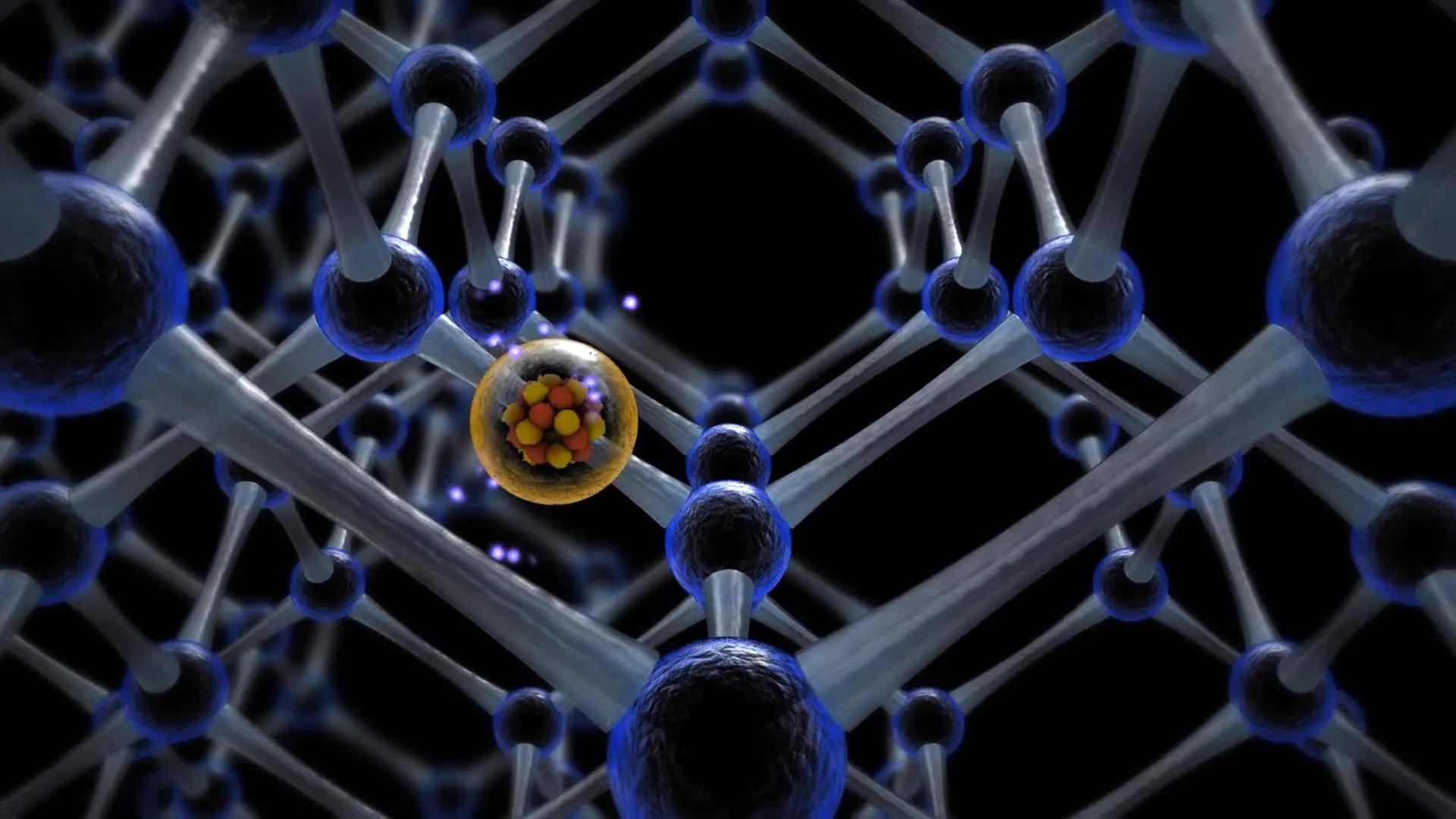
At Florida State University, a dedicated team of physicists, comprising National High Magnetic Field Laboratory Dirac Postdoctoral Fellow Aman Kumar, Associate Professor Hitesh Changlani, and Assistant Professor Cyprian Lewandowski, has pinpointed the precise conditions necessary to forge a novel type of electron crystal. This unique state allows electrons to arrange themselves in a solid lattice, a foundational structure for crystals, while simultaneously exhibiting a remarkable fluidity. This captivating hybrid phase, dubbed a generalized Wigner crystal, represents a significant breakthrough in our understanding of electron behavior. The team’s groundbreaking findings have been published in the prestigious journal npj Quantum Materials, a distinguished publication under the Nature umbrella.
The Genesis of Electron Crystals: A Quantum Ballet
The concept of electrons solidifying into Wigner crystals, a phenomenon first theorized in 1934, has long fascinated scientists. These crystalline arrangements, observed in thin, two-dimensional materials, were a theoretical prediction waiting for experimental confirmation. While recent experiments have indeed detected these elusive structures, the underlying quantum mechanisms driving their formation, especially when considering the complex quantum effects at play, remained partially obscured.
“Our study has illuminated the critical ‘quantum knobs’ that, when precisely adjusted, can trigger this phase transition and usher in the formation of a generalized Wigner crystal,” explained Associate Professor Hitesh Changlani. He elaborated on the significance of their approach: “By employing a 2D moiré system, we’ve unlocked the ability to create diverse crystalline geometries, such as intricate stripes or a honeycomb lattice. This stands in stark contrast to traditional Wigner crystals, which are typically confined to a triangular lattice structure.”
To unravel these complex conditions, the research team harnessed the formidable power of advanced computational tools available at FSU’s Research Computing Center, a vital academic service unit within Information Technology Services. They also leveraged the extensive resources provided by the National Science Foundation’s ACCESS program, a leading provider of advanced computing and data resources under the Office of Advanced Cyberinfrastructure. Their investigative arsenal included sophisticated computational methods such as exact diagonalization, density matrix renormalization group, and Monte Carlo simulations. These powerful techniques allowed them to meticulously examine and predict electron behavior across a wide spectrum of theoretical scenarios.
Navigating the Labyrinth of Quantum Data
The realm of quantum mechanics assigns a dual nature to every electron, embedding two crucial pieces of information. When hundreds or even thousands of these electrons interact, the sheer volume of data generated becomes astronomically large. To manage and interpret this overwhelming quantum information, the researchers developed and employed highly sophisticated algorithms. These algorithms were designed to compress and organize the vast datasets into manageable networks, making them amenable to rigorous examination and insightful interpretation.
“Our theoretical understanding of these exotic states of matter allows us to remarkably mimic experimental observations,” stated Aman Kumar, a key member of the research team. He further detailed their meticulous approach: “We conduct highly precise theoretical calculations utilizing state-of-the-art tensor network calculations and exact diagonalization. Exact diagonalization is a potent numerical technique widely employed in physics to glean detailed information about a quantum Hamiltonian, which fundamentally represents the total quantum energy inherent within a given system. Through this rigorous process, we can construct a clear picture of how these crystal states emerge and, crucially, why they are energetically favored over other competing states.”
A Novel Hybrid: The Quantum Pinball Phase
During their in-depth investigation of the generalized Wigner crystal, the research team stumbled upon another astonishing and entirely unexpected state of matter. This newly identified phase exhibits a paradoxical behavior: electrons simultaneously display both insulating and conducting properties. Within this perplexing state, some electrons remain rigidly fixed in their positions within the crystal lattice, effectively freezing. In contrast, other electrons break free from these constraints, embarking on a journey throughout the material. The movement of these mobile electrons is often described as resembling a pinball, ricocheting erratically between stationary posts.
“This ‘pinball phase’ represents a truly exciting discovery, a novel state of matter that we observed serendipitously while delving into the intricacies of the generalized Wigner crystal,” enthused Cyprian Lewandowski. He further elaborated on the unique nature of this phenomenon: “The co-existence of electrons that are essentially ‘frozen’ and those that are ‘floating’ implies a simultaneous insulating and conducting behavior. This is the very first time that such a distinct quantum mechanical effect has been observed and documented for the specific electron densities we investigated in our work.”
The Profound Significance of These Discoveries
These groundbreaking findings represent a substantial leap forward in humanity’s capacity to comprehend and manipulate the behavior of matter at the fundamental quantum level.
“What are the underlying reasons for a material to exhibit insulating, conducting, or magnetic properties? And can we, in essence, transmute a material from one state to another?” posed Lewandowski, highlighting the profound questions driving their research. “Our ultimate goal is to develop the predictive power to identify where specific phases of matter exist and to understand the precise mechanisms by which one state can transition into another. When we consider the familiar transition of liquid to gas, we often picture increasing heat to boil water into steam. In the quantum realm, however, we’ve discovered that there are other, more subtle ‘quantum knobs’ that can be manipulated to control these states of matter. This newfound control has the potential to catalyze remarkable advancements in experimental research across various disciplines.”
By strategically adjusting these quantum knobs, or energy scales, researchers can effectively guide electrons between solid and liquid phases within these exotic materials. A deeper understanding of Wigner crystals and their associated states promises to profoundly shape the future trajectory of quantum technologies. This includes the development of more powerful quantum computers, the advancement of spintronics—a rapidly evolving frontier in condensed-matter physics that holds the promise of creating significantly faster, more energy-efficient nano-electronic devices with reduced manufacturing costs—and the creation of novel electronic components.
The dedicated team intends to continue their exploration into the complex interplay of electrons within intricate systems. Their overarching ambition is to address fundamental scientific questions that could ultimately pave the way for transformative innovations in quantum, superconducting, and atomic technologies, pushing the boundaries of what is currently conceivable.