Imroatul Nasiyah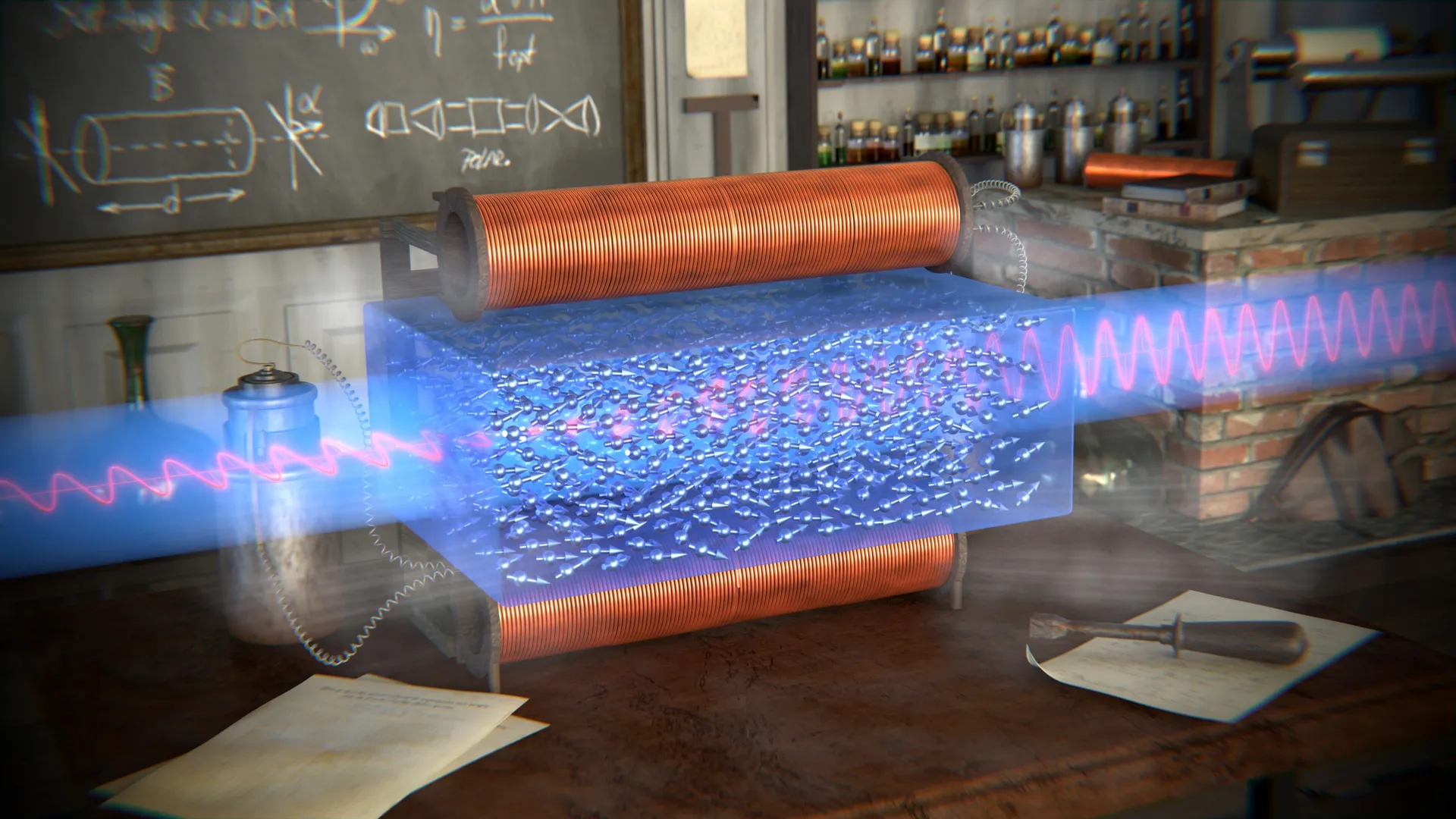
For nearly two centuries, the scientific community has operated under the assumption that the Faraday Effect, a fundamental interaction observed when polarized light passes through a material situated within a magnetic field, was solely a consequence of the electric field of light interacting with the electric charges within the material. This long-held belief, a cornerstone of optical physics, has now been challenged and overturned by the meticulous theoretical and analytical work conducted by Dr. Amir Capua and Benjamin Assouline at the Hebrew University of Jerusalem’s Institute of Electrical Engineering and Applied Physics. Their findings, published in the esteemed journal Scientific Reports, unequivocally demonstrate that the oscillating magnetic field of light is not a passive observer but an active participant, contributing measurably and significantly to the observed rotation of light’s polarization. This paradigm shift redefines our understanding of fundamental light-matter interactions and opens up a wealth of new possibilities for scientific exploration and technological innovation.
The Faraday Effect, at its core, describes the phenomenon where the plane of polarization of linearly polarized light rotates as it propagates through a medium that is subjected to an external magnetic field. This rotation is proportional to the strength of the magnetic field and the length of the material the light traverses. Historically, the explanation for this effect has centered on how the magnetic field influences the motion of electrons within the material. These electrons, when subjected to both the light’s electric field and the external magnetic field, experience forces that cause them to move in a helical path. This helical motion, in turn, leads to a difference in the speed at which light components polarized in different directions propagate through the material, resulting in the observed rotation of the polarization plane. The prevailing theory attributed this entire effect to the interaction between light’s electric field and the charged particles in the material, with the magnetic aspect of light being considered negligible in this context.
Dr. Capua eloquently simplifies this interaction, stating, "In simple terms, it’s an interaction between light and magnetism. The static magnetic field ‘twists’ the light, and the light, in turn, reveals the magnetic properties of the material." He then goes on to articulate the core of their revolutionary finding: "What we’ve found is that the magnetic part of light has a first-order effect, it’s surprisingly active in this process." This statement directly confronts the established scientific narrative, asserting that the magnetic component of light, long relegated to an insignificant role, is, in fact, a crucial player in the Faraday Effect.
The team’s research provides the first theoretical evidence that the oscillating magnetic field of light directly contributes to the Faraday Effect. This conclusion is not based on mere conjecture but on rigorous theoretical calculations. The researchers employed advanced computational methods, drawing inspiration from the Landau-Lifshitz-Gilbert (LLG) equation. The LLG equation is a fundamental equation in magnetism that describes the dynamics of magnetization in ferromagnetic materials, detailing how magnetic spins evolve over time under the influence of external magnetic fields and internal torques. By adapting and applying principles derived from the LLG equation to the context of light-matter interaction, Capua and Assouline were able to demonstrate that the magnetic field of light can indeed generate a magnetic torque within a material. This torque is analogous to the torque generated by a static magnetic field, implying that light itself can exert a magnetic influence on the material it interacts with. As Capua further elaborates, "In other words, light doesn’t just illuminate matter, it magnetically influences it." This sentence encapsulates the profound implication of their work: light is not merely a source of illumination; it is an active agent capable of manipulating the magnetic properties of materials.
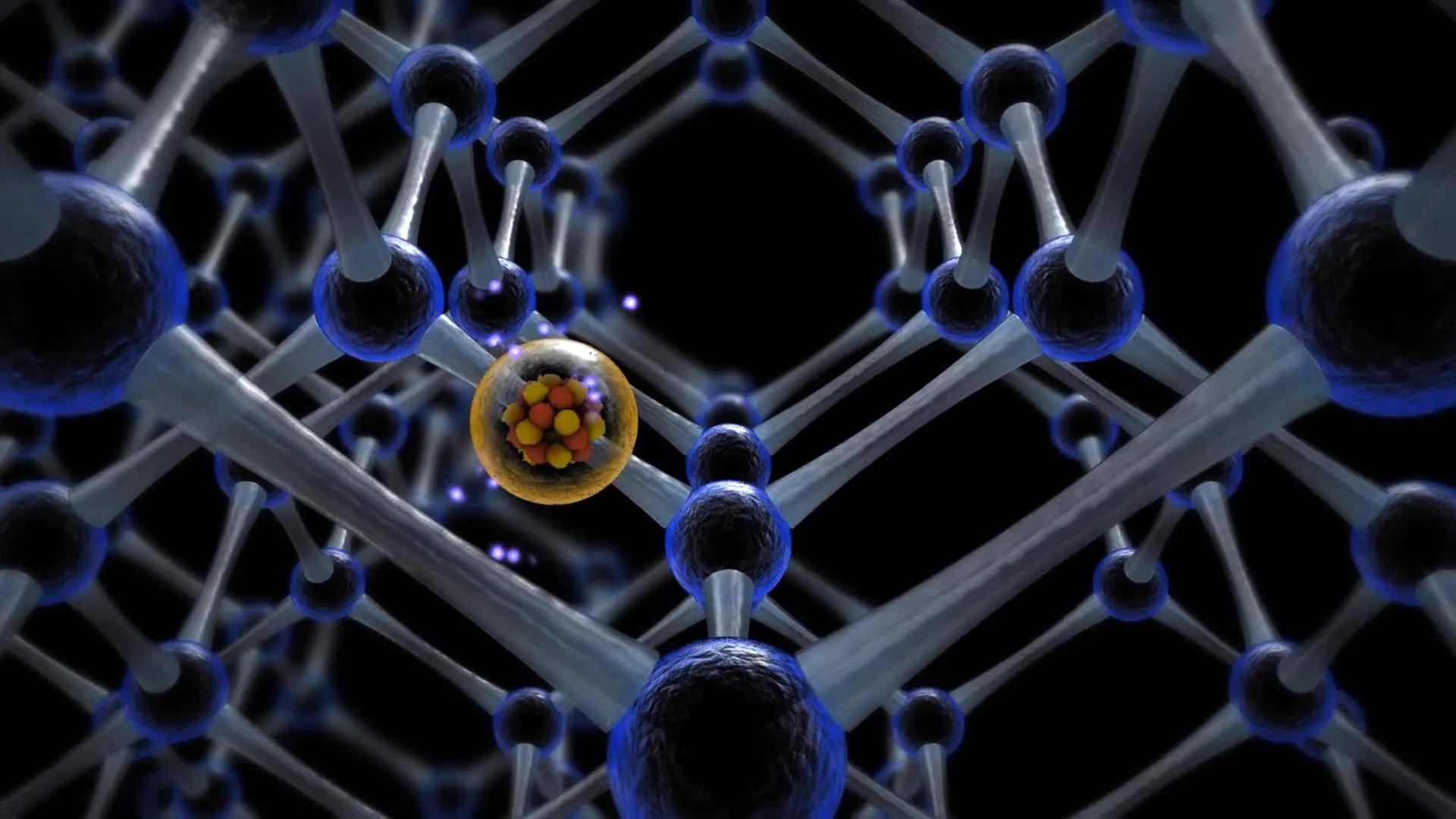
To quantify the magnitude of this magnetic contribution, the researchers applied their theoretical model to a specific material: Terbium Gallium Garnet (TGG). TGG is a crystalline material that is frequently utilized in scientific research to study the Faraday Effect due to its strong magneto-optical properties. Their analysis, performed on this well-characterized material, yielded striking results. They discovered that the magnetic component of light accounts for approximately 17% of the observed polarization rotation in the visible spectrum. This figure, while seemingly modest, is significant given that it was previously considered negligible. The impact of light’s magnetic field becomes even more pronounced in the infrared spectrum, where it is responsible for as much as 70% of the observed rotation. These quantitative findings underscore the substantial and previously unrecognized role of light’s magnetic field in the Faraday Effect across different regions of the electromagnetic spectrum.
The implications of this revised understanding are far-reaching and extend into various technological frontiers. Benjamin Assouline articulates this broad impact by stating, "Our results show that light ‘talks’ to matter not only through its electric field, but also through its magnetic field, a component that has been largely overlooked until now." This simple yet profound statement highlights the dual nature of light’s interaction with matter, a duality that has been only partially appreciated until this recent breakthrough.
The researchers foresee that this enhanced comprehension of light’s magnetic behavior will pave the way for significant innovations. In the realm of optical data storage, where information is encoded and retrieved using light, a more nuanced understanding of light-matter magnetic interactions could lead to the development of higher-density and more efficient storage devices. The field of spintronics, which aims to utilize the spin of electrons in addition to their charge for electronic devices, stands to benefit immensely. By leveraging the magnetic influence of light, new methods for manipulating and controlling electron spins could be developed, leading to faster, more energy-efficient electronic components and novel computing architectures.
Furthermore, this discovery holds immense promise for the development of emerging quantum technologies. Quantum computing, in particular, relies on the precise control of quantum states, often involving the manipulation of spin properties. The ability of light to exert a direct magnetic influence on matter could provide a novel and powerful tool for controlling and entangling qubits, the fundamental units of quantum information. This could accelerate the development of robust and scalable quantum computers, which have the potential to solve problems currently intractable for even the most powerful classical computers.
The study’s publication in Scientific Reports, a prestigious journal known for its rigorous peer-review process, lends significant credibility to these findings. The work by Dr. Capua and Benjamin Assouline represents a significant step forward in our understanding of fundamental physics, challenging long-standing paradigms and opening up exciting new avenues for scientific inquiry and technological advancement. The magnetic secret of light, hidden for nearly two centuries, has finally been revealed, promising to illuminate a path toward a new era of optical and magnetic technologies. This research not only corrects a historical oversight in physics but also provides a vital blueprint for future innovations that could reshape our technological landscape. The subtle interplay between light and magnetism, now understood with greater clarity, holds the key to unlocking unprecedented capabilities in fields ranging from data storage to the very foundations of computation.