Faris Adani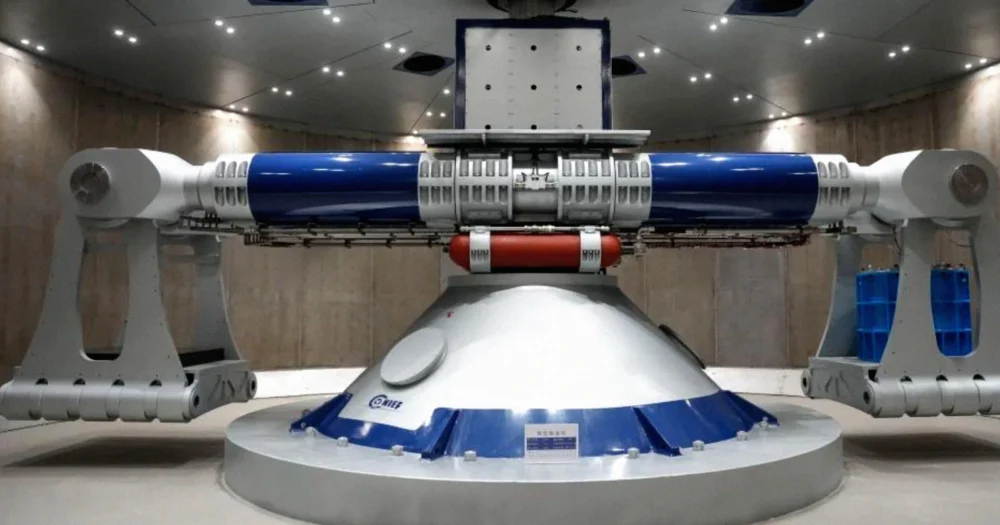
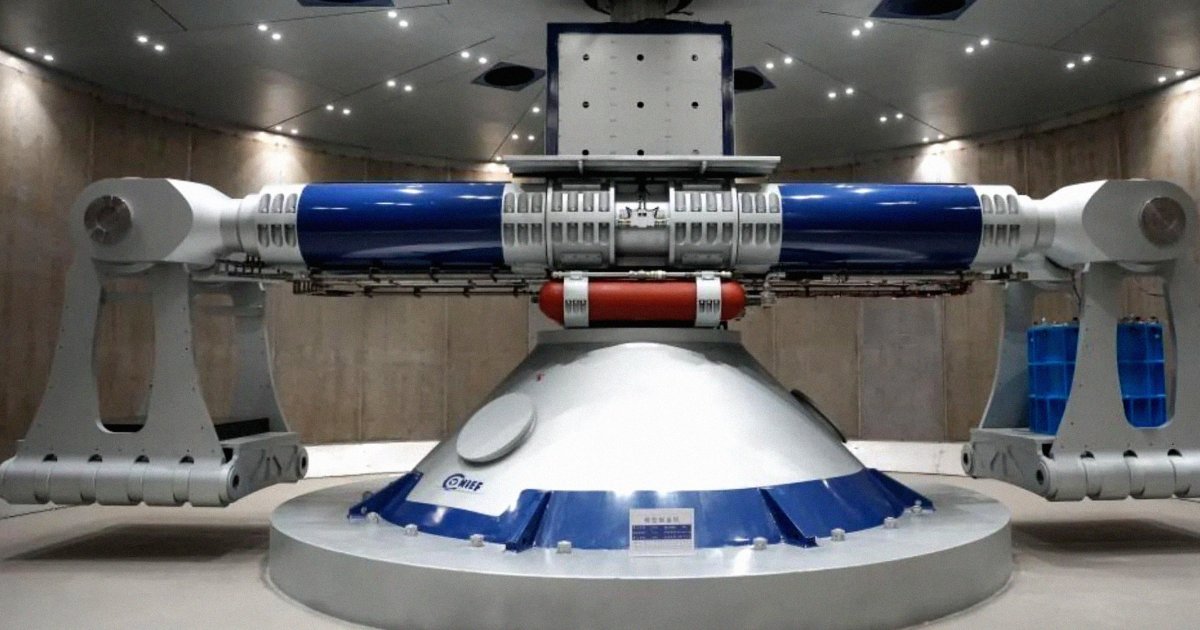
In a monumental leap for scientific infrastructure and engineering, China has officially unveiled the CHIEF1900, an exceptionally powerful "hypergravity machine" capable of generating forces nearly two thousand times stronger than Earth’s standard gravitational pull. This futuristic behemoth, constructed at the Centrifugal Hypergravity and Interdisciplinary Experiment Facility (CHIEF) at Zhejiang University in Eastern China, represents a new frontier in the study of how extreme forces impact a vast array of materials, biological systems, and geological structures. Its debut not only establishes a new global benchmark in centrifugal technology but also promises to unlock unprecedented insights across numerous scientific and engineering disciplines.
The CHIEF1900 is more than just an impressive piece of machinery; it is a meticulously engineered environment designed to "compress space and time," as the South China Morning Post eloquently describes. This capability allows researchers to simulate, in a matter of hours or days, processes that would naturally unfold over decades or even millennia under normal gravitational conditions. At its core, the machine is a colossal centrifuge, far surpassing the capabilities of any predecessor. By spinning a payload at incredibly high velocities, it generates immense centrifugal forces that effectively mimic extreme gravitational environments. These forces are quantified in "g-tonnes," a metric that combines gravitational acceleration (G) with the mass of the payload in tonnes (2,200 pounds). The CHIEF1900 can generate an astonishing 1,900 g-tonnes of force, or 1,900 times the Earth’s gravity, dwarfing the mere two g-tonnes typically produced by a household washing machine. To put this in perspective, even the highly specialized centrifuges used by the US Air Force for pilot training, which simulate high G-forces experienced by fighter pilots, operate at significantly lower magnitudes.
The practical applications of such a formidable machine are diverse and far-reaching. In geotechnical engineering, the CHIEF1900 offers an unparalleled tool for analyzing the structural stability of massive civil infrastructure projects. For instance, it can meticulously examine the resilience of a nearly 1,000-feet-tall dam by subjecting a scaled, ten-foot model to forces of 100 Gs. This accelerated testing can reveal potential weaknesses, predict long-term performance under various stress scenarios, and inform more robust design principles, thereby preventing catastrophic failures like dam collapses or mitigating the impact of seismic events. Similarly, it can simulate the effects of earthquakes on buildings, bridges, and tunnels, allowing engineers to design structures that can withstand extreme ground accelerations. The study of soil liquefaction, a critical concern in earthquake-prone regions, can also be significantly advanced, as researchers can observe the behavior of saturated soil under intense, fluctuating pressures.
Beyond civil infrastructure, the CHIEF1900 holds immense potential for understanding long-term environmental processes. It can simulate the gradual seepage of pollutants into soil and groundwater over thousands of years, providing critical data for environmental remediation strategies and sustainable resource management. By accelerating these processes, scientists can better predict the movement of contaminants, assess the effectiveness of natural attenuation, and develop more efficient methods for preventing and cleaning up environmental disasters. This includes understanding how microplastics or persistent organic pollutants migrate through different soil layers and aquifer systems, impacting ecosystems and human health.
In the realm of transportation infrastructure, the hypergravity machine can be utilized to study the resonance frequencies of high-speed rail tracks, ensuring their stability and safety under the immense dynamic loads imposed by rapidly moving trains. It can also assess the long-term wear and tear on railway components, road foundations, and bridge structures, leading to more durable designs and improved maintenance schedules. The ability to simulate decades of operational stress in a compressed timeframe offers substantial economic and safety benefits.
One of the less immediately obvious, but equally crucial, areas of application lies in fundamental scientific research. As Zhejiang University professor and CHIEF’s chief scientist Chen Yunmin articulated, the goal is "to create experimental environments that span milliseconds to tens of thousands of years, and atomic to [kilometre] scales – under normal or extreme conditions of temperature and pressure." This ambition underscores the machine’s capacity to delve into foundational questions about material science, geology, and even biology. For materials scientists, it offers a unique opportunity to test the limits of new alloys, composites, and ceramics under stresses far exceeding those achievable in conventional laboratories. This is vital for developing next-generation materials for aerospace, defense, and energy sectors, where components must withstand extreme operational environments.
The phrase "compress space and time" takes on a profound meaning here. It implies the ability to rapidly induce geological processes, such as rock deformation, fault mechanics, and sedimentation, which normally unfold over eons. This accelerated observation can lead to a deeper understanding of planetary formation, crustal dynamics, and resource distribution within the Earth.
Moreover, the CHIEF1900 is poised to make significant contributions to biological research, especially given its capacity to study "plants, cells, or other structures." Hypergravity environments can profoundly affect biological systems. Researchers can investigate how extreme G-forces influence cell growth and differentiation, gene expression, fluid dynamics within tissues, and the overall physiological responses of organisms. This could have implications for understanding the resilience of life in extreme terrestrial environments, developing countermeasures for astronauts exposed to varying gravitational forces during space missions, or even in drug discovery by studying how cells respond to stress. For example, understanding how plants adapt to hypergravity could lead to new insights into crop resilience under environmental stress.
The journey to developing the CHIEF1900 was not without formidable engineering challenges. Spinning massive payloads at such incredible speeds generates an enormous amount of heat, which could compromise experiments and damage the machinery itself. To counter this, the engineers devised an advanced vacuum-based temperature control system. This sophisticated system utilizes a combination of coolant circulation and forced-air ventilation within a vacuum chamber to efficiently dissipate the heat, maintaining precise experimental conditions. Furthermore, the structural integrity of the centrifuge arm and the precision of its control systems at such extreme forces required breakthroughs in materials science and robotics to ensure safety and accuracy. The very bearings and motors that drive the centrifuge must withstand immense forces and operate with microscopic precision, a testament to cutting-edge engineering.
The CHIEF1900’s inauguration officially unseated its immediate predecessor, the CHIEF1300, which had only four months prior claimed the title of the world’s most powerful centrifuge. Before that, the record was held by the centrifuge at the Army Corps of Engineers in Vicksburg, Mississippi, capable of generating 1,200 g-tonnes. China’s rapid succession in building increasingly powerful hypergravity machines underscores its accelerating commitment to scientific infrastructure and its ambition to lead in critical areas of fundamental and applied research.
Professor Chen Yunmin’s vision for CHIEF extends beyond mere data collection. He believes that the facility "gives us the chance to discover entirely new phenomena or theories." This encapsulates the true spirit of scientific inquiry that such advanced tools enable. By pushing the boundaries of what is experimentally possible, researchers are often confronted with unexpected observations that challenge existing paradigms and lead to groundbreaking discoveries. Whether it’s a novel material behavior under extreme stress, an unforeseen biological response to hypergravity, or a deeper understanding of geological fault lines, the CHIEF1900 is engineered to reveal the hidden complexities of our world.
In conclusion, China’s CHIEF1900 is a monumental achievement in scientific engineering, establishing a new global standard for hypergravity research. Its unparalleled capacity to generate forces nearly 2,000 times Earth’s gravity offers an unprecedented window into the behavior of materials, structures, and biological systems under extreme conditions. From safeguarding critical infrastructure and understanding environmental degradation to advancing fundamental scientific theories and preparing for future space exploration, this hypergravity marvel is poised to profoundly impact a multitude of disciplines, solidifying China’s position at the forefront of global scientific innovation.