Imroatul Nasiyah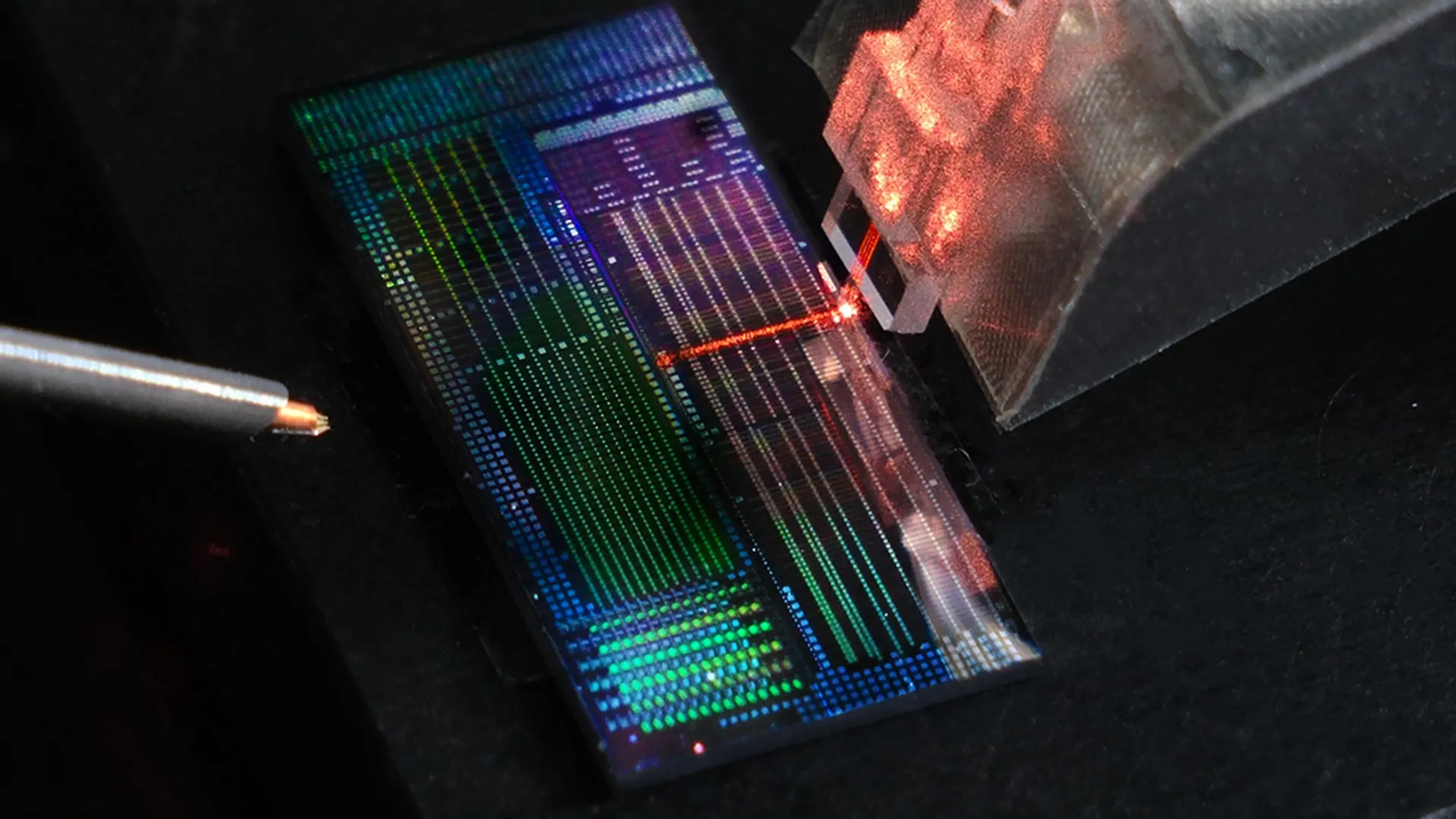
Just as crucial as its minuscule size is the revolutionary method employed in its fabrication. Eschewing the reliance on custom-built, often cumbersome, laboratory equipment, the researchers have ingeniously adopted scalable manufacturing techniques. These methods are remarkably similar to those currently employed in the mass production of the sophisticated processors that power a vast array of modern technologies. This includes the ubiquitous processors found in computers, the sleek processors in smartphones, the complex systems in vehicles, and the intricate electronics within household appliances – essentially, any device that draws power from electricity, from the most advanced servers to the humble toaster. This pragmatic approach dramatically enhances the device’s feasibility for large-scale production, paving the way for widespread adoption.
A Tiny Device Built for Real-World Scale: From Lab Curiosity to Mass-Produced Powerhouse
The pioneering research at the forefront of this innovation was spearheaded by Jake Freedman, an exceptionally promising incoming PhD student within the Department of Electrical, Computer and Energy Engineering. He was joined by Matt Eichenfield, a distinguished professor and the holder of the Karl Gustafson Endowed Chair in Quantum Engineering, lending his considerable expertise and leadership to the project. The collaborative spirit of the endeavor extended to scientists from the esteemed Sandia National Laboratories, with co-senior author Nils Otterstrom playing a vital role. Together, this formidable team has engineered a device that masterfully integrates three critical attributes: diminutive size, exceptional performance, and remarkably low cost, making it an ideal candidate for mass production and widespread deployment in the burgeoning quantum technology landscape.
At the very core of this transformative technology lies the ingenious manipulation of microwave-frequency vibrations. These vibrations oscillate at an astonishing rate, billions of times per second, a frenetic dance that imbues the chip with its remarkable ability to interact with and manipulate laser light with an almost unbelievable degree of precision. This precise control is the key to unlocking new frontiers in quantum information processing.
By directly modulating the phase of a laser beam, the device can adeptly generate new laser frequencies. These newly generated frequencies are not only exceptionally stable, ensuring consistent and reliable operation, but also remarkably efficient, minimizing energy waste. This sophisticated level of control over light is not confined to the realm of quantum computing; it is also a paramount requirement for the advancement of other rapidly emerging and critically important fields such as quantum sensing, which promises unprecedented measurement capabilities, and quantum networking, which aims to establish secure and interconnected quantum communication systems.
Why Quantum Computers Need Ultra-Precise Lasers: The Delicate Dance of Qubits
The intricate workings of some of the most promising quantum computing architectures hinge on the precise manipulation of individual atoms. In these systems, typically employing trapped ions or trapped neutral atoms, each individual atom serves as a qubit, the fundamental unit of quantum information. The computational process within these systems involves researchers interacting with these meticulously controlled atoms by directing carefully tuned laser beams at them. These laser beams act as the instructions, the "commands," that enable the quantum computer to perform complex calculations. For this intricate process to unfold successfully, each laser beam must be adjusted with an extraordinary level of precision. This precision is often measured in the parts per billion, meaning even minuscule deviations can lead to computational errors.
"Creating new copies of a laser with very exact differences in frequency is one of the most important tools for working with atom- and ion-based quantum computers," explained Freedman, highlighting the fundamental importance of this technological advancement. "But to do that at scale, you need technology that can efficiently generate those new frequencies." The current methods for achieving these precise frequency shifts are often cumbersome, requiring large, table-top devices that consume substantial amounts of microwave power. While these systems may suffice for small-scale experimental setups, they are fundamentally impractical for the immense number of optical channels that will be indispensable for the operation of future, large-scale quantum computers.
Professor Eichenfield vividly illustrates the impracticality of current solutions for scaling up: "You’re not going to build a quantum computer with 100,000 bulk electro-optic modulators sitting in a warehouse full of optical tables," he stated. "You need some much more scalable ways to manufacture them that don’t have to be hand-assembled and with long optical paths. While you’re at it, if you can make them all fit on a few small microchips and produce 100 times less heat, you’re much more likely to make it work." This statement underscores the critical need for miniaturization, efficiency, and manufacturability.
Lower Power Use, Less Heat, More Qubits: The Efficiency Advantage
The newly developed device addresses these scaling challenges head-on by generating laser frequency shifts through highly efficient phase modulation. A significant advantage of this innovative approach is its drastically reduced power consumption. The device utilizes approximately 80 times less microwave power compared to many existing commercial modulators. This substantial reduction in power consumption directly translates to less heat generation. Lower heat output is a crucial factor, as it allows for a much greater density of these optical channels to be packed closely together, even onto a single, compact microchip. This increased density is a vital step towards building the massive qubit arrays required for powerful quantum computers.
When considered collectively, these multifaceted advantages coalesce to transform the chip from a laboratory curiosity into a truly scalable system. This system is now capable of orchestrating the incredibly precise and delicate interactions that individual atoms require to perform complex quantum calculations, a feat that has long been a bottleneck in quantum computing research.
Built With the Same Technology as Modern Microchips: Leveraging Established Manufacturing Prowess
One of the most significant and far-reaching achievements of this project is the fact that the device was manufactured entirely within a fabrication facility, or "fab." This is the very same type of highly controlled environment used to produce the advanced microelectronics that power our digital world.
"CMOS fabrication is the most scalable technology humans have ever invented," declared Eichenfield, emphasizing the profound implications of this manufacturing choice. "Every microelectronic chip in every cell phone or computer has billions of essentially identical transistors on it. So, by using CMOS fabrication, in the future, we can produce thousands or even millions of identical versions of our photonic devices, which is exactly what quantum computing will need." This direct leverage of existing, highly mature manufacturing infrastructure dramatically lowers the barrier to entry for mass production and ensures a consistent and reliable supply of these critical components.
According to Otterstorm, the team undertook the task of re-engineering modulator technologies that were once characterized by their bulkiness, high cost, and significant power demands. They have successfully redesigned them to be substantially smaller, far more energy-efficient, and considerably easier to integrate into larger systems.
"We’re helping to push optics into its own ‘transistor revolution,’ moving away from the optical equivalent of vacuum tubes and towards scalable integrated photonic technologies," Otterstorm remarked, drawing a powerful analogy to the transformative impact of the transistor on electronics. This analogy highlights the potential for this breakthrough to fundamentally alter the landscape of optical technologies.
Toward Fully Integrated Quantum Photonic Chips: The Next Frontier
The research team is not resting on their laurels. They are actively engaged in developing fully integrated photonic circuits that will consolidate multiple critical functions – including frequency generation, filtering, and pulse shaping – onto a single, unified chip. This ambitious endeavor represents a significant stride towards the realization of a complete, fully operational, and highly functional quantum photonic platform.
Looking ahead, the team has plans to forge partnerships with leading quantum computing companies. These collaborations will facilitate the crucial testing of these advanced chips within cutting-edge trapped-ion and trapped-neutral-atom quantum computers, providing real-world validation and further refinement.
"This device is one of the final pieces of the puzzle," Freedman expressed with evident enthusiasm, underscoring the device’s pivotal role in the broader quest for scalable quantum computing. "We’re getting close to a truly scalable photonic platform capable of controlling very large numbers of qubits." This sentiment reflects the collective anticipation and excitement surrounding the potential of this breakthrough.
The crucial work on this transformative project received vital support from the U.S. Department of Energy, specifically through the Quantum Systems Accelerator program, a distinguished National Quantum Initiative Science Research Center, which champions pioneering research in quantum science and technology.