Faris Adani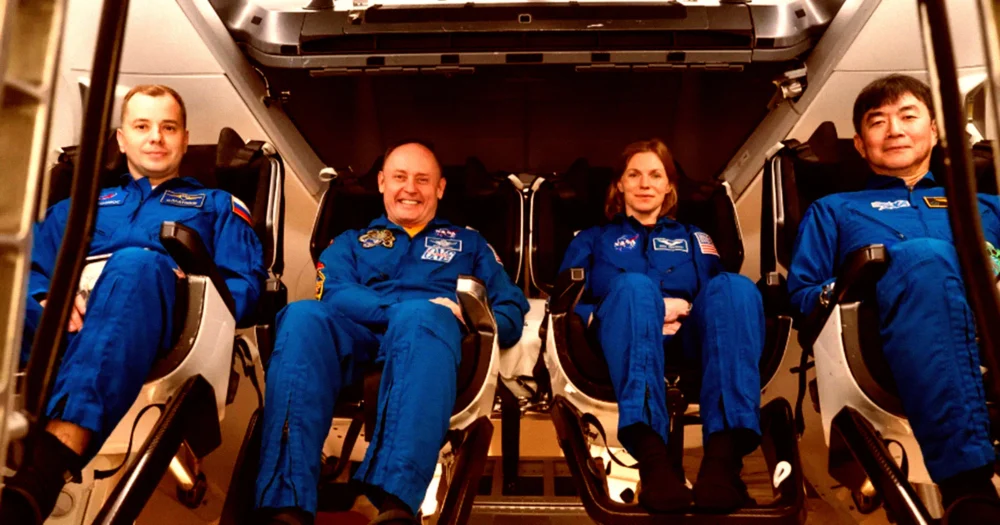
A simple medical issue, as mundane as an infection or a minor injury, escalates dramatically when hundreds of miles above Earth in the confined, unforgiving environment of the International Space Station (ISS), lacking comprehensive medical facilities or specialized health professionals. This stark reality was underscored on Thursday when NASA announced the postponement of a critical January 8 spacewalk due to a "medical concern" involving a single, albeit stable, crew member aboard the ISS. The situation, shrouded in NASA’s characteristic discretion regarding astronaut health, has ignited discussions about the inherent perils of space travel and the robust, yet continually evolving, contingency protocols in place for such emergencies. The historical record is replete with examples illustrating the unique challenges of illness in orbit; Apollo 7 astronaut Wally Schirra famously endured a severe head cold just 15 hours into his 1967 mission, a seemingly trivial ailment that posed a grave threat. Ground control meticulously warned him of the potential to rupture his eardrums during reentry due to severe congestion, a danger amplified by the lack of gravity which transforms even a runny nose into an agonizing experience, forcing astronauts to devise unusual methods, such as utilizing suction devices, to clear their nasal passages and prevent mucus from migrating into sensitive areas or interfering with equipment. This historical context provides a sobering backdrop to the current incident, emphasizing the compelling reasons for extreme caution and meticulous planning when any possibility of illness or injury arises in the isolated domain of space.
NASA’s carefully worded update, stating that the "matter involved a single crew member who is stable," while offering a degree of reassurance, simultaneously signals the seriousness of the situation. The decision to postpone a spacewalk, or Extravehicular Activity (EVA), is not taken lightly; EVAs are meticulously planned, resource-intensive operations vital for the maintenance, repair, and upgrade of the space station, as well as for deploying scientific experiments. Their deferral indicates that the medical concern directly impacts either the affected astronaut’s ability to participate or the overall safety of the mission, necessitating a shift in crew priorities and resource allocation. The vagueness of "medical concern" allows NASA to protect the crew member’s privacy, a standard practice, but the public announcement itself is noteworthy, suggesting that the issue is significant enough to warrant transparency regarding mission changes. The agency’s subsequent statement, "Safely conducting our missions is our highest priority, and we are actively evaluating all options, including the possibility of an earlier end to Crew-11’s mission," further amplifies the gravity of the situation. This specific phrasing indicates that mission control is contemplating an expedited return for the entire crew or potentially just the affected astronaut, a complex maneuver requiring careful coordination with international partners and a thorough risk assessment of the return journey versus continued stay on orbit. Such contingency planning is a testament to the extensive training NASA and its partners undergo, preparing for a wide array of potential emergencies from equipment failures to medical crises. Astronauts are rigorously trained in basic medical procedures, emergency protocols, and even minor surgical techniques, while ground support teams, including flight surgeons and specialists, provide continuous remote guidance.
The Crew-11 mission, which arrived at the ISS on August 2 aboard a SpaceX Crew Dragon, comprises a diverse and highly skilled team: NASA astronauts Mike Fincke and Zena Cardman, Japanese astronaut Kimiya Yui, and Russian cosmonaut Oleg Platonov. They were, at the time of the announcement, scheduled to conclude their mission and return to Earth in mid-February, following the anticipated mid-February launch of the Crew-12 mission. The Crew Dragon spacecraft, known for its reusability and advanced capabilities, provides a critical lifeline to Earth, capable of transporting crew back in a relatively short timeframe if an emergency return is deemed necessary. The logistical complexities of an early return are immense, involving everything from coordinating orbital mechanics and reentry trajectories to preparing ground recovery teams. Any disruption to the mission schedule also has ripple effects on subsequent missions, including the Crew-12 launch and the overall crew rotation plan for the ISS, highlighting the interconnectedness of space operations. While NASA maintains a strict policy on astronaut medical privacy, the agency has historically acknowledged broader research into how microgravity impacts the human body, revealing a spectrum of physiological changes that can complicate health in space. Prolonged exposure to microgravity is known to affect astronauts’ vision, leading to conditions like Spaceflight Associated Neuro-ocular Syndrome (SANS), characterized by changes in eye structure and function. Bone density significantly diminishes, mimicking severe osteoporosis, and muscle mass atrophies without constant, rigorous exercise. Cardiovascular systems also undergo profound alterations, impacting blood circulation and leading to fluid shifts, which can result in orthostatic intolerance upon return to Earth.
More recent and concerning findings include a 2020 study that highlighted the potential for blood clots to form in an astronaut’s jugular vein during spaceflight, a condition that, while its exact danger in microgravity remains unclear, could pose significant health risks, including pulmonary embolism, if not carefully monitored and managed. Beyond these, astronauts face increased radiation exposure, which can elevate cancer risks and potentially affect neurological functions. The immune system is also known to be suppressed in space, making astronauts more susceptible to infections, turning even a common cold into a potentially serious threat, as Wally Schirra’s experience demonstrated. These physiological stressors mean that even a seemingly minor medical issue on Earth could become a critical incident in space, where the body’s natural healing processes might be compromised and medical intervention severely limited. The lack of advanced diagnostic tools, surgical capabilities, and a full pharmacy further complicates treatment, often requiring complex remote consultations with ground-based medical teams. This situation echoes a previous incident in October 2024, when a Crew-8 mission crew member had to be hospitalized upon their return to Earth for observation due to a "minor medical issue." In that instance, NASA similarly adhered to its privacy policy, stating, "To protect the crew member’s medical privacy, specific details on the individual’s condition or identity will not be shared." To this day, the specific reason for that astronaut’s hospitalization remains undisclosed, setting a precedent that suggests similar opacity may accompany the currently unfolding situation, even as NASA promises "further updates within the next 24 hours."
These updates are likely to focus on operational decisions and mission status rather than specific medical diagnoses, continuing the agency’s commitment to crew privacy while addressing public and operational concerns. The challenge of diagnosing and treating medical conditions remotely is immense, relying heavily on the astronauts’ own medical training, the limited onboard equipment, and the real-time telemetry transmitted to Earth. Ground support teams, including flight surgeons and specialized physicians, analyze data, provide guidance, and make critical decisions, often in consultation with international partners. The current "medical concern" on the ISS serves as a potent reminder of the inherent risks and formidable challenges of human space exploration. It underscores the critical importance of ongoing research in space medicine, the development of advanced in-flight diagnostic and treatment capabilities, and the need for robust contingency plans as humanity ventures further into the cosmos. For future long-duration missions to the Moon, Mars, and beyond, astronauts will require far greater self-sufficiency, necessitating the development of sophisticated AI-driven diagnostics, robotic surgical systems, and comprehensive pharmaceutical supplies. Ultimately, such incidents, while concerning, highlight the dedication and bravery of the men and women who volunteer to push the boundaries of human presence in space, accepting these profound risks for the advancement of scientific knowledge and the exploration of the unknown. Their health and safety remain paramount, a constant and complex equation that space agencies worldwide continually strive to solve.