isnaini azizah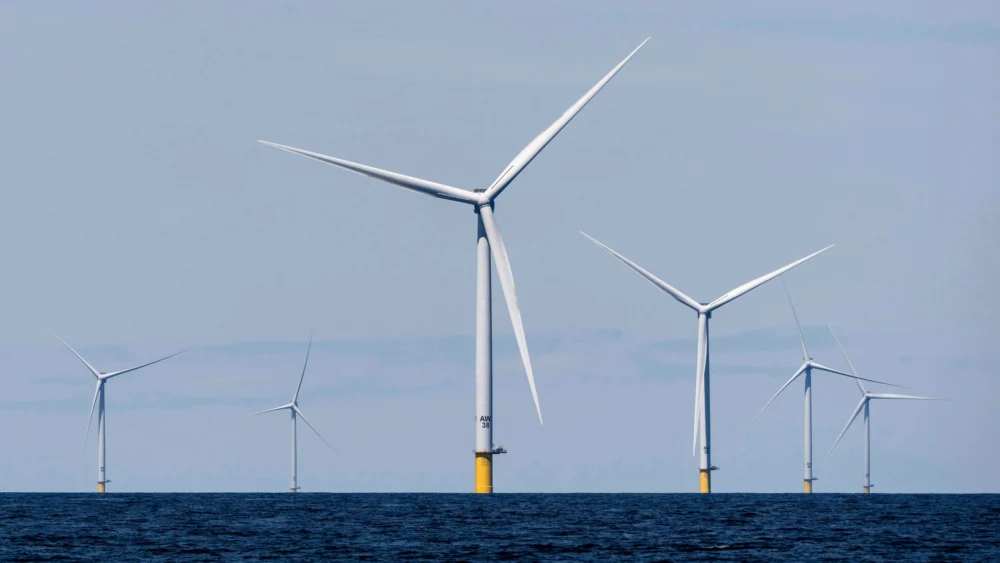
Companies involved have been quick to respond, filing lawsuits and seeking preliminary injunctions to allow construction to proceed. The legal skirmishes could commence as early as this week, and their outcome will have profound implications for the struggling US offshore wind sector. Orsted and Equinor, developers for Revolution Wind and Empire Wind respectively, have publicly stated that their projects underwent extensive federal reviews that already addressed national security concerns. This legal pushback underscores the developers’ frustration and the significant financial and logistical implications of such sudden disruptions, especially when projects are nearing completion. Revolution Wind, for instance, has reportedly installed all its foundations and 58 out of 65 turbines, placing it over 87% complete. Empire Wind is also over 60% finished and scheduled to deliver electricity next year. To halt progress at such advanced stages is not only financially devastating but also deeply demoralizing for the entire industry.
This latest kerfuffle is not an isolated incident; it represents the latest salvo in a series of actions taken by the Trump administration against offshore wind development. Notably, on his first day in office, Donald Trump signed an executive order that temporarily withdrew all areas on the outer continental shelf from offshore wind leasing and initiated a review of federal leasing and permitting practices for wind projects. While that order was later struck down by a judge, the administration previously ordered Revolution Wind to cease work last year, also citing national security concerns. In that instance, a federal judge lifted the stop-work order weeks later after the developer demonstrated the high financial stakes and highlighted that government agencies had previously found no national security issues with the project. This pattern of intervention, even when previously resolved, creates an environment of deep uncertainty for investors and developers.
The core technical issue driving these national security concerns is radar interference. Wind turbines, with their large rotating blades, can indeed create complex signatures on radar systems, resulting in what is known as "clutter." These radar systems are critical for a wide range of applications, including air traffic control, weather forecasting, and vital national defense operations. Previous government reports, including a 2024 report from the Department of Energy (DOE) and a 2025 report from the Government Accountability Office (GAO), have acknowledged this challenge. The DOE report pointed out that "to date, no mitigation technology has been able to fully restore the technical performance of impacted radars." However, the same report also highlighted the existence of techniques that can help mitigate these issues. One such technique involves sophisticated software designed to filter out the signatures of wind turbines, akin to how noise-canceling headphones work, albeit with significantly greater complexity.
Crucially, both the DOE and GAO reports emphasize that the most effective and widespread tactic for addressing radar interference is robust collaboration between wind farm developers and government agencies. Strategic siting and design of wind farms, undertaken in close cooperation with relevant authorities, can ensure that these projects do not impede critical government or military operations. The 2025 GAO report specifically found that government officials, researchers, and offshore wind companies were engaging in effective collaboration, with processes in place to raise and address any concerns during the permitting phase. This suggests that the current pause, based on national security risks that have been subject to years of dialogue and mitigation efforts, is either a pretext for broader policy opposition or a failure to acknowledge and implement established collaborative solutions.
The implications of these legal battles and policy uncertainties extend far beyond the immediate projects at stake. Offshore wind has the potential to be a transformative force for the US energy grid, particularly on the East Coast. In regions like New England, winter often brings tight supplies of fossil fuels and volatile energy prices due to high demand. Offshore winds, however, tend to blow strongest during these critical winter months, making offshore wind farms a vital resource for grid stability and affordability when it’s needed most. A 2025 study indicated that if just 3.5 gigawatts of offshore wind capacity were operational during the 2024-2025 winter, it could have lowered energy prices by 11% and saved ratepayers $400 million. This illustrates the tangible economic and energy security benefits that are being jeopardized.
The broader economic impact is stark. Before Donald Trump’s election, energy consultancy BloombergNEF projected that the US would build 39 gigawatts of offshore wind by 2035. Today, that projection has plummeted to a mere 6 gigawatts. The ongoing legal challenges and the climate of unpredictability they foster could push this figure even lower. This dramatic reduction in expected development signals a significant loss of potential jobs, investment, and clean energy generation. The industry is characterized by its capital-intensive nature and long development timelines; such persistent uncertainty makes it exceedingly difficult for companies to secure financing and commit to future projects.
The current situation is particularly disheartening given the advanced stage of many of the paused projects. The fact that developments nearing completion, having navigated years of regulatory reviews and secured substantial investment, can be brought to a halt by newly cited national security concerns is deeply troubling. This chilling effect extends to future offshore wind endeavors. Even if these legal battles are eventually resolved in favor of the developers, the question remains: would new companies be willing to invest billions of dollars in an industry that is subject to such unpredictable interventions? If there is one word that accurately describes the current state of the US offshore wind industry, it is "unpredictable." This unpredictability is a significant barrier to entry and growth, threatening to undermine the nation’s clean energy transition and its ambitions to achieve climate goals. The future of US offshore wind hinges on the resolution of these legal challenges and a return to a stable, predictable policy environment that fosters long-term investment and development.