isnaini azizah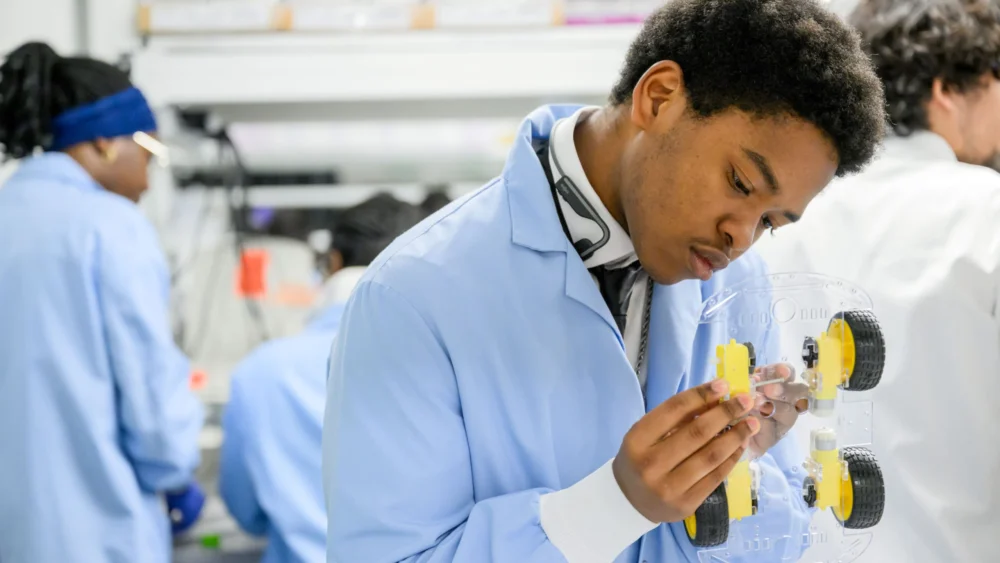
This particular assignment, the design and construction of the chemically powered model car and its intricate battery, is a cornerstone of the curriculum in "Hands-On Engineering: Squishy Style Making with Biology and Chemistry." The course is expertly led by Dr. Justin Buck, the director of the Huang-Hobbs BioMaker Space and a distinguished alumnus (’12). Dr. Buck’s pedagogical approach prioritizes student autonomy and experiential learning. As Jaden himself articulates, "It is definitely one of my favorite classes." This sentiment stems from the significant freedom granted to students once they receive the foundational training. They are empowered to independently explore and devise solutions to the challenges presented by each project, fostering critical thinking and problem-solving skills in a real-world context. This freedom to experiment and innovate is a defining characteristic of the BioMaker Space experience.
The Huang-Hobbs BioMaker Space, strategically situated in the basement of Building 26, serves as a dynamic and inclusive environment. It is a place where individuals with diverse levels of experience, from complete novices to seasoned expert mentors, can converge. The space is equipped to facilitate a wide array of workshops, offering students opportunities to delve into cutting-edge biological and chemical technologies. These workshops cover a broad spectrum of fascinating fields, including bacterial photography, where students learn to harness the power of microorganisms for artistic and scientific purposes; biobots, focusing on the design and construction of biologically inspired robots; lateral flow assay, a technique crucial in diagnostics and biosensing; CRISPR gene editing technology, a revolutionary tool for genetic manipulation; and DNA origami, an emerging field that utilizes DNA to construct nanoscale structures. This diverse offering ensures that students can explore their interests across various disciplines within the broader scope of bio-making.
For Jaden, the BioMaker Space has transcended its physical location to become a vibrant hub for collaboration and community building. He emphasizes the indispensable role of his peers and the guidance provided by counselors in his learning journey. "I could never have done anything in that lab without my peers and counselors helping me," he candidly admits. This profound appreciation for teamwork is a key element that contributes to the welcoming and exhilarating atmosphere of the class. Jaden further highlights the profound impact the makerspace has had on his personal and academic integration into campus life. "It has been a great introduction to campus," he states, revealing that he forged some of his very first friendships at MIT within the collaborative environment of the BioMaker Space. This social dimension, coupled with the rigorous academic content, creates a holistic and enriching student experience.
Jaden’s academic trajectory is currently being shaped by these immersive experiences. He is actively considering a double major, with aspirations to pursue studies in Course 10-ENG, focusing on Energy, and Course 21W, which centers on Writing. However, his engagement with the "Hands-On Engineering" class and the broader offerings of the BioMaker Space has ignited a newfound passion for biology. This interdisciplinary exposure is a testament to the power of experiential learning to broaden horizons and uncover unexpected academic interests. The ability to connect seemingly disparate fields, like engineering and writing, or chemistry and biology, is a hallmark of a well-rounded education, and the BioMaker Space is clearly facilitating such connections for its students.
The educational philosophy underpinning the Huang-Hobbs BioMaker Space is rooted in the belief that learning by doing is paramount. Students are not merely passive recipients of information; they are active participants in the creation and discovery process. The "Squishy Style Making" moniker itself suggests a playful and adaptable approach to complex scientific subjects, making them more accessible and engaging. This methodology is particularly effective for subjects that can often be perceived as abstract or daunting. By providing tangible projects like the model car, students can directly observe the principles they are learning about, solidifying their understanding and fostering a deeper appreciation for the scientific disciplines. The "squishy" aspect likely refers to the use of biological materials, which often possess unique tactile and interactive qualities that enhance the learning experience.
The emphasis on safety and independence within the BioMaker Space is also a crucial aspect of its success. Biological systems, while fascinating, can also present unique challenges and require careful handling. By establishing a safe environment where students are trained and then allowed to work independently, the space cultivates a sense of responsibility and self-reliance. This is an invaluable skill that extends far beyond the laboratory, preparing students for future academic and professional endeavors. The transition from guided learning to independent exploration is a critical developmental stage, and the BioMaker Space provides a supportive framework for this transition.
The variety of workshops offered at the BioMaker Space underscores its commitment to providing a comprehensive and forward-thinking educational experience. Bacterial photography, for instance, merges art and science, allowing students to visualize the unseen world of microorganisms in creative ways. Biobots connect students to the cutting edge of robotics and biomimicry, inspiring them to design machines that emulate biological systems. Lateral flow assays are fundamental to modern diagnostics, and understanding their principles equips students with knowledge applicable to public health and medical research. CRISPR technology represents a paradigm shift in genetics, offering students a glimpse into the future of medicine and biotechnology. DNA origami, a testament to the precision and elegance of molecular engineering, pushes the boundaries of nanoscale design. Each of these workshops, in its own way, contributes to a rich tapestry of learning opportunities.
The collaborative spirit fostered by the BioMaker Space is not merely anecdotal; it is a deliberate design element. In many scientific and engineering fields, groundbreaking discoveries are rarely the product of solitary effort. Teamwork, communication, and the ability to leverage diverse perspectives are essential for tackling complex problems. By creating an environment where students are encouraged to work together, share ideas, and support each other, the BioMaker Space is preparing them for the realities of modern scientific research and innovation. The friendships forged in this space are likely to evolve into valuable professional networks, further amplifying the impact of their educational experience.
Jaden’s contemplation of a double major in Energy and Writing, while seemingly distinct, highlights the growing recognition of interdisciplinary skills. Energy is a critical global challenge that requires not only scientific and engineering solutions but also effective communication to inform policy, engage the public, and drive change. Writing skills are essential for articulating complex scientific concepts, advocating for research, and disseminating findings to a wider audience. The BioMaker Space, by nurturing an appreciation for both hands-on experimentation and clear communication, is ideally positioned to support students like Jaden in forging unique and impactful academic paths. The fact that a class focused on biology and chemistry has also sparked an interest in writing demonstrates the interconnectedness of knowledge and the power of a well-rounded educational environment.
In conclusion, the Huang-Hobbs BioMaker Space is more than just a physical location; it is an incubator of innovation, collaboration, and interdisciplinary learning. Through engaging projects like the chemically powered model car and a diverse array of workshops, students like Jaden Chizuruoke, Rihanna Arouna, and Marian Akinsoji are gaining invaluable hands-on experience, developing critical thinking skills, and forging meaningful connections. The "Hands-On Engineering: Squishy Style Making with Biology and Chemistry" course, under the guidance of Dr. Justin Buck, exemplifies a pedagogical approach that empowers students, fosters a love for scientific exploration, and prepares them to tackle the challenges of the future with confidence and creativity. The makerspace serves as a powerful testament to the transformative potential of experiential learning in the realms of engineering and content creation.