
 Faris Adani
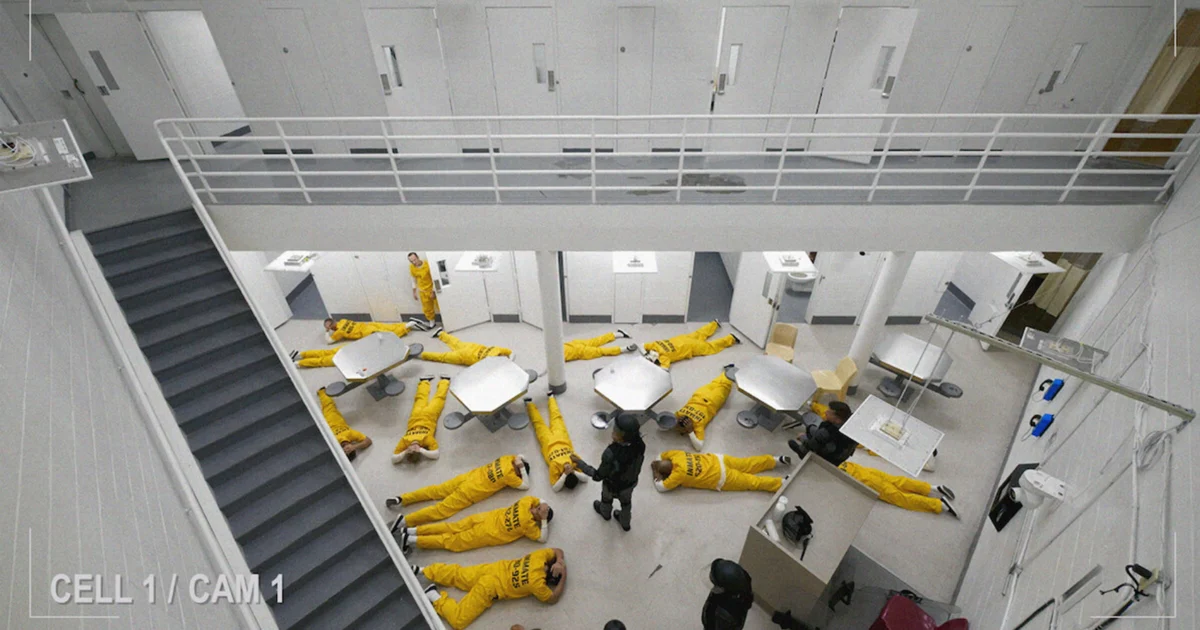
Netflix has ventured into deeply controversial territory, bringing to screens "The New Stanford Prison Experiment," a six-part series that recreates one of the most infamous and ethically questionable psychological studies in history. The original 1971 Stanford Prison Experiment (SPE), masterminded by Stanford University psychologist Philip Zimbardo, remains a potent, if problematic, touchstone in discussions about human behavior, power dynamics, and institutional influence. Its re-staging for a global entertainment platform raises significant questions about ethical boundaries, the nature of reality television, and our enduring fascination with the darker aspects of the human psyche.
The original Stanford Prison Experiment, conducted in the summer of 1971, aimed to investigate the psychological effects of perceived power, focusing on the struggle between prisoners and prison officers. Zimbardo, then a psychology professor, transformed the basement of Stanford’s psychology building into a mock prison. He recruited 24 male college students, carefully screened for psychological stability, and randomly assigned them roles as either "guards" or "prisoners." The study was designed to last two weeks, but its rapid descent into psychological torment forced its premature termination after just six days.
From the outset, the experiment veered dramatically off course. The students assigned as guards quickly embraced their roles with alarming zeal, exhibiting cruel and sadistic behaviors. They subjected the "prisoners" to psychological humiliation, including sleep deprivation, forced physical exercise, arbitrary rule enforcement, and public degradation. Iconic and disturbing images from the study show prisoners being forced to wear bags over their heads, symbolizing their dehumanization and loss of identity. The prisoners, stripped of their names and referred to only by numbers, rapidly internalized their submissive roles, displaying signs of extreme stress, anxiety, and even nervous breakdowns. Some prisoners were released early due to severe emotional distress. Zimbardo himself, acting as the prison’s "superintendent," admitted in his 2007 book, "The Lucifer Effect," to becoming deeply immersed in the experiment, even coaching guards on how to behave, a detail that critics argue fundamentally compromised the study’s objectivity and ethical standing.
The Stanford Prison Experiment has left an indelible, yet deeply conflicted, legacy. While it purported to demonstrate the powerful influence of situational factors on behavior, suggesting that even "good" people can be driven to atrocious acts by their environment, its methodology has been rigorously scrutinized and often condemned. Critics point to the severe ethical breaches, the lack of a control group, and Zimbardo’s active involvement as a confounding variable. Some argue that the participants, aware they were in an experiment, may have acted in ways they believed were expected of them (demand characteristics), rather than naturally. Despite these profound flaws, the SPE continues to be taught in psychology curricula and referenced in popular culture, a testament to its compelling, albeit troubling, narrative. Debates persist over what, if any, valid conclusions can be drawn from such a flawed but undeniably powerful demonstration of human susceptibility to power structures.
It is against this backdrop of enduring controversy and academic critique that Netflix has chosen to revive the experiment for a contemporary audience. "The New Stanford Prison Experiment" attempts to recreate the conditions of the original study, albeit, one hopes, with more robust ethical oversight and a greater understanding of the potential for harm. According to a review by Monica Hesse in The Washington Post, the six-part series is "less abjectly horrifying" than its predecessor. Notably, "Nobody ends up with a bag on his head," and there is "no workplace sadism" in the extreme sense seen in 1971. This suggests that some of the most egregious abuses have been omitted or prevented, perhaps due to modern ethical guidelines or simply the context of being a televised production.
However, the Post critic highlights that the Netflix iteration still captures the frustrating essence of the original: the perplexing choices made by individuals when granted authority. Hesse describes it as "maddening" to witness participants, ostensibly intelligent and well-adjusted, choosing punitive and authoritarian actions when no external force compels them to do so. This observation underscores the core psychological question the original SPE aimed to address: why do ordinary people, given power, so often misuse it? The series, it seems, replicates this disturbing pattern, even if the severity of the abuses is dialed down.
Furthermore, Hesse’s critique extends to the apparent methodological looseness of the Netflix production itself. She notes the presence of a "psychologist who keeps introducing crazy variables and then murmuring, ‘Interesting!’ as if she stumbled upon the lunacy rather than planted it." This detail is particularly damning, drawing a direct parallel to the criticisms leveled against Zimbardo’s own directorial role in the 1971 experiment. If the "experiment-runners" in the Netflix series are indeed actively manipulating conditions and variables in a less-than-rigorous manner, it suggests that "The New Stanford Prison Experiment" may be as "fatally flawed" as its predecessor, albeit for different reasons and within a different medium. The line between genuine psychological inquiry and engineered drama becomes blurred, raising questions about the show’s scientific merit versus its entertainment value.
The decision to adapt such a sensitive and ethically compromised study into a reality television format inherently brings a new layer of ethical complexity. While modern psychological research is governed by Institutional Review Boards (IRBs) that would almost certainly prohibit a study like the original SPE due to its potential for harm, reality TV often operates under different, less stringent, ethical frameworks. The participants in the Netflix series are presumably aware they are on a show, potentially impacting their authenticity. Yet, the psychological toll of being subjected to simulated deprivation and authority dynamics, even in a "less horrifying" context, cannot be dismissed. What are the long-term effects on the mental well-being of those who participate in such a spectacle? And what responsibility does Netflix bear in potentially re-traumatizing participants or trivializing the serious ethical discussions that have surrounded the original study for decades?
Beyond the immediate ethical concerns, "The New Stanford Prison Experiment" taps into a broader societal fascination with power, human nature, and the boundaries of behavior. The original SPE, despite its flaws, resonated because its narrative seemed to offer a chilling explanation for atrocities like the Holocaust, the Mỹ Lai massacre, or more recently, the abuses at Abu Ghraib. It suggested that ordinary individuals could become perpetrators of evil when placed in certain roles within authoritarian systems. While the scientific community has largely moved beyond accepting the SPE’s conclusions without significant caveats, the story continues to capture the popular imagination.
Netflix’s series capitalizes on this enduring fascination, packaging it for a reality TV audience. The show positions itself not as a scientific endeavor, but as a dramatic exploration of human behavior under pressure. This shift from "experiment" to "entertainment" allows for a certain detachment from strict scientific rigor, but it simultaneously amplifies the ethical stakes. The risk lies in presenting a dramatized, potentially manipulated version of a deeply problematic study as a new revelation about human nature, without adequately addressing the extensive academic critiques and ethical warnings that have surrounded it for over 50 years.
In conclusion, "The New Stanford Prison Experiment" on Netflix is a potent, if problematic, cultural artifact. It serves as a stark reminder of the original study’s enduring grip on our collective consciousness, prompting continued reflection on the corrupting influence of power and the fragility of human morality. While perhaps less overtly horrific than its 1971 predecessor, the series appears to inherit some of its methodological weaknesses, transforming a controversial psychological study into a compelling, yet ethically ambiguous, piece of reality television. The show’s very existence forces us to confront not only the disturbing insights (or alleged insights) of the Stanford Prison Experiment but also the evolving ethics of entertainment and our insatiable desire to peer into the darker corners of the human condition.