isnaini azizah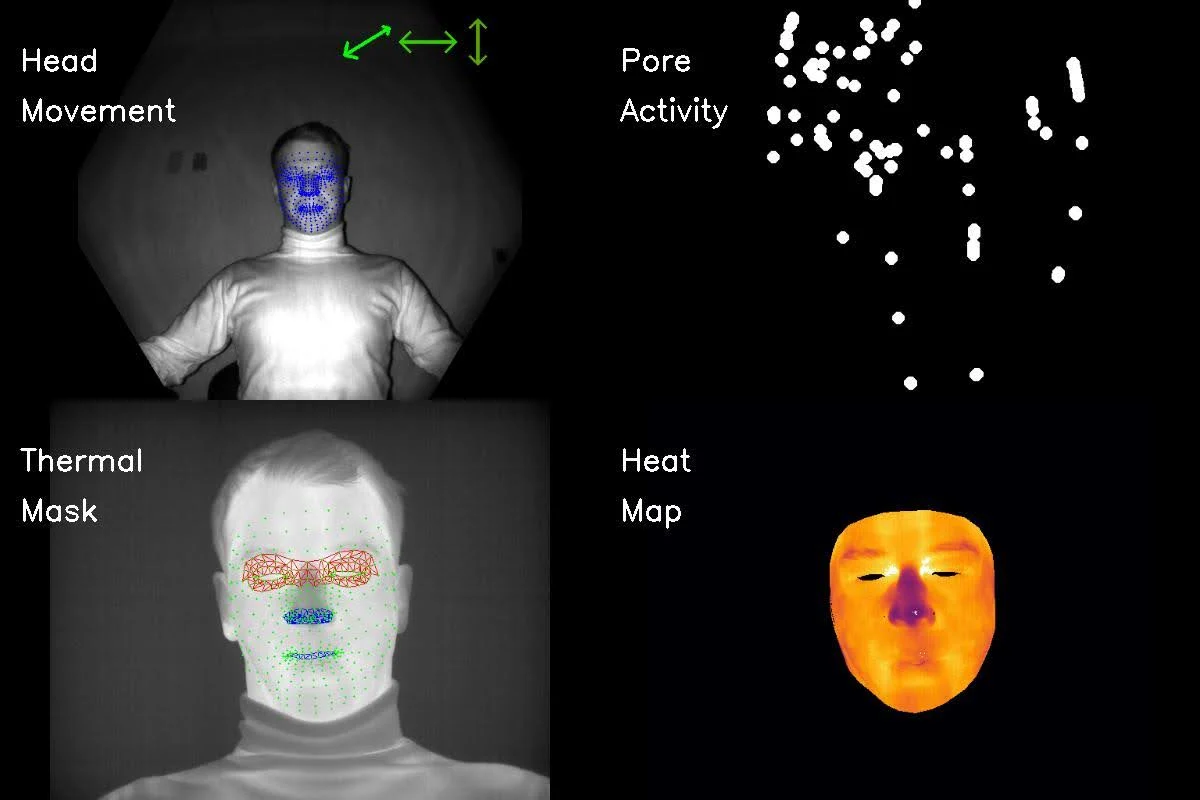
The US Department of Defense has formally requested $30.3 million over the next five years to develop an advanced lie detection system, tentatively named "Polygraph+" or "Polygraph Next." This ambitious initiative aims to significantly enhance the accuracy and reliability of credibility assessment technologies by integrating sophisticated artificial intelligence and machine learning algorithms. A key focus of the program will be "standoff sensing," a novel technique that allows for the collection of physiological data from individuals without the need for direct physical contact or attached devices.
This significant investment underscores a heightened concern within the Pentagon regarding information security and internal leaks. Under the leadership of Defense Secretary Pete Hegseth, the department has reportedly increased its reliance on polygraph examinations in an effort to identify the sources of sensitive information that has been leaked to the press. This push for more advanced lie detection follows reports, such as one from The New York Times in September, detailing how approximately 50 officers on the Joint Staff underwent polygraph tests following news coverage that revealed depleted US weapons stockpiles amidst ongoing conflicts.
The "Polygraph+" program will be spearheaded by the Defense Counterintelligence and Security Agency (DCSA), an agency already responsible for conducting federal background checks. According to the budget proposal, which is currently awaiting congressional approval, the new technology is intended for a range of applications, including the vetting of prospective employees and the detection of "insider threats." While the specific technological components of Polygraph+ remain undisclosed, and the DCSA has not yet provided further details, insights can be gleaned from prior Department of Defense initiatives.
In 2023, the Pentagon’s Defense Innovation Unit (DIU) launched an open call for companies to submit products capable of deception detection. This effort led to the selection of two companies, Presage Technologies and Altec Research, to develop prototypes. Presage Technologies claims to be able to measure heart rate and breathing patterns using standard camera technology, while Altec Research, a medical sensor company, is expanding into non-contact sensing. Visual representations of Altec’s prototype technology, released by the DIU, indicate its capability to monitor head movements, facial skin temperature, and pore activity – all potential indicators of physiological stress. Representatives from Presage Technologies and Altec Research have not commented on their involvement, and the DIU has declined to provide further information.
The development of Polygraph+ comes at a time when traditional polygraph technology, largely unchanged since its invention in the 1920s, faces persistent scrutiny regarding its scientific validity. Current polygraph examinations rely on monitoring blood pressure, pulse, respiration, and galvanic skin response to infer deception. Examiners compare physiological responses to a subject’s answers to baseline questions (e.g., "Is the sky blue?") and relevant questions (e.g., "Have you ever committed a crime?").
Despite the federal government conducting tens of thousands of these tests annually for employee screening, the scientific community has repeatedly questioned the polygraph’s efficacy. A 1983 report by Congress’s Office of Technology Assessment found limited evidence supporting its use for employee screening, and a 2003 report by the US National Research Council (NRC) characterized the evidence of its effectiveness as "weak at best."

Independent research suggests that humans can detect deception with just over 50% accuracy without any technological assistance. While the American Polygraph Association claims a polygraph accuracy rate of 80% to 94%, the 2003 NRC report highlighted the significant number of potential errors, even with such reported accuracy levels, when applied to a large population like the DoD’s 2.8 million staff, potentially leading to tens of thousands of false accusations.
Furthermore, the interpretation of polygraph results can be subjective, with different examiners often reaching disparate conclusions. Concerns have also been raised about potential biases, with individuals from minority groups being more likely to be judged as deceptive. The effectiveness of polygraphs can also be undermined by countermeasures. Individuals trained in these techniques can deliberately heighten their physiological responses to control questions, thereby masking deception during relevant questions. As noted by Sophie van der Zee, an associate professor specializing in deception at Erasmus University in Rotterdam, "If you know how it works, you can beat it." She also points out that the primary impact of polygraphs often lies in their deterrent effect, leading to confessions before the test even begins, but this relies on the subject’s belief in the machine’s infallibility.
Over the decades, numerous attempts have been made to develop more advanced lie detection methods, employing technologies such as thermal cameras, pupil trackers, and brain scans. However, none have consistently demonstrated reliable results outside of laboratory settings. The fundamental challenge, according to experts, is the absence of a universal, unambiguous physiological indicator of lying. "There is still no Pinocchio’s nose," states van der Zee.
The integration of AI offers a theoretical pathway to improve polygraph accuracy by identifying subtle patterns in physiological data that human examiners might miss. AI algorithms are particularly suited for "multi-modal" deception detection, which aims to synthesize multiple data streams into a comprehensive deception "score" that is more difficult to manipulate. Van der Zee explains that lie detection attempts to tap into three core aspects: physiological stress, cognitive load, and conscious efforts to conceal deception. Current polygraph technology primarily addresses only one of these. "The more you can have combined methods that approach it from these three different angles, the more successful you will be," she posits.
This multi-faceted approach is not entirely new. In the 2000s, researchers at Manchester Metropolitan University developed "Silent Talker," a system that generated deception scores from video footage, which was later integrated into the EU-funded pilot program iBorderCtrl. In the US, the AVATAR project combined eye-tracking, voice analysis, and body movement detection for use at border crossings. However, these initiatives have largely faded from prominence.
Kyri Kotsoglou, a professor at Northumbria Law School, expresses skepticism about the fusion of AI and polygraphs, labeling it "the worst of both worlds" due to the potential for compounding uncertainty with existing invalidity. He argues that even if AI can identify novel patterns in physiological data, establishing a reliable link to deception is problematic without definitive "ground truth." Marion Oswald, a professor of law and frequent collaborator with Kotsoglou, echoes these concerns, stating, "Even if you have all the records in the world from polygraph tests, you don’t know whether those polygraph tests are right or not." She fears that new lie detection technologies will increasingly function as psychological deterrents rather than scientifically validated tools.
Oswald suggests that the Pentagon’s renewed interest in lie detection is a direct response to current administrative concerns about leaks and perceived disloyalty. "It seems very much a response to the concern of the current administration to leaks and perceived lack of loyalty," she notes. "[Lie detection is] being used as a threat, to intimidate and force people to confess to things, as opposed to anything that’s actually getting valid information."