Imroatul Nasiyah
Quantum jumps, the abrupt and discrete transitions of a system from one energy state to another, have captivated physicists since the early 20th century. While these phenomena were first experimentally confirmed in trapped ions in 1986 and later in photons, the fundamental particles of light, in 2007, observing them in sound proved to be a far more formidable challenge. The recent study, published in the prestigious journal Science, successfully chronicles these quantum leaps in sound, offering unprecedented insight into the quantum nature of vibrations.
"What this study shows will allow us to move forward with developing new quantum technologies with sound," stated Safavi-Naeini, an associate professor of applied physics at Stanford University. "We have seen that vibrating objects can exhibit quantum behavior, which is the prerequisite for many of the operations needed by quantum computing and sensing." This statement underscores the profound implications of the research, suggesting that the seemingly continuous nature of everyday sound is a macroscopic illusion, masking a fundamentally granular reality at the quantum level.
The quantum equivalent of a photon, the discrete unit of light, is known as a phonon. A phonon represents a quantized vibration, a collective excitation of atoms in a lattice structure. In our everyday experience, vibrations appear to decay smoothly and continuously. For instance, the sound of a ringing bell gradually diminishes until it is inaudible. However, at the quantum scale, this smooth dissipation is replaced by distinct, stepwise changes in energy. This behavior, analogous to the quantized energy levels of electrons in atoms or the energy packets of photons, is a hallmark of quantum mechanics. While previous experiments had provided indirect evidence for sound undergoing these quantum transitions, the Stanford team’s achievement lies in the direct, real-time tracking of individual phonons as they "jump" between energy states.
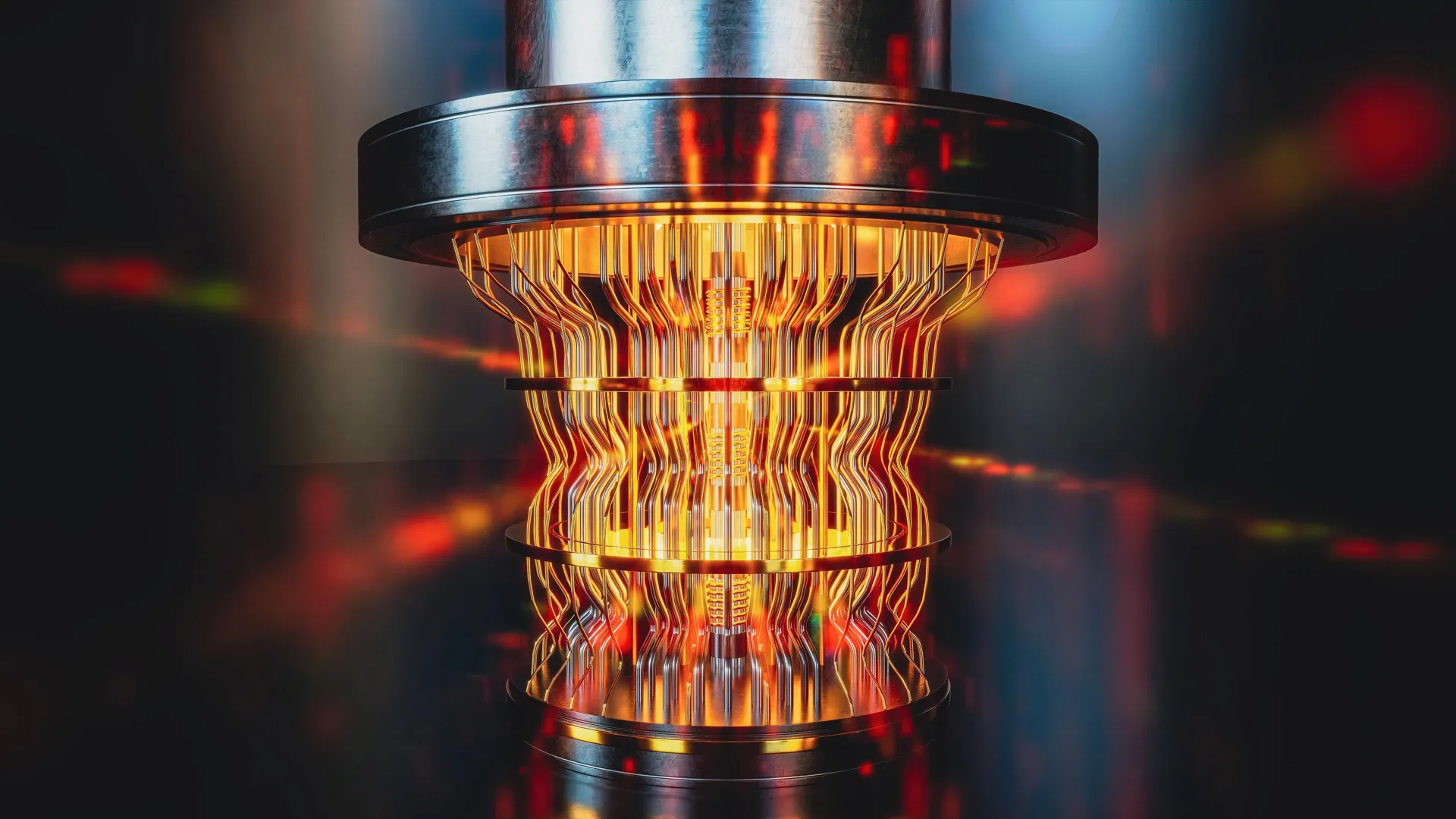
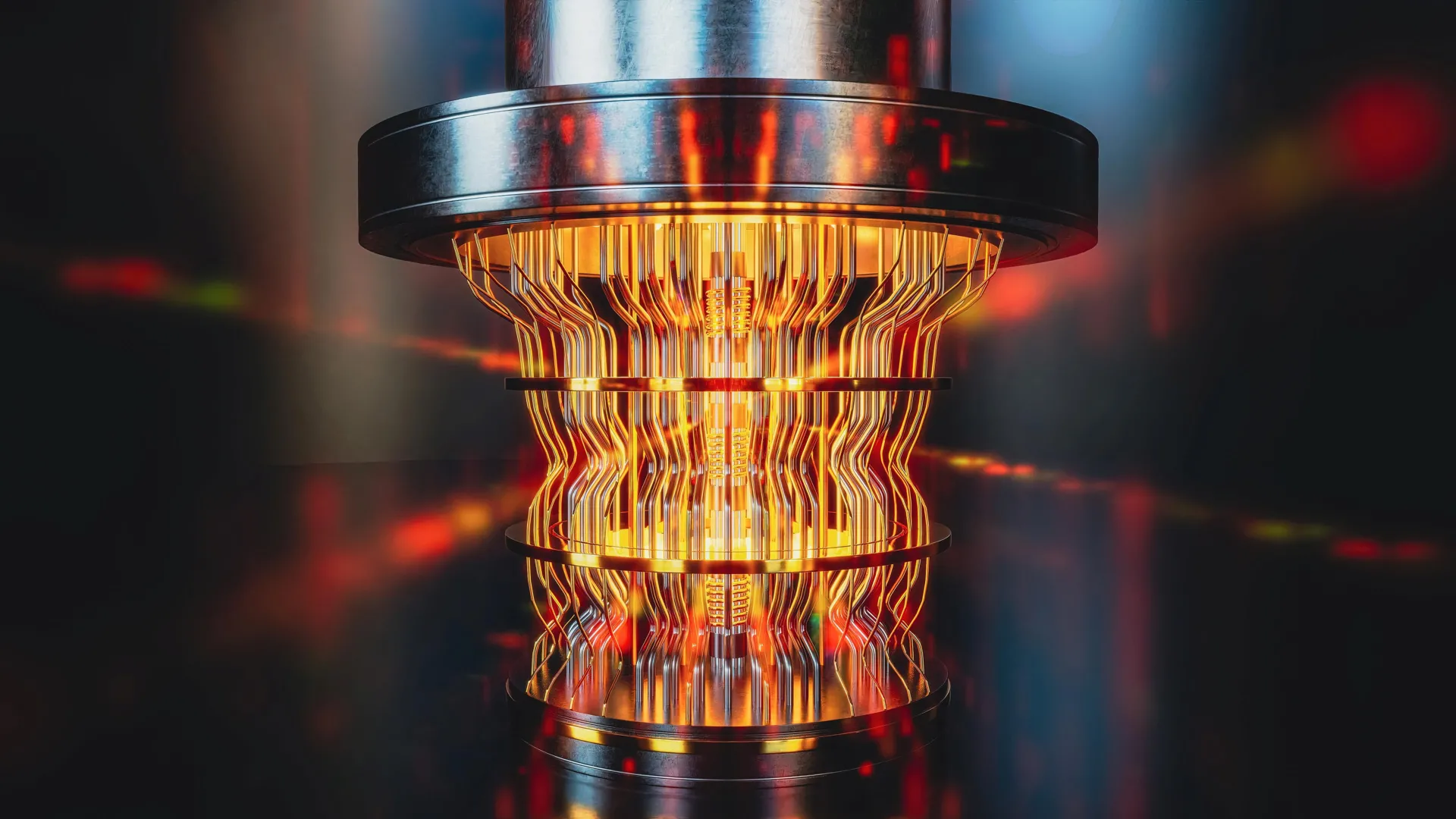
The heart of this groundbreaking experiment is a microscopic mechanical resonator, meticulously engineered using advanced chip fabrication techniques. The diminutive size of this resonator is a crucial design element, as it allows for the potential integration of numerous such devices onto a single chip, paving the way for complex quantum operations. A critical factor enabling the observation of quantum jumps was the resonator’s exceptionally long "ringdown time"—the duration for which it can sustain vibrations. This microscopic tuning fork, as it’s metaphorically described, can vibrate for an impressive two milliseconds. To put this into perspective, if a macroscopic tuning fork possessed the same relative ability to maintain its vibration, it would continue to ring for several hours.
This extended vibration persistence provided the researchers with a vital temporal window. Over these two milliseconds, they were able to conduct hundreds of measurements. The sheer volume of repeated readings was instrumental in pinpointing the precise moment when the vibration ceased, signifying the sound’s quantum jump from an energy state of 1 to 0. This ability to resolve such a fleeting event is a testament to the precision of their experimental setup and methodology.
A significant hurdle overcome by the researchers was the long-standing challenge in quantum engineering: measuring the state of a quantum system without inadvertently disturbing its delicate equilibrium. The quantum world is notoriously fragile, and any attempt to observe it can fundamentally alter its state. To address this, Takuma Makihara and Erik Szakiel, the study’s co-first authors, devised an ingenious method for coupling the microscopic mechanical resonator to a superconducting qubit. A qubit, the fundamental unit of quantum information, is an electrical circuit capable of existing in multiple states simultaneously. In this specific experimental configuration, the qubit also served as the highly sensitive detector.
"We had to continually develop new processes to make this extremely long-lived, vibrating object and then integrate it with the qubit, which is our little electrical detector — without ruining either subsystem," explained Makihara, a recent Stanford doctoral graduate. This intricate dance of fabrication and integration highlights the multidisciplinary nature of quantum research, requiring expertise in materials science, electrical engineering, and quantum physics.
The qubit’s role was to repeatedly interrogate the mechanical resonator throughout its two-millisecond lifespan. Each interrogation determined whether a phonon was present in an energy state of 1 or 0. By performing these measurements in rapid succession, the researchers could meticulously track the resonator’s vibrational energy and, crucially, identify the exact instant of the quantum jump. This iterative measurement process, akin to taking many snapshots of a fleeting event, allowed for the reconstruction of the quantum transition.
The implications of this work extend far beyond fundamental physics, pointing towards tangible applications in emerging quantum technologies. The researchers envision this capability as a foundational step towards harnessing sound as a quantum platform. One promising avenue is quantum error correction, a critical challenge in the development of fault-tolerant quantum computers. Quantum computers hold the promise of solving problems currently intractable for even the most powerful supercomputers, but their quantum states are notoriously susceptible to errors. Quantum jumps, in many quantum computing architectures, can serve as an indicator of such errors. The ability to monitor these jumps in acoustic vibrations could provide a powerful new mechanism for detecting and rectifying these errors, thereby improving the reliability of quantum computations.
Furthermore, the synergy between the mechanical resonator and the qubit presents a potential for developing ultra-sensitive measurement platforms. Safavi-Naeini’s group is already collaborating with physicist Michael Roukes’ team at Caltech to explore the system’s potential for detecting and identifying individual proteins within living cells. This biophysical application underscores the versatility of quantum phenomena and their potential to revolutionize fields ranging from medicine to materials science.
Beyond the realm of specialized quantum technologies, the advance also promises to enhance existing technologies that rely on sound. As Szakiel, a doctoral student in Safavi-Naeini’s lab, noted, sound plays an integral role in numerous electronic devices, including smartphones. The ability to achieve increasingly precise control over vibrations could lead to new generations of these devices with improved performance and novel functionalities. "This shows we can have incredibly fine-tuned control of sound, which might mean that devices that use sound as a fundamental technology can get much better," he remarked. This suggests a future where acoustic components in our everyday electronics are not only more efficient but also possess capabilities previously confined to theoretical discussions.
The research team’s contributions are further amplified by the involvement of other distinguished researchers and substantial funding from various governmental and private entities. Safavi-Naeini’s affiliation with Stanford Q-FARM and Bio-X highlights the interdisciplinary environment fostering such cutting-edge research. The list of additional Stanford co-authors, including Professor David Schuster, scientist Shannon Harvey, research scientist Mihir Pendharkar, and doctoral scholars Rachel Gruenke-Freudenstein, Oliver Hitchcock, Matthew Maksymowych, and Kaveh Pezeshki, showcases a broad collaborative effort within the university. The research received crucial support from Amazon Web Services Inc., the Air Force Office of Scientific Research, the Office of Naval Research, the National Science Foundation, the Natural Sciences and Engineering Research Council of Canada, and the U.S. Department of Defense. The recognition of Safavi-Naeini and Schuster as Amazon Scholars further indicates the potential commercial and industrial interest in these quantum advancements. This confluence of academic rigor, technological innovation, and robust funding has culminated in a scientific achievement that resonates across multiple disciplines, promising to shape the future of technology and our understanding of the quantum universe.