isnaini azizah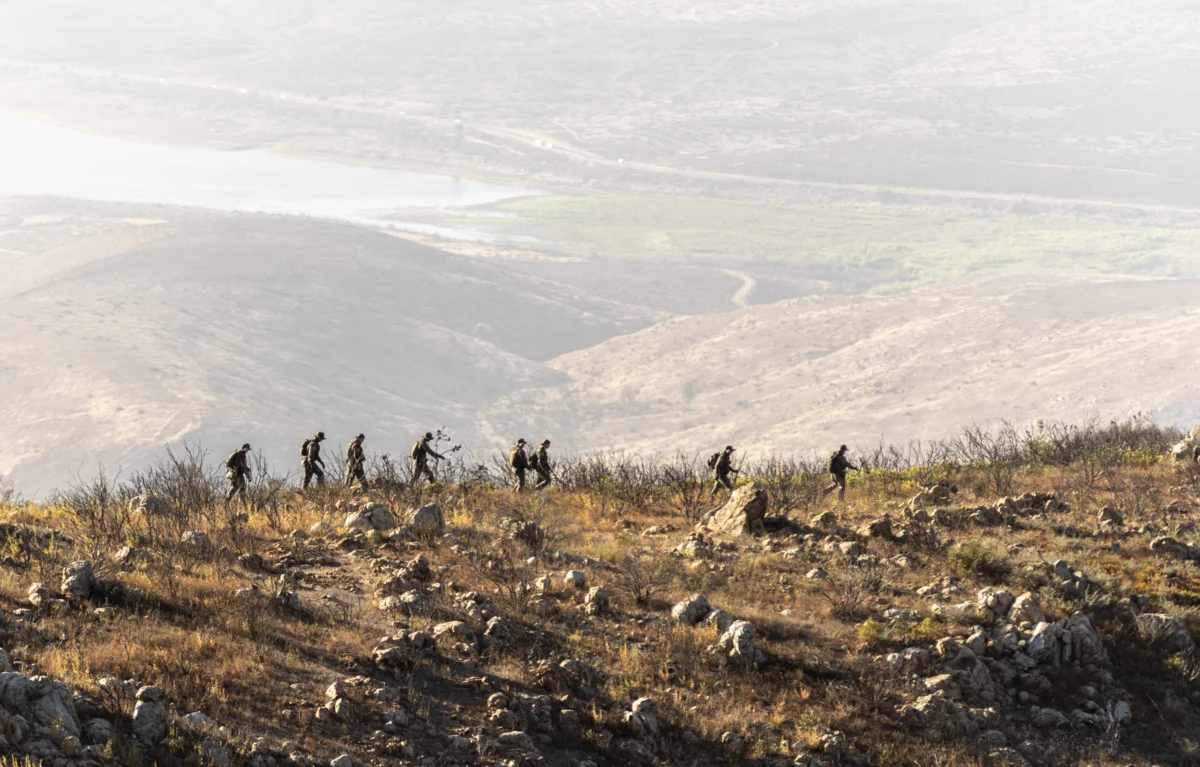
The vast, unforgiving landscape of the Otay Mountain Wilderness became the final resting place for Graciela Gómez Hernández, a 30-year-old mother whose desperate journey to provide for her children ended tragically just hours after she crossed into the United States on September 14, 2025. Her story, unearthed through a collaborative investigation by MIT Technology Review and Times of San Diego as part of the "Dying on Camera" series, highlights a disturbing paradox: a region saturated with advanced surveillance technology, yet one where migrants continue to perish in plain sight, their final moments potentially unobserved or ignored by the very systems designed to monitor the border.
Graciela, driven by the urgent need to send money back to her three children and parents in southern Mexico, embarked on her perilous journey with the hope of securing work. Her oldest son, just 11, had dreamed of a bicycle, a simple wish that underscored the depth of her familial obligations. She had kept her plan secret from her family until the day before, a testament to the difficult choices forced upon those seeking a better life. Her chosen path led her to the eastern edge of Tijuana, where she navigated a section of the border wall, either by scaling it or finding a gap in the undeveloped fencing. This marked the beginning of her trek into the rugged Otay Mountain Wilderness, a vast expanse of sagebrush and manzanita where game trails crisscross the dusty terrain.
While the eastern edge of San Diego is only a mile away, migrants often venture 10 to 20 miles north through the mountains to evade Border Patrol checkpoints, aiming for smaller towns and more remote highways. Graciela, it seems, was attempting precisely this strategy. Her final voice messages to her mother, filled with a growing sense of exhaustion and despair, paint a haunting picture of her struggle. "I can’t do it anymore," she whispered into her phone between 2 and 3 p.m. By the time a forensic crew arrived two weeks later, her body had been reclaimed by the earth, a stark reminder of the unforgiving environment and the passage of time.
Graciela died alone, yet she was undeniably within one of the most heavily monitored stretches of land on Earth. She had told her family of seeing helicopters overhead and Border Patrol trucks patrolling the roads below, and crucially, she was within the formidable gaze of a General Dynamics surveillance tower, erected in 2019. This tower, equipped with electro-optical and infrared cameras boasting a range of 5 to 7 miles, was a mere mile from Graciela’s final location. The proliferation of such towers, now enhanced with artificial intelligence to distinguish humans from wildlife and track movements, represents a billion-dollar investment in border security. Yet, as these sophisticated cameras sweep the landscape, migrants continue to die, often within their unblinking view.

The Otay Mountain Wilderness, in particular, has become a focal point for these tragic occurrences. An analysis by Times of San Diego revealed hundreds of cases along the California border where migrant remains were found within the surveillance range of these towers, with at least 138 occurring in the past four years. A further topographical analysis by MIT Technology Review suggested that over half of these remains were found in locations offering a clear, unobstructed view for the cameras. While some migrants succumb quickly to accidents or drowning, many, like Graciela, endure slow deaths from exposure, their suffering potentially preventable with timely aid. These individuals, hailing from across Mexico and even as far as Africa, and ranging in age from 5 to 70, all met their end within the reach of surveillance technology.
The investigation highlighted several other poignant cases: Marcia Dutra, a 36-year-old Brazilian woman found in July 2023 near a border fence, likely from heat exposure, despite an AI-equipped tower being a mere 2,000 feet away. Elvi Vasquez Bortolon, a 28-year-old Mexican man, died of suspected hypothermia in February 2024 on a ridge near the border wall, his body spotted from a helicopter after being deceased for over five days, with a remote video tower approximately 1,400 feet distant, hidden from view. In August 2024, Ramón Montenegro, a 51-year-old Mexican man, died of possible heatstroke in the mountains, with an AI surveillance tower, invisible on the other side of a hill, just 1,300 feet away.
The sheer number of surveillance towers along the California border—over 120 according to the Electronic Frontier Foundation—is staggering. This network is further augmented by trail cameras, underground motion detectors, radar, infrared sensors, drones, and even blimps, underscoring the extensive technological apparatus deployed to monitor the border. The Trump administration even directed spy satellite agencies to surveil the U.S.-Mexico border in March 2025, illustrating the escalating reliance on technology for border enforcement.
Companies like Anduril, responsible for nearly half of the towers installed along the U.S.-Mexico border, claim their technology "directly contributed to saving lives and stopping illicit drugs." They reported in 2024 that their towers had "autonomously identified hundreds of thousands of border crossings." Border Patrol officials have echoed this sentiment, with one sector chief in Arizona stating in May 2026, "We’re dang close to pretty much knowing everything that comes across."
However, the persistent proximity of migrant deaths to these high-resolution cameras raises critical questions: Did the system fail to detect individuals in distress, or were they detected and their pleas for help ignored? Anduril, the manufacturer of AI-enabled towers, did not respond to inquiries about their performance in mountainous terrain. General Dynamics, whose tower was closest to Graciela’s body, referred all questions to the Border Patrol, which similarly declined to comment on whether Graciela was spotted prior to her death or how surveillance cameras are used to detect individuals in emergency situations.

Search and rescue leaders express skepticism about the efficacy of the towers. Rafael Hernández Larraenza of Desert Angels believes some towers are "just adornment" and ineffective for tracking migrants. He also notes that Border Patrol agents, when meeting with his group, often cite a lack of time and opportunity for searches, indicating that people in need of rescue are not a priority. Bryce Peterson of No More Deaths concurs, stating, "People in need of rescue are not a priority."
The specific location where Graciela Gómez Hernández’s body was found offers a chilling perspective. A surveillance tower stood a mile away, clearly visible. A second, newer tower, equipped with slow-spinning, long-range cameras, sat 1.4 miles away on the other side of a hill. The closer tower, over 100 feet tall, peered not only onto the hillsides frequented by migrants but also into a Tijuana neighborhood. The shorter, 33-foot-tall tower surveyed the canyon Graciela likely would have traversed had she continued her journey. This newer tower, manufactured by Anduril, features two dark, round cameras that give the impression of watchful eyes, rotating and locking onto targets before swiveling away.
Osvaldo Ruiz, volunteer coordinator for the Border Angels, describes the Otay Mountain Wilderness as being peppered with "beacons throughout the mountains" capable of observing vast areas. He also points to camouflaged cameras hidden within rocks and bushes, alongside visible cameras with license plate readers. Surveillance towers have been a presence in the area since 2011, with frequent installations and upgrades, including AI-directed towers introduced in 2018 and enhanced with longer ranges in 2026. Government Accountability Office reports indicate a substantial planned expansion of these towers, with a projected cost of $1.4 billion for an additional 175, bringing the total to 2,300 by 2034, funded in part by the "One Big Beautiful Bill Act" in 2025. Border czar Tom Homan, speaking in December 2025, characterized the border infrastructure as a "smart system" designed to make agents more effective.
Graciela’s journey, like so many others, was born out of desperation. Her husband, who had already crossed to find work, had stopped sending money, leaving her family in dire straits. "There were moments when they didn’t have enough money even for a bag of detergent, or to eat," her sister, Irma, recounted, her voice trembling. Graciela’s decision to come to the U.S. was met with resistance from her family, fueling her secrecy. Irma described her sister as "a very humble person, kind to people, and loving with her children."
Graciela paid 20,000 pesos (approximately $1,150) for smugglers to assist her initial crossing, a significantly lower cost than the current average of $12,000. However, she was tasked with navigating the treacherous terrain on her own, relying only on information about where and when to start. Her phone’s location pings were meant to be transmitted back to the smugglers in Tijuana. Cesar Ortigoza, a leader of the Armadillos search group, highlights the immense scale of the territory and the arduous journey migrants face, often realizing the miles yet to cover only after reaching mountain peaks, all while under intense pressure to evade capture.

On the afternoon of September 14, 2025, Graciela’s WhatsApp voice messages conveyed her successful border crossing. These brief audio snippets became the only clues to her fate. The hillside where she walked was exposed, offering a panoramic view of the border wall, but the other side presented a daunting mountainous wilderness. It’s possible she turned back, overwhelmed and lost. Wandering in the afternoon heat without adequate water, dehydration could have set in within hours. Larraenza noted that "Because of the heat, there are places where you can’t move forward even half a mile in an hour."
By 2 p.m., Graciela informed her sister she was "very tired and couldn’t go any further." Irma urged her to persevere, to think of her children. 4 p.m. marked the last time Graciela’s location was transmitted to the smugglers.
Ortigoza found it "strange" that Graciela was so close to the border at her last known location. However, Peterson of No More Deaths points out the myriad ways a person can be on the verge of death near the wall, especially if they get lost and attempt to backtrack. "The only thing we’re certain of is that she suffered in her last moments," Ortigoza stated, emphasizing the terror of dying alone.
During her ordeal, Graciela encountered another individual on the trails. In one of her final messages, a man’s voice was heard saying, "there isn’t time." After this, her phone still received messages, but Graciela no longer responded.
The possibility remains that the federal surveillance tower, just a mile away, did not detect Graciela, or perhaps did not detect her in distress. An internal memo from October 2024 revealed that 30% of older surveillance towers were broken, missing parts, or had outdated equipment, rendering them ineffective. While the Government Accountability Office reported in September 2025 that Customs and Border Protection was working to repair and upgrade these towers, the number still out of commission remained unclear. The Border Patrol offered no comment on whether the tower near Graciela’s death site was operational.

Dave Maass of the Electronic Frontier Foundation questions the overall functionality of these systems, noting a lack of independent evaluations of their effectiveness. A report from March 2026 detailing the installation of G-BOSS(E) towers in the Otay Mountain Wilderness prior to Graciela’s death highlighted operational challenges, including vulnerability to tipping, rodent damage, and battery depletion. Even with claims of dominance in "rugged terrain," Osvaldo Ruiz believes the dense brush and high cover in the Otay Mountain Wilderness would still make it difficult for surveillance towers to track migrants effectively.
Analysts from the RAND Corporation concluded in 2020 that the "outcomes and outputs" indicating the success of surveillance towers are "not directly observable." They suggested that the towers’ primary value lay in their deterrent effect, potentially forcing migrants into more remote and undetected routes, rather than their direct surveillance capabilities. This increased surveillance, paradoxically, pushes migrants into more extreme and dangerous areas, further diminishing the chances of rescue.
Despite manufacturers’ claims of AI-enabled towers identifying migrants autonomously, apprehensions still require human intervention. Smugglers have reportedly begun sending migrants across alone to overwhelm the system with individual alerts. This means it’s possible Graciela was captured on camera, but agents deemed her individual presence not worth pursuing, especially if they were prioritizing larger groups. Peterson notes that Border Patrol agents often "ignore" individuals if it’s "not worth their time to just catch one person."
Larraenza recounts instances where dehydrated individuals called out to Border Patrol agents who failed to stop, while acknowledging that agents also perform "impossible" rescues. He recalled an incident in September 2024 where a deputy stated that Border Patrol "don’t come out here" when asked about their response to a rescued family. On a recent visit to the site of Graciela’s death, multiple Border Patrol trucks were visible nearby, with an agent working on the tower’s cameras.
Irma’s desperate messages to her sister went unanswered. She suspects Graciela may have been killed or abandoned by a fellow migrant during her final hours due to her inability to maintain pace. It took Irma two weeks to contact the smugglers, who were initially uncooperative until threatened with police action. This pressure yielded Graciela’s last known location.

On October 3, 2025, nearly three weeks after Graciela’s final message, the Armadillos search group transmitted her phone’s last known GPS coordinates to the Border Patrol. The medical examiner’s report, however, contradicts Irma and Ortigoza’s accounts of when her location was known, suggesting they were not interviewed. The autopsy report described "skeletonized remains" and noted the absence of water or food in the vicinity. The decomposition was so advanced that it was impossible to determine if Graciela was a victim of murder or dehydration. Her clothing was found in a pile, and the report noted the presence of Mexican currency, coins, bobby pins, and tweezers in her pants pockets. It remained unclear if her clothes were removed by another person or if she shed them during a state of dehydration delirium. Nearby, a backpack contained women’s spray deodorant and a small glass container of perfume.
"When you get to one of these sites, and you see the situation, the loneliness, the environment, you start wondering, what was this person thinking in their last moments?" Larraenza mused. After DNA confirmation, Irma spent over $4,000 to send her sister’s remains back to Mexico for a funeral held nine months after her death. Graciela’s oldest son often sits in quiet contemplation, missing his mother, while the family rallies to care for her children.
A cross was placed at the site of Graciela’s discovery with Border Patrol’s permission. Ortigoza, visiting the memorial, played one of Irma’s voice messages, the sound resonating into the dirt where Graciela’s body imprint remained visible. "I know that in the place you’re in, there isn’t suffering, like how you suffered here on this earth," Irma’s message conveyed. "I know you left thinking about your children. I know you wanted to give them a better life. I feel you here, and I feel you alive."
Cesar Ortigoza receives up to five calls daily from families searching for missing loved ones at the border. Despite a decrease in border crossings and reported deaths since January 2025, the underlying issues in migrants’ home countries persist, driving continued attempts to cross. In the first half of 2026, consumption of water and supplies left by volunteers in the Otay Mountain Wilderness decreased, suggesting shifts in migration patterns. "It’s hard for me to really understand how people are crossing, but I know they are," Ruiz stated.
Peterson warns that increased surveillance could lead to more migrant deaths. As surveillance towers push migrants to take longer, more extreme routes, the available safe zones diminish. Some now attempt to traverse surveilled territories rather than bypass them, moving at breakneck speeds, "not being able to take the time to take care of themselves." Larraenza notes that migrants often choose the hottest weeks of the year for their crossings, believing fewer agents will be present, but increasing their risk of death. In mid-September, at least two people had gone missing in the Otay Mountain Wilderness, their remains yet to be found.

Ortigoza views Graciela’s story as emblematic of a decades-long trend of individuals risking their lives out of necessity. The surveillance towers, regardless of their functionality, failed to deter Graciela from crossing or from dying in that area. "If the riches of the world were distributed more equitably, we wouldn’t have to do things like this to reach a better life," he stated. During a visit to the memorial, Ortigoza observed a Border Patrol truck parked near the surveillance tower, with an agent working on its cameras, a stark reminder of the ongoing, technologically driven, and often fatal dynamic at the border.