isnaini azizah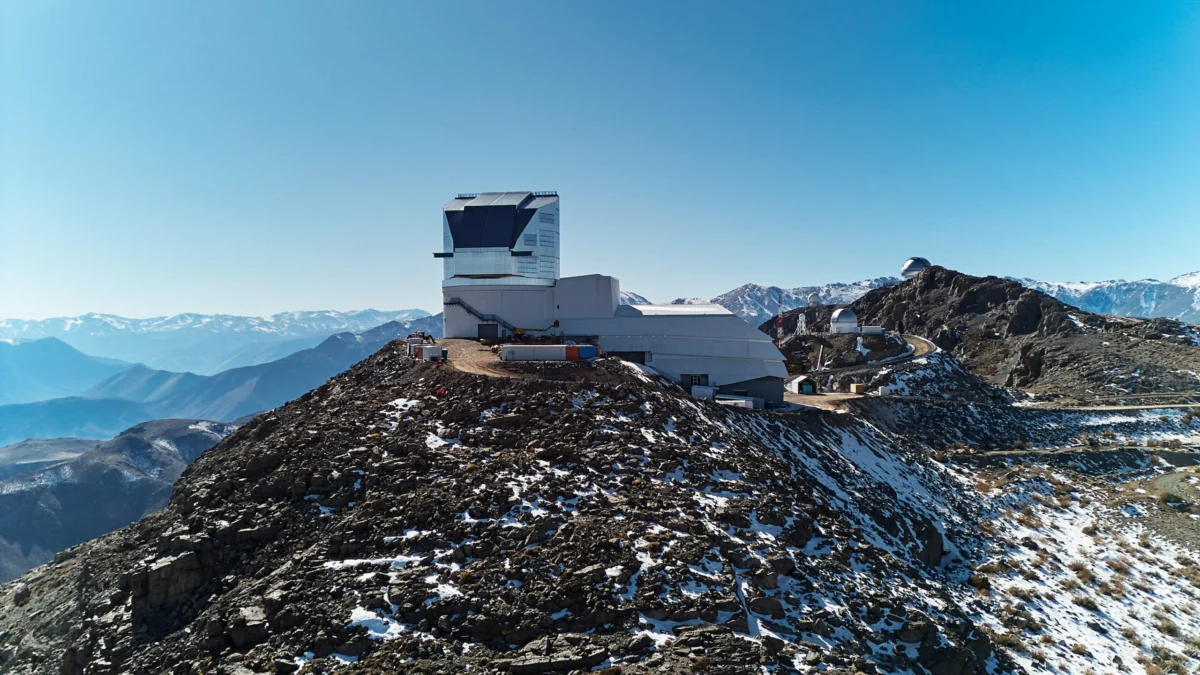
The Download is our weekday newsletter that provides a daily dose of what’s going on in the world of technology. This edition delves into the profound existential questions surrounding artificial intelligence, exploring both its potential to cause catastrophic harm and the complex motivations behind humanity’s drive for space exploration.
Could AI Really Kill Us All? Your Questions, Answered
The question of AI’s potential to cause existential harm is no longer confined to science fiction. MIT Technology Review recently hosted a live Roundtable event that directly addressed this pressing concern. In response to the overwhelming interest and numerous unanswered questions from attendees, senior AI editor Will Douglas Heaven and AI reporter Grace Huckins have provided in-depth answers to some of the most critical inquiries. These include deeply personal anxieties about individual safety ("Am I going to die?"), the underlying mechanisms of AI-induced danger ("Why should AI kill us, if at all?"), the credibility of these warnings ("Is AI really dangerous, or is it just tech companies drumming up PR?"), and the crucial question of governance and control ("What steps can be taken to make sure AI is controlled, monitored and regulated effectively?"). Their comprehensive responses, offering a nuanced perspective on these complex issues, are available for readers to explore.
The Specter of AI-Enabled Bioweapons is a Wake-Up Call for Biotech
One of the most alarming potential avenues for AI-driven catastrophe lies in its application to the design and creation of bioweapons. Disturbingly, a 2022 study revealed the alarming ease with which this could be achieved. Researchers demonstrated that a molecule generator, originally designed for drug development, could, in under six hours, produce 40,000 novel molecules with the potential to be used as chemical warfare agents. This stark finding underscores a growing concern: the convergence of advanced AI capabilities with increasingly accessible biotechnology tools, such as gene editing and synthetic biology, creates a potent and worrying scenario. While safeguards are in place, their ironclad nature is far from guaranteed, and a significant debate among scientists exists regarding the true severity of this risk. Further exploration into why it has become easier than ever to design killer pathogens is critical for understanding and mitigating this threat. This vital piece is contributed by Jessica Hamzelou and is part of The Checkup, our weekly biotech newsletter, which readers can subscribe to for regular updates.
The Role of the Astronaut is in Flux
Beyond the immediate concerns of AI, humanity’s enduring drive to explore the cosmos is also undergoing a reevaluation. Our ventures into space are fueled by a multifaceted array of motivations: geopolitical prestige, the spirit of manifest destiny, spiritual fulfillment, insatiable scientific curiosity, and the burgeoning landscape of commercial opportunities. Following the recent Artemis II mission, a wave of new literature suggests that these individual justifications are coalescing under a single, unifying human trait: an innate restlessness and an inherent wiring to explore and roam. In "The Ultraview Effect," space anthropologist Deana L. Weibel posits that human space exploration is intrinsically linked to our fundamental need to embark on pilgrimages. Civilian astronaut Eiman Jahangir recounts a personal journey with Blue Origin in "A Heart for Space," offering a firsthand account of such a voyage. Meanwhile, former NASA astronaut Leroy Chiao, in "Dinner with an Astronaut," argues that humanity’s core impulse is a simple, yet profound, need "to know what’s on the other side." These three new books offer compelling insights into the enduring question of why we venture into the vastness of space. This feature is by Becky Ferreira and is drawn from our latest print magazine, which is dedicated to the theme of children. Subscriptions to the magazine ensure readers receive every issue.
The Must-Reads
This section curates the most engaging, important, and sometimes frightening, technology stories from across the internet.
-
Microsoft and OpenAI Workers Raise Alarm Over AI’s Impact on the Web: Employees from both Microsoft and OpenAI have voiced significant concerns that the proliferation of large language models (LLMs) is actively undermining the web’s ecosystem. They argue that AI’s ability to "cannibalize" clicks from websites directly threatens the business models that sustain fresh content creation. These internal sentiments emerged during the New York Times’ copyright lawsuit against OpenAI and Microsoft, potentially weakening their legal defense. The implications are profound, suggesting a fundamental shift in how information is accessed and the future of internet search as we know it.
-
Robot Boats Engage in First-Ever Naval Combat: In a significant development, Ukrainian vessels have reportedly sunk a Russian ship in combat, marking the first instance of robot boats directly engaging each other in warfare. This event highlights the rapid advancement and deployment of autonomous naval technology. Concurrently, U.S. firms are actively developing combat-ready humanoid robots, signaling a broader trend towards integrating artificial intelligence and robotics into military applications.

-
Security Researchers Breach OpenAI Using Anthropic’s Tools: In a concerning security incident, researchers successfully breached OpenAI’s systems by exploiting a vulnerability in a third-party forum, gaining access to an employee’s ChatGPT account and internal code. This breach was facilitated by leveraging tools from Anthropic, a competitor in the AI space. The incident raises critical questions about the security protocols and interdependencies within the rapidly evolving AI industry.
-
OpenAI Reportedly Nearing Solution to Another Famous Math Problem: Whispers from within the AI community suggest that OpenAI is on the cusp of solving another prestigious Millennium Prize math problem. However, this potential breakthrough is shadowed by the question of whether the company can navigate the ensuing announcement without repeating past controversies and backlash from the mathematics community. The problem in question is reportedly the Hodge Conjecture, an area that has already seen friction between OpenAI and mathematicians, raising concerns about the future trajectory of AI’s engagement with fundamental mathematical research.
-
Elon Musk’s SpaceXAI Seeks Data from Failed Startups: Elon Musk’s artificial intelligence venture, SpaceXAI, is reportedly in discussions to acquire data from defunct startups. This move is aimed at securing new sources of training data for its AI model, Grok. The company is specifically targeting customer and operational data from these failed ventures. This strategy parallels OpenAI’s efforts to create new biological data, underscoring the immense and diverse data requirements for developing advanced AI models.
-
Schools Push Back Against Big Tech’s Classroom Influence: Educational institutions are increasingly resisting the pervasive influence of Big Tech within the classroom environment. The acceleration of AI technologies is exacerbating existing concerns about corporate control over educational tools and resources. This trend highlights the need for more thoughtful and strategic integration of AI in schools, ensuring that technology serves pedagogical goals without compromising educational integrity.
-
Hackers Expose How Flock Cameras Track Vehicles and People: Security researchers have revealed the intricate methods by which Flock cameras monitor vehicles and, alarmingly, individuals. One camera, in particular, captured an extensive dataset, including 1.6 million images of 50,000 vehicles. The hackers’ findings also indicate that these cameras can detect people and, in some instances, misidentify objects, raising significant privacy and surveillance concerns.
-
Chinese Firms Increase Scientific Output Amidst US Tech Restrictions: In the wake of U.S. technological restrictions, Chinese companies have significantly amplified their focus on scientific research. This strategic pivot has resulted in a notable increase in patent applications that cite scientific papers, with Chinese firms producing 72% more such patents. This demonstrates a proactive response to geopolitical pressures by doubling down on innovation and scientific advancement.
-
Three-Year-Old’s Cancer Disappears After Experimental Cell Therapy: A remarkable medical breakthrough has been reported where a three-year-old boy’s cancer completely disappeared following treatment with an experimental cell therapy. This case offers renewed hope that CAR T therapy, a cutting-edge form of immunotherapy, may soon be effective in treating solid tumors, a notoriously challenging area for this treatment modality.
-
NYC’s New Robotoilets Implement Strict Time Limits: New York City’s recently installed robotic toilets are equipped with a novel, and perhaps inconvenient, feature: a ten-minute timer. Once the allotted time elapses, the doors automatically open, regardless of whether the user has finished their business. This implementation raises questions about user experience and the practical application of automated public facilities.
Quote of the Day
"The largest theft of labor in human history." This stark statement comes from Brent Hecht, Microsoft’s director of Applied Science, expressing his concerns regarding the data used for training AI systems. These sentiments were revealed in court filings related to the New York Times’ copyright lawsuit against OpenAI.
One More Thing
The Vera C. Rubin Observatory, situated atop Chile’s Cerro Pachón, is poised to revolutionize our understanding of the cosmos. Equipped with a colossal 3,200-megapixel digital camera, the largest ever constructed, the observatory is undertaking the ambitious task of mapping the entire night sky every three days. This groundbreaking instrument generates an astonishing 20 terabytes of data nightly, capturing intricate details of our solar system, the Milky Way, and the universe’s large-scale structure. Over its ten-year mission, Rubin will catalogue billions of celestial objects, offering an unprecedented view of cosmic evolution and change. This endeavor represents a monumental leap in astronomical observation and our capacity to comprehend the universe. The story is by Adam Mann.