Imroatul Nasiyah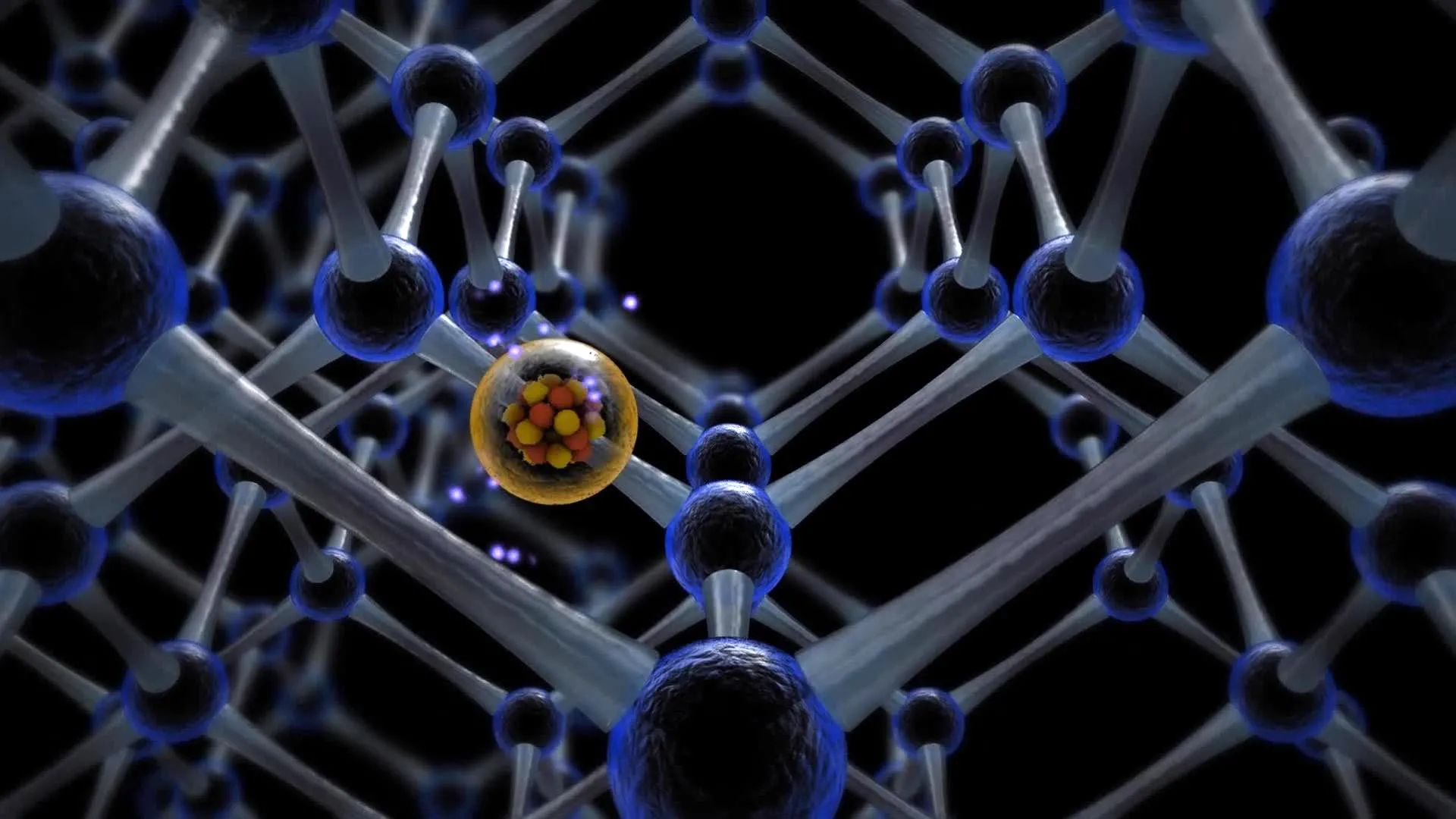
Harnessing the Power of Sound for Quantum Information Transfer
One of the most compelling avenues for developing advanced quantum networking capabilities lies in leveraging the intrinsic spin of an electron, often associated with impurities within diamond crystals, as a robust medium for storing quantum information. To facilitate the movement of this delicate quantum data between different qubit nodes within a network, tiny packets of mechanical vibration, known as phonons, can be employed as efficient carriers. The Lončar laboratory has been at the forefront of exploring and unlocking the vast potential of these phononic systems. Among their notable achievements is the development of a sophisticated structure termed a phononic cavity. This ingenious design is capable of trapping mechanical vibrations with remarkable precision, thereby enabling a much stronger and more controlled interaction between the phonons and the electron spin residing within a qubit.
Phonons offer several compelling advantages over light, which is the more commonly adopted medium for transmitting quantum information across chip-scale networks. A key benefit is their significantly shorter wavelength compared to light at the same frequency. This disparity in wavelength allows for the construction of considerably smaller and more densely packed components, a critical factor in miniaturizing quantum devices. Moreover, phonons exhibit a remarkable versatility in their interactions. They readily engage with both solid-state spins, the fundamental building blocks of many quantum systems, and electromagnetic fields. This dual interaction capability makes phonons particularly attractive for the advancement of hybrid quantum technologies. Such technologies aim to integrate diverse types of qubits into a unified system, unlocking new possibilities for quantum computation and communication.
The Persistent Challenge of Preserving Quantum Memory: The Coherence Conundrum
Despite the promising advantages offered by phonons, their utilization introduces a significant hurdle: the formidable challenge of protecting quantum memory. Qubits, by their very nature, are extraordinarily sensitive to even the slightest disturbances from their surrounding environment. To remain functional and useful in quantum computations, they must maintain their delicate quantum state for a sufficiently extended period, a property known as coherence. This coherence time dictates how long a qubit can reliably store and process information before succumbing to environmental noise and decoherence.
Researchers have traditionally employed sophisticated techniques to shield quantum memories from external interference. A common approach involves the application of precisely timed microwave pulses. These pulses are designed to effectively "separate," or decouple, the qubit from the surrounding ambient noise, thereby preserving its quantum state. However, these conventional microwave-based decoupling techniques have proven to be remarkably ineffective when applied to qubits that are strategically placed within phononic cavities. This limitation has created a fundamental paradox: while phononic cavities are ideal for achieving strong interactions with phonons, they simultaneously present a formidable obstacle to maintaining long-lasting quantum memory within the same device. This has been a major bottleneck in the quest for robust and scalable quantum systems that leverage phonons.
"Dressed" Qubits: A Novel Protection Mechanism Powered by Sound
The SEAS research team has ingeniously circumvented this persistent challenge by demonstrating what they aptly describe as "all-mechanical coherence protection" for a specific type of qubit: a silicon-vacancy spin embedded within a diamond crystal. Instead of relying on the conventional, and in this context, ineffective, microwave pulses, the researchers adopted a novel strategy. They continuously applied a mechanical driving field, generated by phonons, to the qubit. This continuous acoustic field effectively transformed the qubit into a distinct quantum state, colloquially referred to as a "dressed" qubit.
The term "dressed" aptly captures the essence of this phenomenon, signifying that the qubit is metaphorically "wearing" a continuous acoustic field. In this specially induced state, the qubit becomes remarkably less susceptible to low-frequency noise emanating from its environment. Crucially, this novel protection mechanism is derived from a continuous mechanical field, a modality that is inherently compatible with the operational principles of phononic cavities. This compatibility means that the protection strategy can be seamlessly implemented within the very structures that are envisioned to connect stationary nodes in future quantum networks.
This breakthrough bestows upon phonons a potentially powerful dual role within quantum systems. Not only can they serve as efficient conduits for transporting quantum information between different segments of a quantum network, but they can simultaneously act as a protective shield, safeguarding that very information from the detrimental effects of environmental noise. Eliza Cornell eloquently articulated the significance of their achievement, stating, "We are solving two problems. We want the spin to have strong interaction with phonons, and we want the spin to have a long coherence time. Our paper demonstrates a method of extending the coherence time that is compatible with the silicon-vacancy center being in a cavity." This dual functionality is a game-changer for the practical implementation of quantum technologies.
A Tripled Increase in Quantum Coherence: The Dawn of More Reliable Quantum Systems
The application of this innovative "all-mechanical coherence protection" method has yielded remarkable results. The researchers have successfully increased the coherence time of the silicon-vacancy spin by an impressive factor of approximately three. This substantial enhancement in coherence time is a clear testament to the efficacy of their approach. The findings unequivocally demonstrate that continuous-wave mechanical noise suppression can significantly extend quantum coherence in real-world devices. This breakthrough strongly suggests that microscopic sound waves, once relegated to the realm of acoustics, are poised to become an indispensable tool in the construction of quantum systems that are not only more reliable but also remarkably more compact.
The groundbreaking research paper detailing this advancement, titled "All-mechanical coherence protection and fast control of a spin qubit," features a distinguished list of co-authors: Zhaoyou Wang, Hana K. Warner, Eliana Mann, Michael Haas, Smarak Maity, Graham Joe, Liang Jiang, Peter Rabl, and Benjamin Pingault. This collaborative effort underscores the multidisciplinary nature of cutting-edge quantum research.
The pioneering work was generously supported by significant funding from the U.S. federal government. This includes grants from the National Science Foundation under grant number EEC-1941583, the Air Force Office of Scientific Research under award numbers FA9550-23-1-0333 and FA9550-23-1-0338, and the Q-NEXT initiative, a U.S. Department of Energy Science National Quantum Information Science Research Centers, under award No. DE-FOA-0002253. Furthermore, a portion of the research was conducted at the Harvard Center for Nanoscale Systems, a vital member of the National Nanotechnology Infrastructure Network, which receives crucial support from the National Science Foundation under award No. ECS-0335765. Recognizing the profound potential of these innovations, the Harvard Office of Technology Development is actively engaged in pursuing patent protection and exploring commercialization opportunities for the groundbreaking technologies emerging from this transformative research. This concerted effort signals a strong commitment to translating scientific discovery into tangible technological advancements that could reshape the future of computing and communication.