isnaini azizah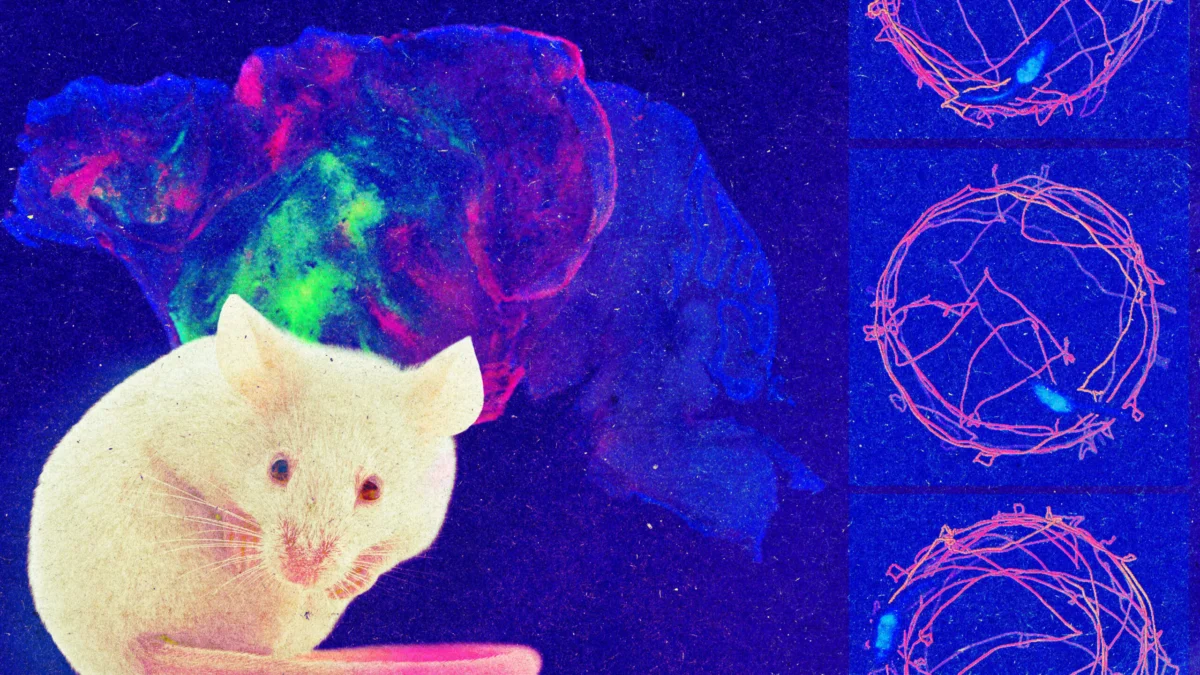
In a groundbreaking advancement that blurs the lines between species and pushes the boundaries of neuroscience, researchers at Stanford University have successfully integrated human brain cells into the developing brains of mice, creating what lead neuroscientist Sergiu Pașca terms "xenocortical mice." This pioneering work, published today in the prestigious journal Nature, builds upon prior experiments where human brain organoids, essentially miniature, lab-grown blobs of neural tissue, were shown to survive and even exhibit some functionality when transplanted into the brains of infant rodents. The latest research, however, takes a significant leap forward by employing genetic engineering to create mice with underdeveloped cortices and hippocampi, two crucial areas of the brain. This deliberate neural deficit creates a more hospitable environment, allowing the introduced human cells a greater opportunity to integrate and proliferate.
Sergiu Pașca’s team strategically engineered mice whose brains, particularly the cortex and hippocampus, fail to develop fully in utero. These specific brain regions are fundamental to higher cognitive functions, including learning, memory, and sensory processing. By creating this neural vacuum, the researchers established an environment primed for the colonization of human brain cells. "Human cells that are placed in these animals will divide, will grow, and within a few weeks to a few months they will take most of that space," Pașca explained, highlighting the remarkable adaptability and growth potential of the human neural tissue within the rodent brain.
The initial observations of these genetically modified mice were striking. Those lacking significant portions of their native brain tissue appeared surprisingly normal in their outward behavior, moving and vocalizing as expected. However, when subjected to cognitive tests, particularly a maze-navigation task, their deficiencies became evident. These mice struggled to recall previously explored paths, demonstrating clear memory impairments. This observation underscored the critical role of the cortex and hippocampus in spatial memory and learning, and simultaneously served as a baseline to evaluate the impact of the human cell integration.
In a stark contrast, the xenocortical mice, which had been augmented with human brain cells, exhibited markedly improved performance on the same maze test. This enhanced cognitive ability strongly suggests that the integrated human neural tissue was not merely surviving but actively participating in the animals’ cognitive processes. The human cells were demonstrably contributing to the mice’s ability to learn and retain information, offering compelling evidence of functional cross-species neural integration.
Pașca envisions these xenocortical mice as invaluable tools for studying a wide range of neurological conditions, particularly brain injuries and diseases. By creating a model with human brain tissue, researchers can investigate the mechanisms of injury and test potential therapeutic interventions in a more relevant biological context than traditional animal models. Beyond its direct applications in disease research, the work is also hailed as a profound demonstration of the synergistic power of genetic engineering and stem-cell technology. Carsten Charlesworth, a scientist from a different Stanford lab who was not involved in the study, commented on the broader implications, stating that the research is a "dramatic demonstration of the combined power of genetic engineering and stem-cell technology to reshape biology."
The potential applications of brain organoid technology extend far beyond this specific mouse model. Brain organoids are already being explored for their ability to interface with external systems. In one intriguing development, these lab-grown neural tissues are being tested for their capacity to connect with computers, with experiments involving playing video games already underway. Furthermore, scientists have proposed the use of brain organoids as regenerative "replacement parts" for treating conditions like stroke, where damaged brain tissue could potentially be substituted with functional lab-grown cells.
Charlesworth further emphasized the astounding nature of the integration achieved, noting, "What’s most remarkable to me is the extent to which human neural tissue introduced after birth grew and connected with the mouse nervous system across a species barrier." He added that as these technologies mature, they will undoubtedly compel society to re-evaluate long-held assumptions about biology and intelligence. The ability of human neurons to not only survive but to form functional connections within a different mammalian nervous system represents a significant scientific milestone, opening up new avenues of inquiry into neural development and interspecies communication.
The ethical considerations surrounding such advanced neuroscience are not being overlooked. Last year, Pașca proactively convened a group of leading ethicists to deliberate on the complex implications of neural organoid technology. These discussions delved into critical questions, including the potential for an animal to develop human-like consciousness, a prospect that raises profound moral concerns. Another significant ethical challenge identified was the risk of "organoid therapy clinics" exploiting vulnerable patients by offering unproven and potentially fraudulent treatments.
For the present, Pașca remains sanguine about the risk of the xenocortical mice developing human-level cognition. He attributes this to the inherent limitations of their small brains and the vast evolutionary gulf that separates humans and mice. However, this very evolutionary distance is also why Pașca strongly advocates for caution when considering similar experiments in higher species. The introduction of substantial volumes of functioning human brain tissue into species with more complex neural architectures could indeed blur the cognitive boundaries between humans and animals, presenting unprecedented ethical dilemmas.
Pașca has drawn a clear ethical boundary, specifically cautioning against performing these experiments on primates. He articulated this concern with firm resolve: "One of the things that I see as a very clear red line is doing this experiment in a primate. I don’t think that is justified at this point in any way." This stance reflects a deep understanding of the potential consequences and a commitment to responsible scientific advancement, recognizing that certain experimental pathways carry too high a risk of creating ethically untenable situations. The successful integration of human brain cells into mice, while a triumph of scientific ingenuity, also serves as a potent reminder of the responsibility that accompanies such powerful technologies.