Imroatul Nasiyah
The groundbreaking findings, meticulously detailed in the prestigious journal Nature Materials, represent a significant expansion of scientific understanding concerning the Hall effect. This discovery not only deepens our comprehension of fundamental physics but also holds the promise of enabling the development of simpler, more adaptable magnetic sensors crucial for advancements in a wide array of technologies, including consumer electronics, sophisticated transportation systems, and cutting-edge medical imaging.
Rethinking a Century-Old Physics Effect: The Hall Effect Under Scrutiny
For over a century, the scientific community has relied heavily on the Hall effect, a phenomenon first observed and meticulously documented by Edwin Hall in 1879. His seminal discovery illuminated a fundamental interaction between electricity and magnetism: when a magnetic field is applied perpendicularly to a material that is conducting an electric current, the mobile charge carriers within that material are systematically deflected to one side. This deflection, in turn, generates a measurable voltage across the material, a phenomenon known as the Hall voltage.
This precisely measurable Hall voltage serves as a potent diagnostic tool, imparting invaluable information about the electrical and magnetic properties of a material. Researchers can glean insights into the nature of the charge carriers (whether they are positively or negatively charged), quantify the density of these charge carriers, and assess their mobility—how easily they can traverse the material. The practical implications of this fundamental understanding are vast; Hall effect sensors have become ubiquitous, integrated into countless technologies that shape our daily lives, from the anti-lock braking systems in automobiles to the intricate circuitry of computer keyboards.
However, a team of intrepid researchers at Carnegie Mellon University’s Department of Physics, operating within the cutting-edge confines of the Lab for Investigating Quantum Materials, Interfaces and Devices (LIQUID), has now unveiled a novel and unexpected manifestation of this effect. Their work demonstrates that the Hall effect is not confined to the conventional, perpendicular magnetic field configuration that has been the bedrock of its study for so long.
"For a long time, people thought the Hall effect only worked when the magnetic field was applied perpendicular to the plane of the film," explains Simranjeet Singh, an associate professor of physics and a leading figure in this research. "We’ve shown that that’s not true—you can also get a response when the field is in-plane." This statement, seemingly simple, carries profound implications for the field, challenging a deeply ingrained assumption.
The significance of this revelation lies in its demonstration that a Hall response, intrinsically linked to the magnetization of a material, is not unidirectional. Instead, it can manifest and be detected when the applied magnetic field lies parallel to the surface of the material. This opens up a new dimension for exploration, providing physicists with an unprecedented avenue to investigate and characterize complex, multidimensional magnetic and topological structures within condensed matter systems. These structures are fundamental to understanding the exotic behaviors of materials at the quantum level.
Professor Singh further elaborates on the practical ramifications: "Beyond fundamental importance, this discovery can enable novel planar device architectures and sensor types, such as vector magnetometry, via measuring the out-of-plane and in-plane anomalous Hall effect signals in the same device." Vector magnetometry, the ability to measure magnetic field strength and direction along multiple axes simultaneously, is a highly sought-after capability in numerous scientific and technological domains. The prospect of achieving this with a single, integrated device, rather than relying on multiple, disparate sensors, represents a significant leap forward in efficiency and miniaturization.
Turning a Prediction Into a Tangible Experiment: The Quest for the In-Plane Hall Effect
While the experimental realization of the in-plane anomalous Hall effect is a recent triumph, the theoretical underpinnings had been contemplated by scientists for some time. Researchers had, in fact, predicted the possibility of such an effect arising from theoretical models. However, translating these theoretical conjectures into concrete experimental evidence had proven to be an exceptionally formidable challenge. The primary hurdle lay in the difficulty of synthesizing or identifying magnetic materials possessing the precise crystallographic symmetry required to exhibit this specific, in-plane response.
"People proposed it and ideas were out there, but it’s very difficult to make a magnetic material with the right symmetry to do it," Singh concedes. "What we did was we found a material with the right symmetry, and we made it magnetic." This statement underscores the ingenuity and perseverance of the research team. It was not simply a matter of applying existing knowledge, but of actively seeking out and engineering the ideal conditions at the material level.
The intricate process of fabricating the nanometer-sized devices essential for these experiments demanded a high degree of expertise in the burgeoning field of two-dimensional quantum materials. Professor Singh collaborated closely with Jyoti Katoch, an associate professor of physics renowned for her specialization in fabricating sophisticated devices from these atomically thin materials. This interdisciplinary synergy was critical to the project’s success.
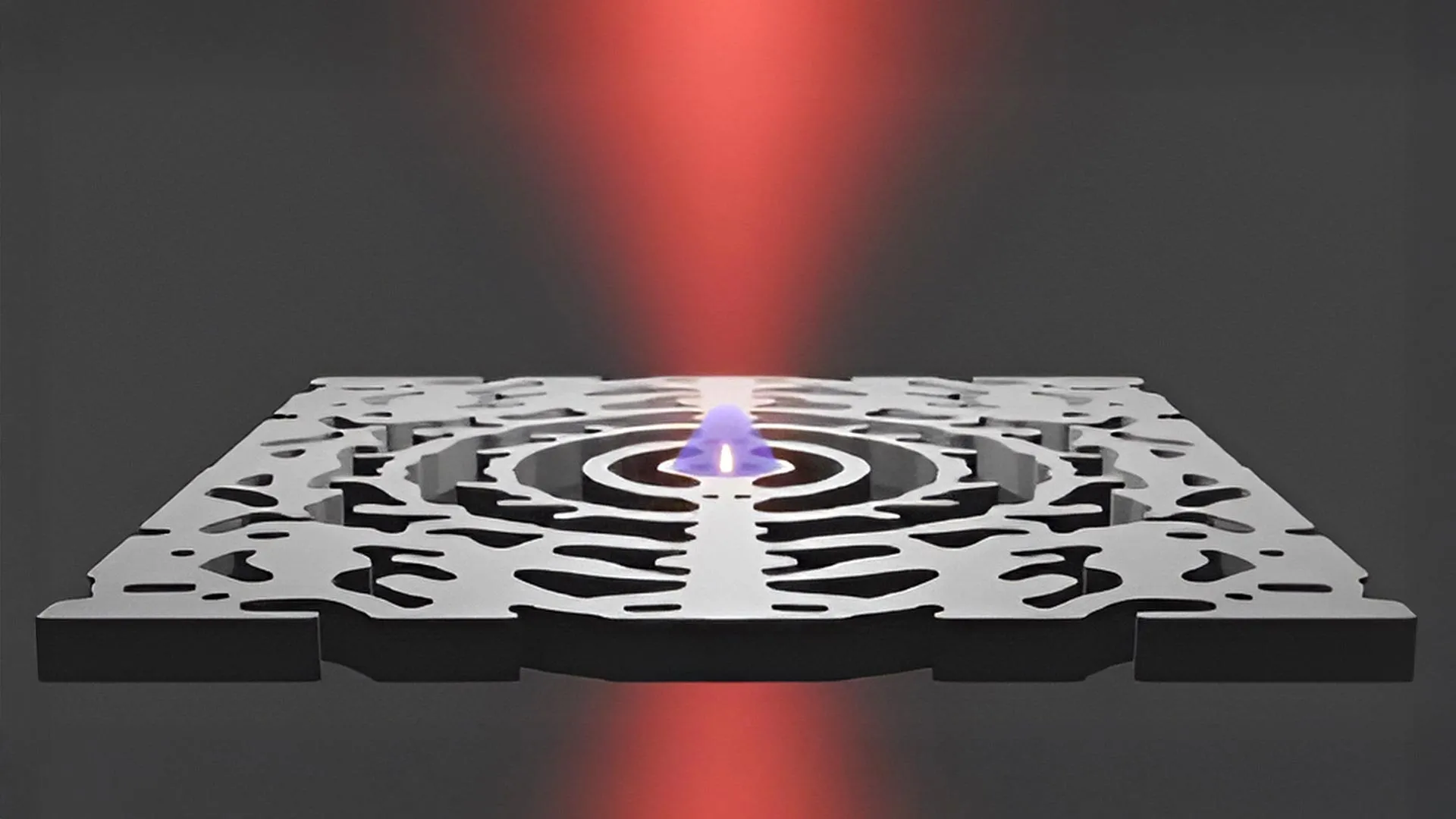
The experimental foundation of this research was built upon a carefully chosen heterostructure, comprising two distinct, atomically thin layers. The team began with tantalum iridium telluride (TaIrTe4), a material whose inherent crystal structure possesses the specific symmetry necessary to support a multidimensional Hall effect. The researchers then painstakingly reduced this material to a thickness of just a few atomic layers. Subsequently, they strategically placed a second magnetic material, chromium germanium telluride (Cr2Ge2Te6), often abbreviated as CGT, in close proximity to the TaIrTe4 layer.
The close interfacial proximity of these two layers proved to be the key to unlocking the desired magnetic properties. The magnetic influence emanating from the CGT layer, which itself exhibits ferromagnetism, effectively "imprinted" magnetic characteristics onto the normally nonmagnetic TaIrTe4. Crucially, this induced magnetism did not obliterate the fundamental electronic properties of the TaIrTe4. This delicate balance allowed the researchers to engineer a material with both the necessary electronic transport properties and the induced magnetic anisotropy required for the in-plane Hall effect.
"This truly demonstrates the power of building atomically precise heterostructures of emergent two-dimensional quantum materials to obtain on-demand electronic and magnetic properties," remarked Professor Katoch, highlighting the significance of nanoscale engineering in materials science. The ability to tailor material properties at the atomic level opens up a universe of possibilities for designing materials with unprecedented functionalities.
One Device, Multiple Magnetic Directions: A New Era of Sensing
Within the confines of these precisely engineered, atomically thin devices, the Carnegie Mellon researchers were able to meticulously detect not only the familiar, perpendicular Hall signal—the one that has been studied for over a century—but also a distinct and unconventional second signal. This novel signal was directly correlated with the magnetization lying within the plane of the material, confirming the occurrence of the in-plane anomalous Hall effect.
This groundbreaking distinction carries potentially profound practical consequences. The ability to detect magnetic fields along more than one axis using a single, ultrathin device represents a paradigm shift in magnetic sensing technology.
"We have broadened the potential application of these materials," Professor Singh emphasized. "You can do multidimensional magnetic sensing with one sensor only. Before, you needed to put two sensors to measure the magnetic field in two directions." This simplification translates directly into more compact, less power-hungry, and more cost-effective sensor systems.
The work therefore points toward the development of magnetic sensing systems that can perform comprehensive measurements in multiple directions without the need for complex assemblies of separate sensors. This could revolutionize fields where precise magnetic field mapping is critical, such as in advanced navigation systems, detailed brain imaging techniques, and the development of next-generation data storage devices.
Explaining the Unusual Hall Response: Theoretical Insights and Future Directions
Complementing the experimental investigations, Shubhayu Chatterjee, an assistant professor of physics, played a pivotal role in providing the theoretical framework to explain the observed phenomena. His theoretical modeling efforts were instrumental in unraveling the underlying physics that governs the emergence of the in-plane Hall effect and elucidating how the specific symmetry of the combined materials facilitates this unconventional response.
"We found that the reduced symmetry due to pairing with CGT allows additional spin-orbit coupling at the interface," Professor Chatterjee explained. Spin-orbit coupling is a relativistic quantum mechanical effect that links a particle’s spin to its motion. In this context, it plays a crucial role in mediating the interaction between the magnetic field and the charge carriers. "These spin-orbit coupling terms are crucial for the in-plane anomalous Hall effect to emerge once CGT becomes ferromagnetic at low temperatures."
He further noted, "While certain features of the observed anomalous Hall effect signal are consistent with an intrinsic origin, a detailed characterization of few-layered TaIrTe4 is needed to nail down the precise mechanism." This statement reflects the rigorous scientific process of not only discovering new phenomena but also striving for a complete and fundamental understanding of their origins. Distinguishing between intrinsic effects (arising from the fundamental band structure of the material) and extrinsic effects (arising from defects or impurities) is a key goal in condensed matter physics.
The LIQUID team is not resting on their laurels. They are actively pursuing further research avenues, including the investigation of additional material combinations that could potentially exhibit this same unconventional Hall response. This exploration aims to broaden the palette of materials available for developing these novel sensors. Furthermore, a critical next step involves testing the performance and stability of these devices at room temperature. The ability of these sensors to function reliably under ambient conditions is a paramount requirement for their eventual integration into practical, real-world applications. This ongoing research promises to further solidify the impact of this discovery on the future of magnetic sensing and our understanding of fundamental physics.