Imroatul Nasiyah
This relentless expansion, however, presents a formidable challenge: the immense and growing demand for electricity. Data centers, the very backbone of our digital infrastructure, are already prodigious consumers of power, and projections indicate a substantial rise in their energy requirements over the coming decades. Without significant breakthroughs in efficiency, ICTs are poised to become a considerable contributor to global electricity consumption and, consequently, to carbon emissions. Therefore, the imperative to discover and implement more energy-efficient computing solutions has become paramount as the demand for digital services continues its accelerated trajectory.
In a significant leap forward, researchers at the University of Edinburgh have unveiled a novel theoretical framework that holds the potential to dramatically reduce the energy expenditure associated with storing and manipulating digital information, represented by binary bits ("0"s and "1"s), within future magnetic memory technologies. This groundbreaking development addresses a critical bottleneck in current computing paradigms.
At the core of magnetic memory lies the fundamental ability to switch magnetic states, a process that enables the modification and control of digital information. Traditionally, the design of these magnetic switching processes, which form the bedrock of data manipulation, has relied on conventional methodologies. However, the University of Edinburgh team has ingeniously reoriented their approach by drawing upon Optimal Control Theory. This sophisticated mathematical discipline is specifically employed to ascertain the most efficient pathways for achieving predefined objectives.
Leveraging this powerful theoretical lens, the research team has meticulously engineered a framework for the design of ultrafast magnetic-field pulses. These pulses are specifically crafted to induce magnetic state switching while minimizing energy consumption to the greatest extent possible. A crucial aspect of their methodology is the incorporation of realistic experimental constraints, a factor that imbues their theoretical framework with a higher degree of relevance and applicability to the development of potential future devices.
The computer simulations undertaken by the researchers paint a compelling picture. They suggest that their innovative method has the capacity to reduce switching energy by several orders of magnitude when juxtaposed with the leading memory technologies currently in use or under active development. This includes established technologies like Dynamic Random-Access Memory (DRAM), as well as emerging and promising solutions such as Spin-Transfer Torque Magnetoresistive Random-Access Memory (STT-MRAM) and the even newer Spin-Orbit Torque Magnetoresistive Random-Access Memory (SOT-MRAM).
Perhaps even more astonishing is the observation that the predicted energy requirements for these future magnetic memory devices bring them remarkably closer to the Landauer limit. This limit, a fundamental thermodynamic principle, defines the absolute minimum amount of energy theoretically required to process a single bit of information. Approaching this fundamental boundary, which is dictated by the laws of physics, would represent a monumental stride in the long-standing endeavor to render computing as energy-efficient as humanly and technologically possible.
The comprehensive framework, detailed in the prestigious journal Advanced Materials, extends beyond mere theoretical calculations. It meticulously outlines practical guidance for potential implementation, offering insights into optimized device designs and effective methodologies for delivering the precisely shaped magnetic fields. These actionable recommendations are designed to empower researchers to eventually test this groundbreaking concept through experimental validation.
Dr. Elton Santos, the lead researcher from the Institute for Condensed Matter Physics and Complex Systems at the University of Edinburgh, articulated the profound implications of their work. He stated, "Every digital operation carries an energy cost, and that cost becomes increasingly significant as AI and data-intensive technologies continue their exponential expansion. Our research conclusively demonstrates that by meticulously designing the temporal evolution of a magnetic field, magnetization can be switched with far greater efficiency than is achievable with conventional approaches."
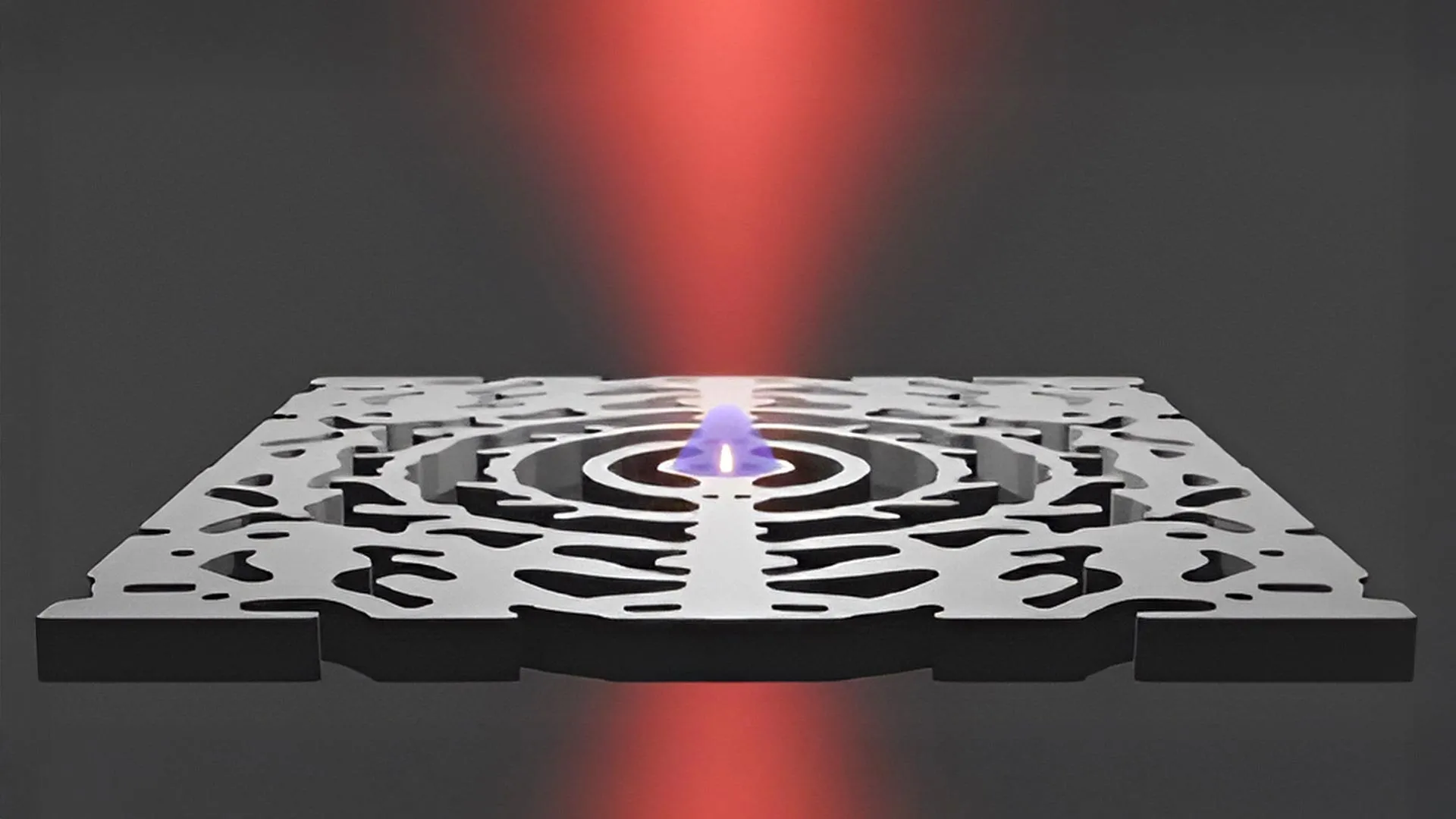
Dr. Santos further elaborated on the broader applicability of their findings: "While we initially developed this theory using magnetic field pulses, the underlying mathematics possesses a far more versatile nature. The same theoretical framework can be readily adapted to manipulate electrical currents and even ultrafast laser pulses, which are among the most advanced technologies being explored for future data storage solutions. This implies that the conceptual advancements we have achieved here have the potential to transcend the specific systems we initially studied, opening doors to a wide array of applications. It appears we may have just uncovered the next paradigm shift in energy-efficient computing." This research signals a pivotal moment in the quest for sustainable digital infrastructure, promising a future where the insatiable demand for data processing does not come at an unsustainable energy cost. The implications are far-reaching, potentially impacting everything from personal electronic devices to massive supercomputing arrays.