Pradipta eManuel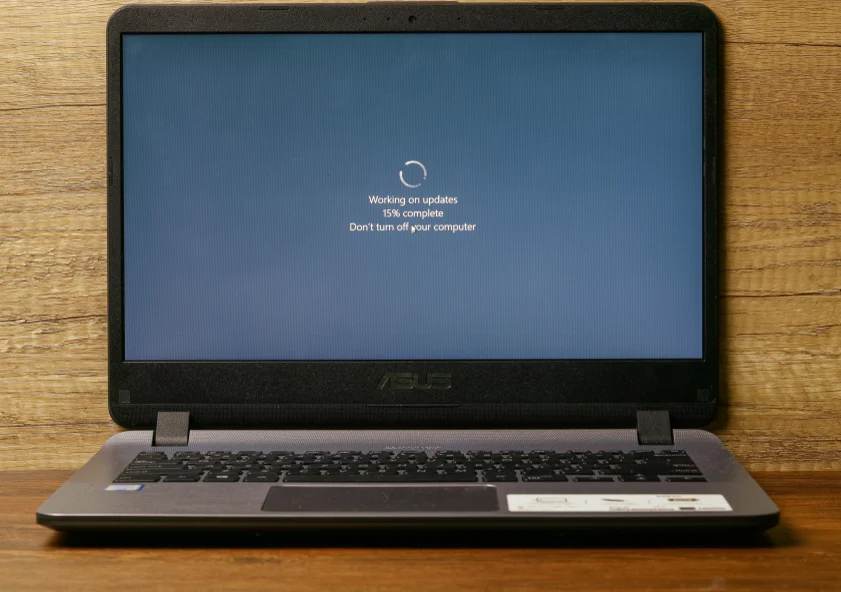
Microsoft Corp. has unleashed an unprecedented software update, addressing a staggering 570 security vulnerabilities across its Windows operating systems and other products, nearly tripling the record set by its previous Patch Tuesday. This colossal release is attributed, in part, to the accelerating pace of vulnerability discovery powered by artificial intelligence. Of the 570 flaws patched, almost 60 were classified as "critical," posing a significant risk of attackers gaining remote control of Windows devices with minimal user interaction. Adding to the urgency, Microsoft also resolved three zero-day vulnerabilities, two of which are already being actively exploited in the wild.
Among the critical patches are fixes for two zero-day flaws that allow for privilege escalation on Windows systems. These join approximately 250 other elevation of privilege vulnerabilities addressed in this update. Two notable examples include CVE-2026-56155, a vulnerability within Active Directory Federation Services, and CVE-2026-56164, a flaw impacting Microsoft SharePoint. These types of vulnerabilities are particularly concerning as they can grant attackers deeper access and control over compromised systems.
Another significant vulnerability patched is CVE-2026-50661, a security feature bypass affecting Windows BitLocker. While Microsoft states this bug has been publicly disclosed, they are not aware of any active exploitation. However, this flaw could potentially allow attackers with physical access to a device to circumvent BitLocker encryption and access sensitive data, underscoring the importance of physical security alongside software updates.
Pavan Davuluri, Executive Vice President at Microsoft, acknowledged in a blog post that users should anticipate a "higher volume of security updates included in each security release." He explained that advances in AI are dramatically enhancing the speed and scope of vulnerability discovery, enabling the identification of more issues across a broader codebase. Davuluri’s statement highlights a paradigm shift in cybersecurity, where AI is not only a tool for defense but also for offense, necessitating a constant evolution of security practices.
Jack Bicer, director of vulnerability research at Action1, drew attention to CVE-2026-48561, a remote code execution flaw in Microsoft Copilot with a critical CVSS threat score of 9.6. This vulnerability could allow an unauthorized attacker to execute code remotely by tricking users into visiting a malicious website. The exploit mechanism involves crafting prompts that are automatically sent to Copilot by Microsoft Edge for Android when a user accesses such a site. This particular vulnerability underscores the new attack vectors emerging with the integration of AI into everyday software.
The increasing sophistication of AI in vulnerability discovery is a double-edged sword. While it aids defenders in identifying and patching flaws more rapidly, it also empowers attackers to devise exploits for known vulnerabilities at an accelerated pace. Microsoft’s "exploitability index," which estimates the likelihood of a vulnerability being exploited, is now facing scrutiny. Satnam Narang, senior staff research engineer at Tenable, argues that this index needs to adapt more effectively to the "machine speed" of AI-driven discovery. He pointed to the SharePoint zero-day (CVE-2026-56164) as an example, which was initially rated "less likely" for exploitation but was subsequently added to CISA’s Known Exploited Vulnerabilities list on July 1st.
Narang further elaborated on the fragility of current exploitability assessment systems, citing findings from Anthropic’s Red Team. Their Mythos Preview model was able to generate proof-of-concept exploits for 13 out of 14 vulnerabilities that were rated "Exploitation Less Likely" or "Exploitation Unlikely." This suggests that the traditional human-centric approach to assessing exploitability is becoming increasingly outdated. As AI tools become more adept at generating exploits, defense strategies must evolve in parallel.
The trend of increased patching frequency is not isolated to Microsoft. Chris Goettl at Ivanti noted that other major software vendors are also stepping up their update schedules. Adobe, for instance, has announced a shift to twice-monthly security bulletins, citing AI as a catalyst for their accelerated patch cycles. Companies like Cisco, Mozilla, and Oracle are also releasing updates more frequently. Google’s security fixes in June 2026 alone surpassed 900, indicating a broader industry-wide response to the escalating threat landscape.
Given the sheer volume of patches released by Microsoft this month, end-users are advised to exercise caution. While prompt application of security updates is generally recommended, the record-breaking number of fixes could increase the risk of introducing system stability issues. It may be prudent for users to wait a few days before applying these updates to allow for community feedback and to mitigate potential unforeseen conflicts. Furthermore, backing up Windows systems and data before undertaking such extensive updates is always a sound practice, especially when dealing with such a significant patch deployment.
The implications of AI on cybersecurity are profound and multifaceted. On one hand, it offers powerful tools for threat detection, vulnerability analysis, and rapid remediation, as evidenced by Microsoft’s ability to identify and fix a record number of flaws. On the other hand, it lowers the barrier to entry for attackers, enabling them to develop sophisticated exploits more quickly and efficiently. This arms race between AI-powered offense and defense necessitates continuous innovation and adaptation in security strategies. Microsoft’s proactive approach in releasing these comprehensive updates, while acknowledging the role of AI in both discovery and the evolving threat landscape, signals a critical juncture in cybersecurity. The future of patch management and vulnerability response will undoubtedly be shaped by the ongoing advancements in artificial intelligence.
For further insights into Microsoft’s Patch Tuesday and the broader cybersecurity landscape, readers are encouraged to consult the following resources:
- Action1’s Patch Tuesday blog: https://www.action1.com/patch-tuesday/patch-tuesday-july-2026/?vyi
- Automox’s rundown: https://listen.automox.com/episodes/patch-fix-tuesday-july-2026-e34