anjir abdul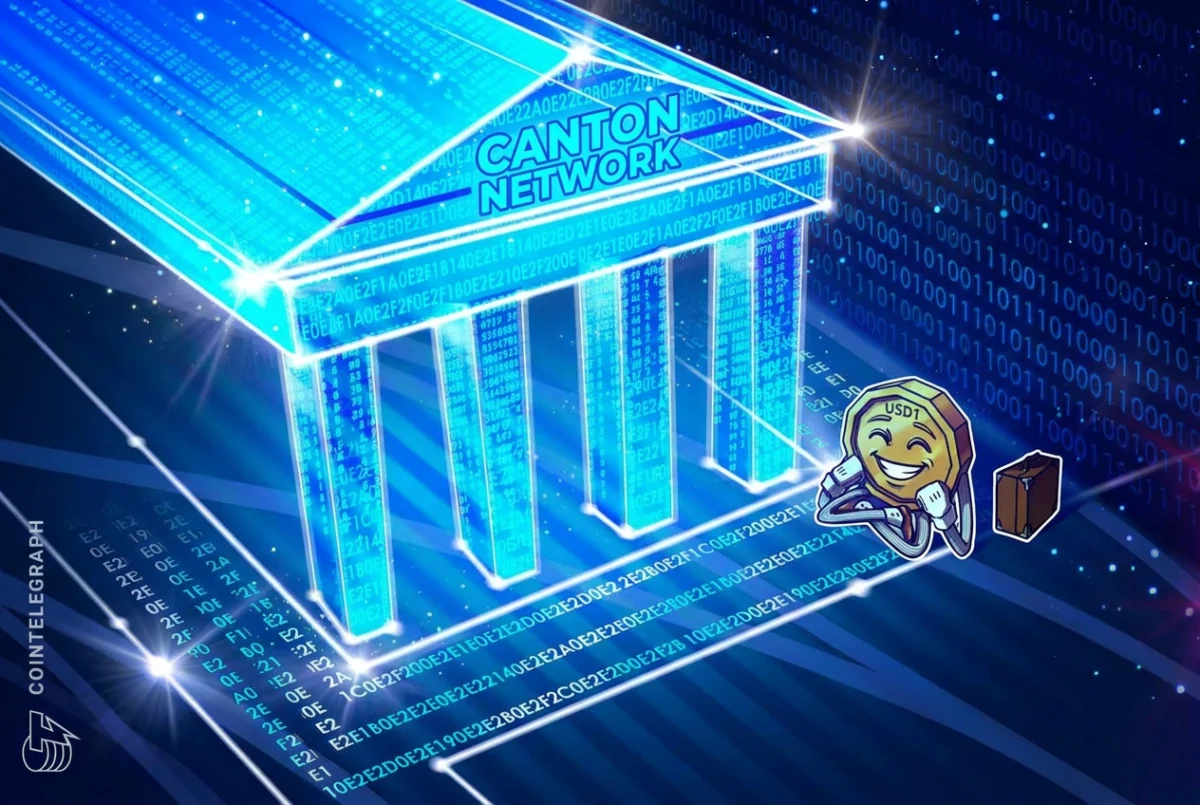
In a landmark development poised to reshape the landscape of institutional finance, World Liberty Financial (WLF) has officially launched its USD1 stablecoin natively on the Canton Network, marking a significant leap forward in facilitating efficient and secure transactions involving tokenized real-world assets. This strategic integration empowers financial institutions with a robust and compliant digital currency for settling a diverse array of transactions, leveraging Canton’s specialized architecture for privacy, permissioning, and scalability. The move underscores the accelerating convergence of traditional finance with blockchain technology, promising enhanced efficiency, transparency, and programmability across global markets.
The native issuance of USD1 on the Canton Network represents a deeper level of integration than simply bridging an existing token. It means that USD1 is directly created and managed on Canton, allowing it to function seamlessly and atomically within the network’s ecosystem. This capability is paramount for institutional use cases, where the ability to settle multiple legs of a transaction simultaneously and irrevocably—known as atomic settlement—is critical. For institutions, this translates into reduced counterparty risk, improved operational efficiency, and the elimination of delays often associated with traditional settlement processes.
According to a Tuesday announcement from World Liberty Financial, the primary utility of USD1 on Canton will be to serve as the "cash leg" for transactions involving tokenized assets. This encompasses a broad spectrum of financial activities, including but not limited to derivatives collateral, institutional lending, asset issuance, and redemptions. For example, in a tokenized lending scenario, USD1 can be programmed to be released to a borrower concurrently with the transfer of tokenized collateral to the lender, ensuring that both parties fulfill their obligations simultaneously. This level of transactional integrity and automation is a game-changer for complex institutional workflows.
The Canton Network’s intrinsic privacy and permissioning controls are particularly vital for this integration. In the world of institutional finance, confidentiality and regulatory compliance are non-negotiable. Canton’s design ensures that transactions can be executed with granular control over who sees what data, allowing institutions to meet strict regulatory requirements while still benefiting from the transparency and immutability of blockchain technology. This bespoke approach to privacy, coupled with the ability to define specific permissions for participants, makes Canton an ideal environment for sensitive financial operations involving high-value assets.
World Liberty Financial’s USD1 stablecoin has rapidly established itself as a significant player in the digital asset space since its debut in March 2025. With a current market capitalization hovering around $4.05 billion, it stands as the sixth-largest stablecoin globally, according to comprehensive data from DeFiLlama. This impressive growth reflects a strong market demand for a stable, reliable digital dollar, particularly one backed by robust and transparent reserves. The stablecoin is meticulously backed by a diversified portfolio of high-quality, liquid assets, including short-term US Treasurys, government money market funds, and dollar deposits, ensuring its stability and redeemability at par with the U.S. dollar.
The operational integrity of USD1 is further bolstered by its issuer, BitGo Bank & Trust. BitGo, a regulated entity known for its digital asset custody and financial services, manages USD1’s reserves and is responsible for processing all mints and redemptions. This involvement of a trusted and regulated third-party custodian provides an additional layer of security and confidence for institutional users, ensuring that the stablecoin adheres to stringent financial standards and operational best practices. The "Trump family-backed crypto venture," as World Liberty Financial has been described since its launch in 2024, has leveraged this association to attract attention and potentially instill a degree of confidence among certain investor demographics, positioning itself as a credible entrant in the competitive stablecoin market. The backing and operational structure of USD1 are critical to its ability to serve as a reliable settlement asset for sophisticated financial products.
The Canton Network itself is a testament to the evolving architecture of blockchain technology designed specifically for the rigorous demands of institutional finance. Positioned as a public, permissionless blockchain, Canton differentiates itself by offering the foundational infrastructure required for large-scale, enterprise-grade applications. Its impressive statistics speak volumes about its capabilities and adoption within the financial sector: the network reportedly processes and issues more than $9 trillion in tokenized assets each month. Furthermore, it facilitates the movement of over $350 billion in on-chain US Treasurys daily, highlighting its critical role in the burgeoning market for tokenized real-world assets (RWAs). This sheer volume of activity underscores Canton’s robustness, efficiency, and its growing importance as a backbone for digital asset transformation in finance.
The emergence of tokenized real-world assets is one of the most transformative trends in finance today. By representing tangible assets such as real estate, commodities, equities, or government bonds on a blockchain, tokenization offers unprecedented liquidity, fractional ownership, and programmability. However, for these tokenized assets to realize their full potential, a corresponding digital "cash" equivalent is essential for seamless settlement. This is precisely where USD1’s native integration on Canton becomes a pivotal enabler. It provides institutions with a stable, regulated, and efficient digital dollar to facilitate transactions, eliminating the need to move off-chain for fiat settlement, which can be slow, costly, and complex.
The benefits for institutions utilizing USD1 on Canton are multi-faceted. Firstly, enhanced efficiency through atomic settlement significantly reduces transaction times and operational overheads. Secondly, reduced counterparty risk is achieved by ensuring that all legs of a transaction are executed simultaneously, eliminating the possibility of one party failing to uphold its end of the deal after the other has performed. Thirdly, greater transparency and auditability are inherent to blockchain technology, providing immutable records of transactions while maintaining necessary privacy controls. Fourthly, programmability opens up new possibilities for smart contracts to automate complex financial agreements, such as collateral management, interest payments, or redemptions, with predefined rules. Finally, the potential for global reach and 24/7 operation means that financial markets can operate continuously, transcending geographical and time-zone limitations.
USD1’s position as the sixth-largest stablecoin signifies its growing acceptance and liquidity within the broader digital asset ecosystem. This scale is crucial for institutional adoption, as large-volume transactions require deep liquidity to avoid significant price slippage. Its backing by BitGo Bank & Trust, combined with its transparent reserve structure, provides the necessary regulatory comfort and trust that institutions demand before integrating a digital asset into their core operations. The strategic decision by World Liberty Financial to launch USD1 natively on Canton, rather than simply bridging it, demonstrates a commitment to deep integration and leveraging the full capabilities of an institutional-grade network.
This integration is not an isolated event but rather part of a broader expansion of the Canton ecosystem. Just last week, Digital Asset, a leading builder of Canton, along with former US House Speaker Paul Ryan’s American Idea Foundation, announced plans to pilot a Canton-based system for distributing state-administered benefits across three US states beginning in 2027. This initiative highlights Canton’s versatility and its potential to revolutionize not only traditional finance but also public sector services, demonstrating its capacity to handle sensitive data and complex workflows across diverse applications. Such developments cement Canton’s reputation as a robust and adaptable blockchain infrastructure for the digital economy.
Looking ahead, the native launch of USD1 on Canton Network is a critical step towards the full realization of tokenized finance. It lays down a foundational layer for institutions to build innovative financial products and services, fostering a more connected, efficient, and resilient global financial system. As more real-world assets become tokenized, the demand for stable, compliant digital currencies like USD1, operating on high-performance, permissioned networks like Canton, will only intensify. This collaboration between World Liberty Financial and the Canton Network is poised to accelerate the institutional adoption of blockchain technology, paving the way for a new era of digital finance where assets and money move seamlessly and securely, governed by code and cryptographic certainty. The implications of this development are far-reaching, signaling a definitive shift in how financial markets will operate in the coming decades, embracing the power of distributed ledger technology for unparalleled innovation and efficiency.