anjir abdul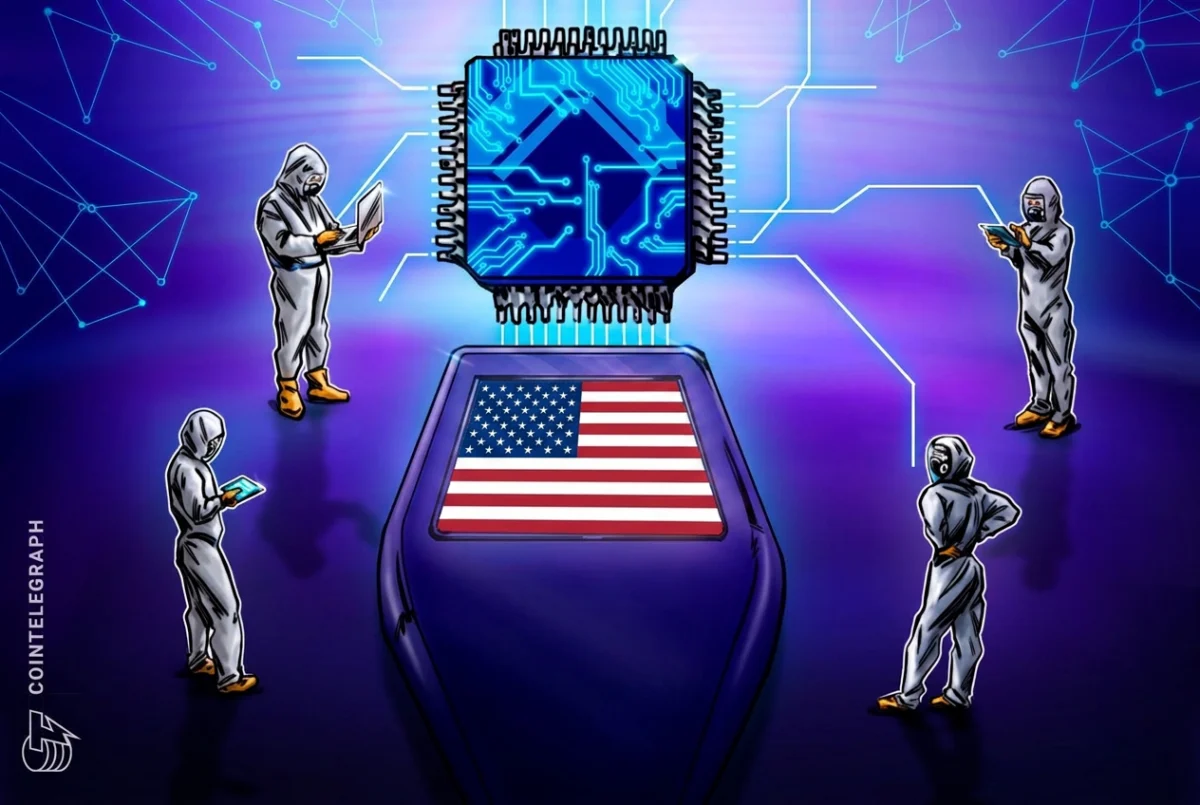
Senator Elizabeth Warren has launched a high-stakes inquiry into the US Commerce Department’s recent policy adjustments regarding the United Arab Emirates, demanding a thorough explanation after revelations of significant UAE investments in President Donald Trump’s family-backed cryptocurrency venture, World Liberty Financial. The Massachusetts lawmaker’s intervention underscores mounting concerns in Congress about potential conflicts of interest, foreign influence, and the integrity of national security decisions in the allocation of advanced technologies like AI chips.
According to a Wednesday CNBC report from August 5, 2026, Senator Warren formally addressed Commerce Secretary Howard Lutnick, dispatching a pointed letter that seeks clarity on why the US government has granted the UAE enhanced access to crucial AI chip technology. This policy shift occurred following two distinct financial transactions linking the Gulf nation to the Trump family’s burgeoning crypto business, raising immediate red flags among congressional oversight bodies. Warren’s letter explicitly questioned the timing and rationale behind the Commerce Department’s decision, emphasizing the potential for these financial ties to compromise US economic and national security interests.
The crux of the controversy lies in a significant policy change enacted by the US Commerce Department. The department recently reclassified the UAE to Country Group A:5, a designation that affords the nation greater access to license-free exports, crucially including advanced semiconductors essential for artificial intelligence development. Beyond this broader categorization, the department also committed to "favorably review" license applications involving highly sought-after chips and servers for MGX, a specific UAE entity. This commitment to MGX is particularly scrutinizing given its direct involvement in one of the controversial crypto investments.
The investments that have drawn Senator Warren’s ire are substantial and multifaceted. In January, an Abu Dhabi entity, reportedly backed by Sheikh Tahnoon bin Zayed Al Nahyan – a prominent figure in the UAE’s strategic investment landscape and brother to the nation’s president – injected a staggering $500 million into World Liberty Financial. This venture, explicitly described as "Trump family-backed," immediately sparked concerns about the blurred lines between political influence and private financial gain. World Liberty Financial, though its precise operations remain somewhat opaque, has been presented as a significant player in the evolving cryptocurrency sector, leveraging its association with a globally recognized political brand.
Adding another layer to the complex web of transactions, another company with demonstrable links to the UAE reportedly settled a massive $2 billion investment in the crypto exchange Binance. This colossal payment was executed using World Liberty Financial’s proprietary stablecoin, USD1. The use of a stablecoin issued by a Trump-linked entity for such a substantial international transaction has amplified suspicions, suggesting a strategic move to integrate and legitimize World Liberty Financial’s digital asset within the broader global crypto ecosystem, potentially benefiting from its connections.
Senator Warren, a vocal critic of unregulated financial markets and a staunch advocate for consumer protection and ethical governance, articulated her profound concerns in the letter. "The Department’s actions raise significant questions about the potential influence the President’s cryptocurrency business interests may be having on the agency’s operations and our national security," the Massachusetts lawmaker was quoted as stating by CNBC. Her statement reflects a deep-seated worry that the allure of private financial gain, particularly for a politically influential family, might be inappropriately swaying critical foreign policy and technology export decisions.
The strategic importance of AI chips cannot be overstated in the current geopolitical landscape. These advanced semiconductors are the bedrock of artificial intelligence, powering everything from sophisticated data centers and autonomous systems to advanced military applications. Granting a foreign nation, even a strategic partner like the UAE, unfettered or significantly eased access to such dual-use technology carries substantial national security implications. Critics argue that without stringent oversight, there is a risk of technology diversion, re-export to adversarial nations, or the acceleration of AI capabilities in ways that could potentially challenge US technological supremacy. Warren’s inquiry implicitly probes whether the Commerce Department adequately weighed these national security risks against other considerations when making its policy shift.
The UAE’s heightened interest in AI technology aligns with its ambitious national strategy to diversify its economy away from oil and establish itself as a global hub for innovation and advanced technology. Under the leadership of figures like Sheikh Tahnoon bin Zayed Al Nahyan, who oversees a vast network of state-backed enterprises and sovereign wealth funds, the UAE has aggressively pursued investments in cutting-edge sectors, including AI, quantum computing, and biotechnology. From the UAE’s perspective, securing access to advanced AI chips is crucial for realizing these national ambitions, fueling its domestic tech industry, and attracting global talent. However, the confluence of these strategic objectives with private financial investments linked to a prominent US political figure creates a potent cocktail of ethical and national security dilemmas.
This latest probe is not an isolated incident but rather part of a broader, sustained effort by Democratic lawmakers to scrutinize potential foreign influence stemming from crypto investments linked to politically exposed persons. Just months prior, in June, a bipartisan group of senators, including Warren, had already called for congressional hearings into the initial $500 million investment in World Liberty Financial. Those earlier calls highlighted concerns about transparency, the origins of the funds, and the potential for illicit financial flows or foreign meddling through the less regulated cryptocurrency space. The recurring theme in these congressional inquiries is the need for greater accountability and transparency when high-value foreign investments intersect with the financial interests of current or former US officials and their families.
Adding to the complexity and concern is the ongoing scrutiny surrounding former President Trump’s pardon of Changpeng Zhao (CZ), the founder and former CEO of Binance. Zhao, who pleaded guilty to money laundering charges and sanctions violations, had been facing a significant prison sentence. Trump’s pardon, issued shortly before the UAE’s $2 billion investment in Binance using World Liberty’s stablecoin, has fueled speculation among lawmakers that it might be linked to broader efforts to cultivate influence within the crypto industry or with specific foreign entities. Critics argue that such a pardon could undermine the rule of law and send a dangerous signal about the susceptibility of the US justice system to political considerations, especially when intertwined with lucrative financial deals. The connection between the pardon, the UAE’s Binance investment, and the use of the Trump-linked stablecoin creates a narrative of potential quid pro quo that lawmakers are determined to unravel.
The broader context of US-UAE relations is also relevant. The UAE is a key strategic partner for the United States in the Middle East, collaborating on security, counter-terrorism, and regional stability initiatives. This partnership often involves complex diplomatic and economic considerations, making policy decisions regarding technology transfers particularly sensitive. While strengthening alliances is a stated goal of US foreign policy, the appearance of private financial interests influencing such decisions risks undermining public trust and potentially exposing the US to unforeseen vulnerabilities.
Senator Warren’s letter demands a comprehensive response from Secretary Lutnick, including detailed justifications for the policy change regarding AI chip exports to the UAE, an assessment of any potential national security risks, and full disclosure of any communications or considerations related to the Trump family’s crypto interests in the decision-making process. Her inquiry aims to ascertain whether proper due diligence was conducted and if the policy shift was solely based on strategic national interests, or if it was, in any way, swayed by the financial dealings of a former president’s family.
The implications of this investigation are far-reaching. It could lead to a re-evaluation of US export control policies, particularly concerning dual-use technologies like AI chips, and a tightening of ethics regulations for former and current government officials involved in international business ventures. It also highlights the growing challenge of regulating the cryptocurrency sector, where the lines between legitimate investment, speculative trading, and potential influence peddling can often blur. As the inquiry unfolds, it promises to cast a revealing light on the intricate intersections of politics, finance, technology, and national security in an increasingly interconnected and complex global landscape.
Cointelegraph is committed to independent, transparent journalism. This news article is produced in accordance with Cointelegraph’s Editorial Policy and aims to provide accurate and timely information. Readers are encouraged to verify information independently.