Joko Widodo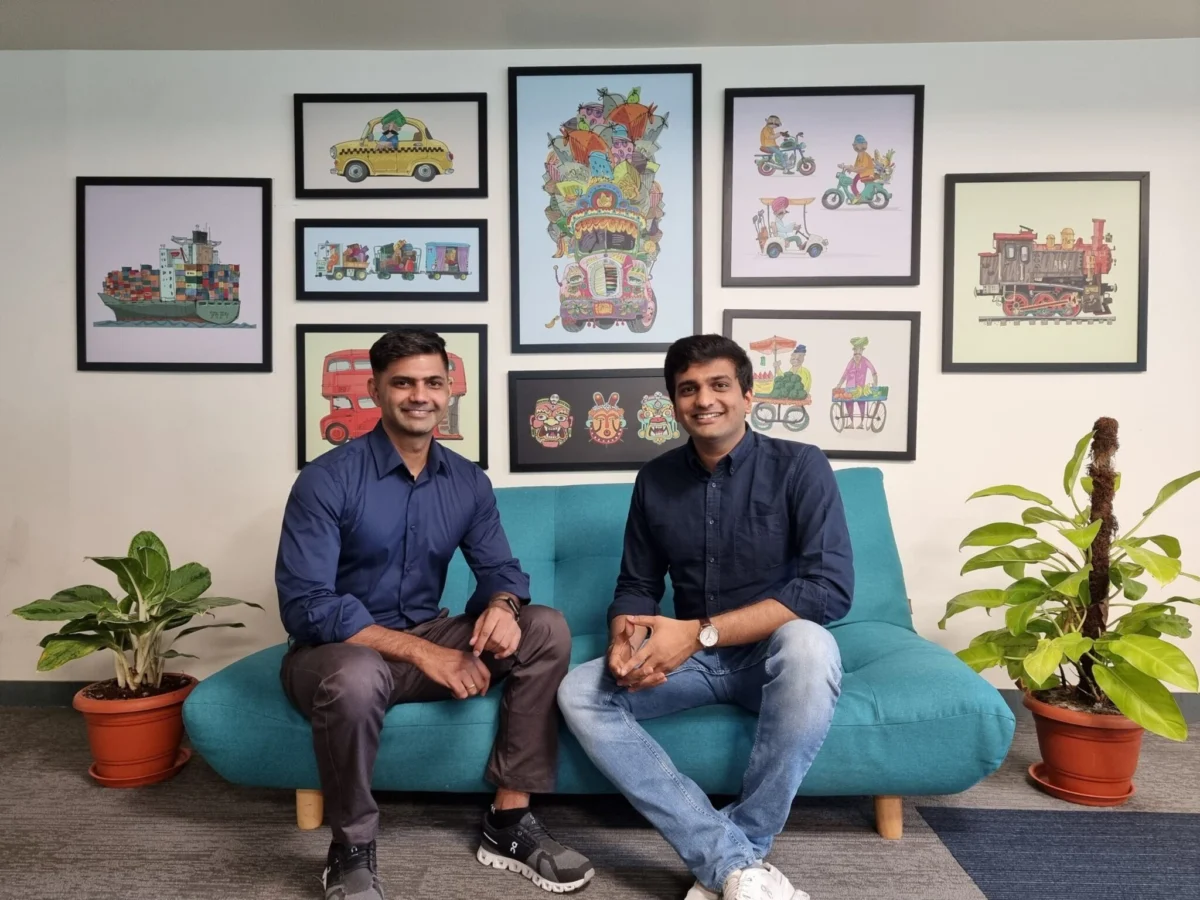
Enterprise AI startup Freehand has successfully closed a $75 million Series B funding round, marking a significant milestone in its mission to revolutionize supply chain management for Fortune 500 companies through advanced autonomous AI agents. This substantial capital injection is earmarked to accelerate the scaling of its sophisticated AI technology, which is designed to meticulously manage complex supply chain expenditures and streamline back-office operations for some of the world’s largest enterprises. The funding round saw co-leadership from prominent venture capital firms Battery Ventures and NewRoad Capital Partners, underscoring strong investor confidence in Freehand’s innovative approach and market potential. Additional participation came from Nexus Venture Partners and former U.S. Commerce Secretary Penny Pritzker, further solidifying the strategic backing behind the San Francisco-based company. With this latest infusion of capital, Freehand’s total funding has now reached an impressive $100 million, a rapid accumulation considering its relatively recent founding.
While Freehand chose not to disclose its exact valuation, CEO and co-founder Nitin Jayakrishnan indicated that the Series B represented "a significant step up" from the company’s $25 million Series A round, which was raised just months prior in March 2024. This rapid increase in valuation and funding speaks volumes about the perceived value and urgency of Freehand’s solution in the current global economic climate. The timing of this deal is particularly pertinent, as the traditional outsourcing models that have underpinned global supply chains for decades are now facing unprecedented strain. Factors such as escalating tariffs, evolving international tax regulations, and shifting immigration policies are creating a volatile environment, making manual and geographically dispersed back-office operations increasingly inefficient and risky. Freehand’s fundraise also aligns with a broader trend of heightened venture funding into supply chain and logistics-related startups. Crunchbase data indicates a robust resurgence in this sector, with 2026 projected to be the strongest year for investments since 2022, having already seen $6.2 billion raised by such companies across 350 deals in the first half of the year alone. This surge reflects a growing recognition among investors and enterprises alike that technological innovation, especially AI, is crucial for navigating the complexities of modern global commerce.
Logistics Roots: A Foundation for Autonomous Innovation
The genesis of Freehand in February 2024 was rooted in profound industry experience. It was co-founded by Nitin Jayakrishnan and Abhijeet Manohar, two seasoned enterprise logistics veterans whose prior venture laid the groundwork for their current ambitious undertaking. Before Freehand, Jayakrishnan and Manohar co-founded Pando, a highly successful SaaS transportation management system (TMS) and procure-to-pay system of record tailored for large enterprise logistics. Their extensive tenure at Pando provided them with invaluable insights into the intricate, often archaic, operational challenges faced by global supply chains. In early 2024, as the transformative potential of AI began to rapidly accelerate, Jayakrishnan and Manohar made a strategic decision. They transitioned from operational roles at Pando to board positions, enabling them to dedicate their full attention to launching Freehand as an independent entity singularly focused on agentic AI. Pando continued its operations under a newly appointed executive team, eventually being sold to a strategic buyer in early 2026, culminating in a complete shareholder exit for the founders. This sequential entrepreneurial journey highlights their deep commitment to innovation within the logistics and supply chain domain.
Their cumulative experience in building sophisticated enterprise supply chain software at Pando unequivocally convinced them that existing back-office paradigms were not merely inefficient but fundamentally ripe for disruption. Jayakrishnan articulated this vision to Crunchbase News, stating, "We had been in this fairly archaic dinosaur of an industry for the last six to eight years." He elaborated on their rationale for founding Freehand, explaining, "Instead of trying to catch them up to a technology paradigm that was sunsetting, we thought we could leapfrog them into a technology paradigm that was just rising." This perspective encapsulates Freehand’s ambition: to not incrementally improve existing systems but to fundamentally transform them using cutting-edge autonomous AI. They recognized that while traditional software provided incremental gains, the true leap forward required AI that could act, negotiate, and decide autonomously, moving beyond mere automation to genuine intelligence.
Beyond Corporate Cards: Freehand’s Unique Value Proposition
Freehand’s unique market position becomes clear when contrasted with existing spend management platforms. While popular solutions like Ramp primarily focus on optimizing corporate card usage, streamlining employee travel expenses, and automating routine bill payments, Freehand targets an entirely different and far more complex dimension of enterprise spend: core supply chain operations. This distinction is crucial. Instead of merely processing standardized receipts and facilitating routine approvals, Freehand’s autonomous AI agents are engineered to manage the non-standard, highly variable, and often opaque spending associated with logistics, raw materials procurement, parts acquisition, and labor costs across global networks.
The power of Freehand’s software lies in its ability to operate seamlessly within a company’s existing IT infrastructure and enterprise systems. Its AI agents are designed to perform a wide array of sophisticated tasks that previously required extensive human intervention and expertise. This includes meticulously reading and interpreting complex contracts, adhering to nuanced company policies, analyzing email communications, and synthesizing internal data from various sources. These agents use this information to verify bills with unparalleled accuracy, track critical operational milestones across diverse supply chain legs, and even engage in nuanced vendor negotiations. This comprehensive, intelligent automation liberates enterprises from the manual burden of verifying countless data points, allowing for greater accuracy, speed, and cost efficiency in managing the most intricate aspects of their supply chain finances.
Automating Complex Financial Governance: The AI Advantage

For large, global businesses, the task of meticulously tracking and verifying supplier bills across intricate and often volatile shipping routes—such as those navigating the Red Sea or the Strait of Hormuz—presents an immense challenge. Supply chain contracts are typically replete with highly detailed clauses, conditions, and variable pricing structures. Historically, the arduous process of checking whether multi-million-dollar bills genuinely align with the actual work performed or services rendered has necessitated the deployment of vast, dedicated back-office teams. These teams painstakingly review documents, cross-reference data, and often engage in protracted manual verification processes.
Jayakrishnan vividly articulated this pain point: "When eventually rubber hits the road, when you get an invoice from a supplier saying, ‘Hey, you owe me $16.948 million for everything that I’ve done for you in the last six months,’ there aren’t a lot of proof points to figure out whether you know if that number is right or wrong." He further elaborated on the traditional solution: "And so there are large teams that have gotten built over the course of the last decade or so, whose job it is to check these invoices, negotiate these contracts, and figure out whether service obligations from global suppliers are in alignment with contract governance overall." This manual, human-intensive approach is not only costly but also prone to errors, delays, and inconsistencies, especially given the scale and complexity of Fortune 500 supply chains.
This is precisely where Freehand’s AI agents deliver transformative value. When billing discrepancies inevitably arise—whether due to contractual misinterpretations, service failures, or simple errors—Freehand’s AI agents are equipped to negotiate adjustments directly with suppliers. Critically, this negotiation is conducted while meticulously maintaining strategic vendor relationships, ensuring that cost savings do not come at the expense of crucial partnerships. Jayakrishnan highlighted the sophistication of this automated negotiation: "If it is not [in alignment], then negotiating with the supplier becomes, ‘you should have charged me $16.4 million instead of charging me $16.9 million and here’s why I’m not going to pay you the difference,’ and going back and forth without… losing the sensitivity towards that relationship itself." He underscored the core innovation: "Taking those business calls, which have historically been done through tribal knowledge… and truly automating the process to the point of no human intervention is effectively what Freehand does." This capability represents a significant leap from traditional automation, embodying true autonomous intelligence.
Measurable ROI for Fortune 500 Spend: Quantifiable Impact
Freehand’s agentic automation paradigm offers profound benefits that extend far beyond mere efficiency gains. By fundamentally shifting from costly, error-prone manual oversight to intelligent, autonomous systems, Freehand empowers enterprises to significantly reduce their reliance on third-party offshore outsourcing. This not only cuts operational costs but also mitigates the risks associated with geopolitical shifts and data security concerns. Furthermore, it allows internal employees to transition away from tedious, repetitive tasks, freeing them to perform higher-value, strategic work that directly contributes to the company’s competitive advantage and innovation pipeline.
The company’s impressive client roster already includes approximately 50 customers, featuring industry titans such as Meta, Johnson & Johnson, Pfizer, and Cardinal Health. These are companies with notoriously complex global operations and immense spending volumes, underscoring the enterprise-grade robustness and reliability of Freehand’s platform. According to the company, its platform autonomously processes billions in payments across 60 to 70 countries and hundreds of currencies, all without requiring human supervision. This global, multi-currency capability is a testament to the platform’s advanced design and its ability to handle the most intricate financial governance requirements at scale.
The tangible benefits of Freehand’s technology are quantifiable and impactful, as articulated by Jayakrishnan. Enterprises leveraging Freehand’s platform are reportedly recovering 5% to 10% of their total spend across a diverse range of categories. This recovery is achieved through meticulous invoice verification, contract compliance enforcement, and proactive negotiation. Additionally, the platform is accelerating "complex" operational workflows by a remarkable 5x to 7x, drastically cutting down the time required for critical financial processes. Perhaps most impressively, it is reducing overall procure-to-pay cycle times by more than 70%, from initial purchase request to final payment, thereby improving cash flow and operational agility. Jayakrishnan emphasized the pioneering nature of their deployments, stating, "We are, for a lot of companies, their first global rollout of AI deployments at scale that impacts daily transactions and daily operations at global scale." He encapsulated the company’s vision and namesake, adding, "Our ask of the enterprise… is to allow us to give AI a free hand to run supply chain finance for your business."
Dharmesh Thakker, General Partner at Battery Ventures, provided crucial investor insight into the market opportunity and Freehand’s strategic position. He noted that while supply chain and logistics management constitutes a massive global sector, it predominantly "still runs on manual labor and repetitive workflows that are begging to be automated." Thakker further highlighted the external pressures exacerbating these inefficiencies: "And that’s before you account for the turmoil: tariffs, shifting geopolitics, disrupted trade routes." He pointed out the glaring disparity in the sector: "Meanwhile, technology spending is a rounding error at just over $20 billion, which tells us AI has enormous room to drive efficiency, starting with the most mission-critical but repetitive workflows like freight audits and payments." This analysis underscores the immense, untapped potential for AI-driven transformation within logistics and supply chain finance. Thakker explained that Battery Ventures conducted extensive research into supply chain AI across its global offices and found Freehand to be a standout contender on multiple fronts. He specifically praised the exceptional "founder market-fit," Freehand’s strategic focus on the largest Fortune 500 shippers "rather than the intermediaries everyone else chases," and its ability to deliver "clear, measurable business outcomes." This investor endorsement reinforces Freehand’s compelling value proposition and its potential to lead the charge in automating the world’s most complex supply chains.
The emergence of Freehand and its successful funding round signifies a pivotal moment in the evolution of enterprise automation. It represents a shift from simple task automation to true agentic AI, where intelligent systems can autonomously manage complex, high-stakes financial operations. As global supply chains continue to face unprecedented volatility and complexity, the demand for such transformative technologies will only grow. Freehand is not just offering a new tool; it is proposing a new paradigm for how the financial backbone of global commerce is managed, positioning itself at the forefront of this critical technological revolution.