anjir abdul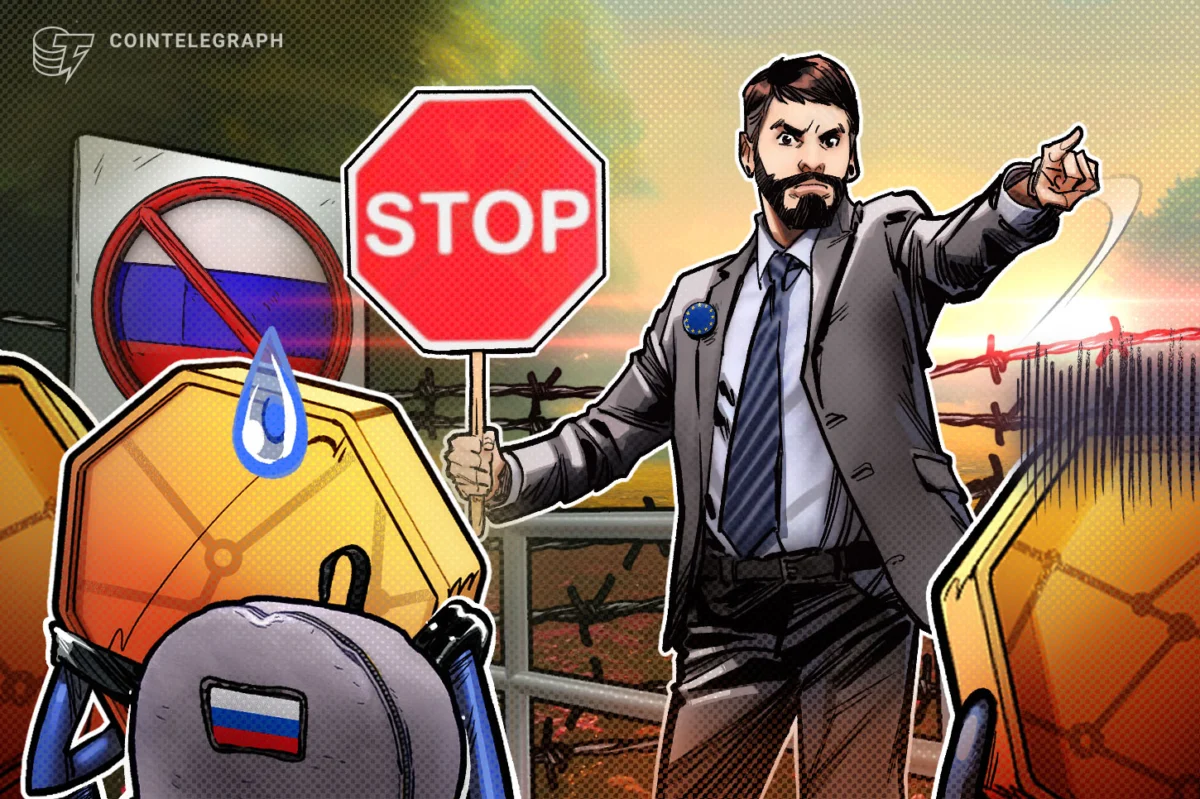
The European Union has officially added the cryptocurrency exchange HTX, formerly known as Huobi Global, to its comprehensive list of sanctions targeting Russia. This significant move, announced on a Thursday, marks a deepening of the EU’s efforts to curtail Russia’s financial capabilities amidst its ongoing full-scale invasion of Ukraine, which commenced in February 2022. The decision places HTX among 18 entities that the EU identifies as "providing crypto-assets services or payment services established outside of the Union that are significantly frustrating the purpose of the prohibitions" against Russia, thereby enabling circumvention of existing restrictive measures.
This latest package of sanctions underscores the European Council’s unwavering commitment to leveraging financial and economic tools to pressure Moscow. The amendment to previous measures was explicitly made "in view of Russia’s actions destabilizing the situation in Ukraine," signaling a direct link between HTX’s alleged activities and the continuation of the conflict. The EU’s stance is clear: any entity, regardless of its operational base, found to be facilitating financial lifelines for Russia’s war machine will face severe repercussions. This includes not only traditional financial institutions but increasingly, players within the burgeoning crypto-asset sector.
EU officials emphasized the strategic rationale behind these measures, stating, "The Union has repeatedly taken measures to identify financial institutions, credit institutions or entities providing crypto-asset services or payment services that facilitate a continued financial lifeline for Russia’s war of aggression against Ukraine, whether by connecting to the system for transfer of financial messages of the Central Bank of the Russian Federation or by enabling the circumvention of Union restrictive measures, and to prohibit any transaction between those institutions or entities and Union operators." This statement highlights two primary concerns: direct integration with Russia’s financial infrastructure (like the SPFS, Russia’s alternative to SWIFT) and enabling the circumvention of existing sanctions through various means, including crypto.
For HTX, a globally recognized cryptocurrency exchange, this sanction carries substantial weight. Previously, the exchange had publicly asserted its dedication to regulatory compliance. HTX had told Cointelegraph that "regulatory compliance remains [its] absolute top priority" and that the exchange would "proactively monitor and strictly adhere to regulatory frameworks in all jurisdictions." These assurances now stand in stark contrast to the EU’s assessment, raising questions about the effectiveness of HTX’s compliance protocols or the scope of its previous understanding of "adherence." The implication of being named in an EU sanctions list is severe, potentially leading to significant operational challenges, reputational damage, and a loss of trust among its global user base, particularly those within the EU. European individuals and entities are now prohibited from engaging in transactions with HTX, effectively cutting off a significant market for the exchange.
The EU’s move is not an isolated incident but part of a broader, concerted effort by Western powers to tighten the noose on entities perceived to be aiding Russia. The United Kingdom, for instance, had already imposed similar sanctions on HTX in May. The UK government stated there were "reasonable grounds to suspect" that HTX supported Russia’s government by facilitating financial services and funds that involved sanctioned entities. This prior action by the UK likely served as a precursor and perhaps provided intelligence or justification for the EU’s subsequent decision, indicating a coordinated approach among international allies to address this specific vulnerability in the global sanctions regime. The convergence of sanctions from two major economic blocs like the EU and the UK significantly amplifies the pressure on HTX and sends a clear message to other crypto exchanges about the risks of engaging with sanctioned regimes.
The inclusion of HTX in the EU’s sanctions list also casts a spotlight on the evolving role of cryptocurrencies in international finance and geopolitical conflicts. Since Russia’s full-scale invasion of Ukraine, there has been a persistent concern among global regulators that digital assets could be exploited to bypass traditional financial sanctions. Cryptocurrencies, by their decentralized nature and pseudonymous characteristics, offer avenues that can be more challenging for traditional surveillance methods to track. This has led to an intensified focus on crypto exchanges, particularly those operating across multiple jurisdictions, to ensure they are not inadvertently or deliberately becoming conduits for illicit finance or sanctions evasion. The EU’s action against HTX is a concrete manifestation of this concern, signaling that crypto exchanges are no longer immune from the geopolitical implications of their operations.
Furthermore, this development occurred on the same day EU officials announced another significant regulatory step: the prohibition of Belarusian nationals and residents from owning, controlling, or managing crypto exchanges and digital asset service providers. This measure aligns with the region’s groundbreaking Markets in Crypto Assets (MiCA) framework, which is set to become fully applicable by the end of 2024. MiCA is designed to create a comprehensive regulatory framework for crypto assets across the EU, aiming to ensure market integrity, consumer protection, and financial stability. While the sanctions against HTX are a direct response to Russia’s war and fall under the EU’s Common Foreign and Security Policy, the simultaneous announcement regarding Belarusian nationals under MiCA highlights a broader, multi-faceted strategy by the EU. This strategy seeks to both counter immediate threats of sanctions evasion and establish a robust, long-term regulatory environment for digital assets that prevents their misuse for illicit purposes. It underscores the EU’s comprehensive approach to bringing the crypto sector under a regime of heightened scrutiny, driven by both market stability and national security imperatives.
The EU’s ongoing efforts to identify and sanction entities that provide a "financial lifeline" to Russia involve a complex web of surveillance and intelligence gathering. The reference to entities connecting to the "system for transfer of financial messages of the Central Bank of the Russian Federation" (SPFS) is particularly telling. SPFS was developed by Russia as an alternative to SWIFT, the global interbank messaging system, after fears of being disconnected from it following the 2014 annexation of Crimea. Any financial institution or crypto service provider that integrates with SPFS or facilitates transactions through it directly undermines the efficacy of international sanctions designed to isolate Russia from the global financial system. The EU’s action against HTX, therefore, is not merely about a crypto exchange but about severing any and all channels that could enable Russia to sustain its war economy.
The implications for other global cryptocurrency exchanges are profound. This action by the EU serves as a stern warning that regulators are actively monitoring the flow of funds and user bases, especially in relation to sanctioned countries. Exchanges will likely face increased pressure to enhance their Know Your Customer (KYC) and Anti-Money Laundering (AML) procedures, particularly concerning users from or connected to high-risk jurisdictions. The expectation is that exchanges must demonstrate proactive compliance and a clear commitment to preventing their platforms from being used for sanctions evasion. Failure to do so could result in similar punitive actions, not only from the EU but from other major economic powers.
Looking ahead, HTX faces a challenging path. While the specifics of potential delisting or appeal processes for sanctioned entities are complex, the immediate impact will be felt in its operational capacity and its relationships with financial partners and users within the EU. The exchange will likely need to implement stringent measures to block EU-based users and prevent any transactions involving EU entities, or risk further legal action and penalties. The broader struggle against sanctions circumvention in the digital age is an ongoing cat-and-mouse game, with authorities continuously adapting their strategies as technology evolves. The EU’s decision to include HTX in its sanctions list is a clear signal that the cryptocurrency sector is now firmly within the crosshairs of international financial enforcement, marking a new chapter in the global effort to combat illicit finance and uphold international security. This move solidifies the EU’s commitment to its sanctions regime and highlights the increasing convergence of geopolitical strategy and financial regulation in the rapidly evolving cryptocurrency landscape.