Imroatul Nasiyah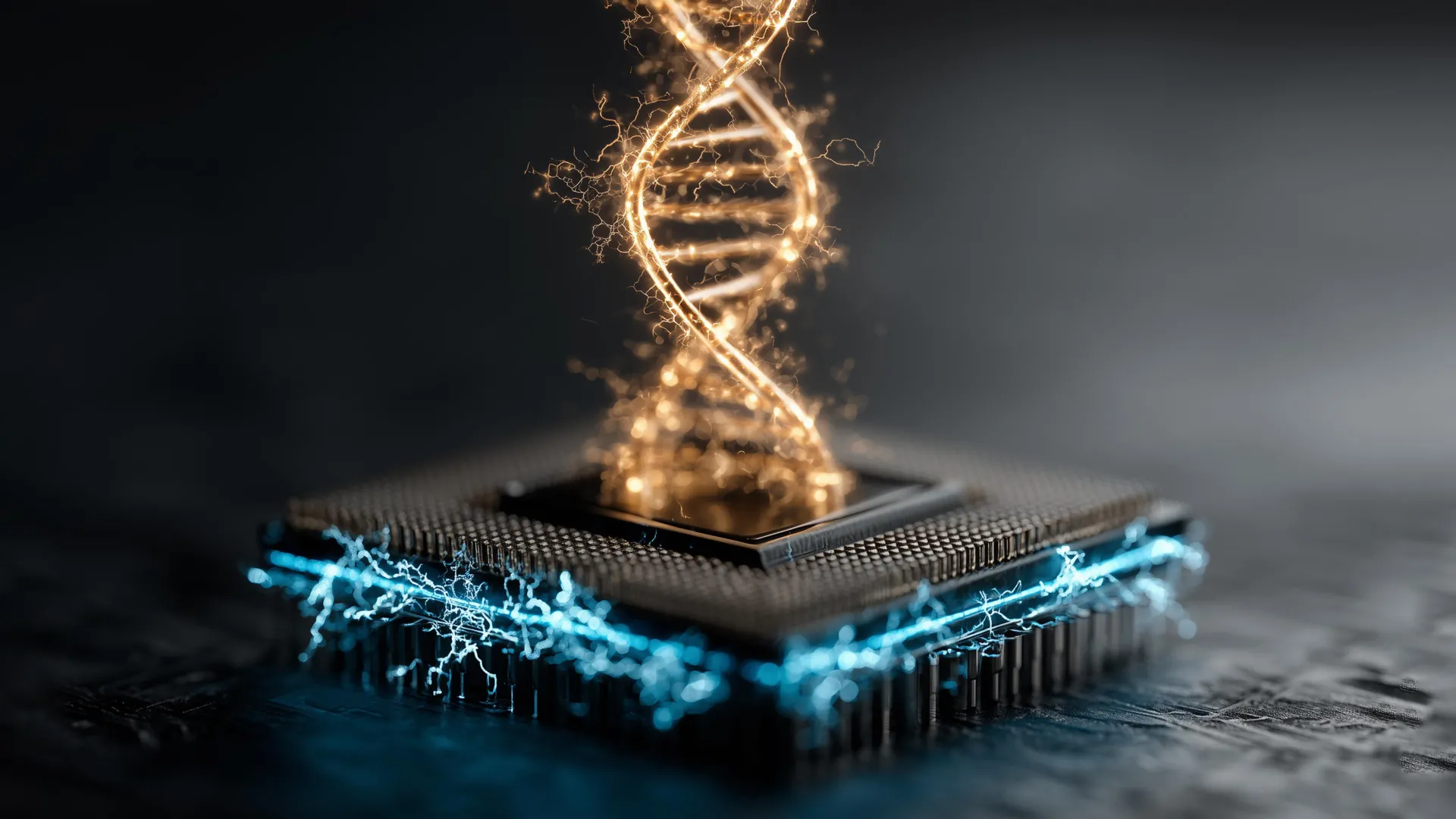
Silicon chips, the bedrock of our digital world, are now poised to redefine the landscape of biotechnology. Moving beyond their traditional role in computation, these sophisticated microelectronics are evolving into powerful tools for deciphering and, remarkably, creating life’s fundamental building blocks – DNA. A groundbreaking study, spearheaded by researchers at Harvard University, unveils a revolutionary silicon chip capable of acting as a sophisticated "DNA writing machine," synthesizing multiple DNA sequences simultaneously using an environmentally conscious, water-based enzymatic process. This innovation promises to democratize DNA synthesis, making it more accessible, sustainable, and adaptable for a myriad of scientific and medical advancements.
The pioneering research, published in the esteemed journal Nature Electronics, details the development of a novel silicon chip that can synthesize an impressive 64 distinct DNA sequences concurrently. This represents a significant leap forward from conventional methods, which often rely on solvent-intensive chemical processes that carry environmental and safety concerns. Instead, the Harvard team’s chip leverages a water-based enzymatic approach, meticulously controlling electrical currents to trigger DNA building reactions at precise locations across its surface. This elegant integration of microelectronics and molecular biology, led by Donhee Ham, the John A. and Elizabeth S. Armstrong Professor of Engineering and Applied Sciences at the Harvard John A. Paulson School of Engineering and Applied Sciences (SEAS), marks a pivotal moment in synthetic biology.
Synthetic DNA is an indispensable component across numerous scientific frontiers, underpinning critical advancements in diagnostics, genome engineering, and the fight against diseases like cancer. The current gold standard for producing custom DNA is phosphoramidite chemistry, a mature and highly parallelized method capable of generating millions of sequences. However, this established technique is heavily reliant on hazardous organic solvents and necessitates specialized, centralized manufacturing facilities. The inherent risks and environmental footprint associated with these solvents have long spurred the scientific community to seek greener alternatives.
Enzymatic DNA synthesis has emerged as a promising contender, offering a gentler, water-based alternative that more closely mimics the natural DNA replication processes within living cells. The potential benefits are substantial: smaller, safer, and more widely accessible DNA synthesis systems. Despite its inherent advantages, enzymatic DNA synthesis has historically lagged behind its chemical counterpart in terms of the number of sequences that can be produced simultaneously. Previous demonstrations were typically limited to synthesizing around a dozen sequences at once. The Harvard team’s breakthrough chip shatters this limitation, successfully synthesizing 64 unique DNA sequences in parallel, each extending up to 39 nucleotides in length. This achievement sets a new benchmark for the scalability and efficiency of enzymatic DNA synthesis.
The intricate mechanism by which the silicon chip "writes" DNA is a testament to precise engineering. DNA is constructed nucleotide by nucleotide, with each addition requiring a temporary blocking group to prevent uncontrolled elongation. Crucially, before the next nucleotide can be appended, this blocking group must be removed through a process known as deprotection, which is typically triggered by acidic conditions or a low pH in an aqueous environment. The challenge in producing multiple DNA sequences simultaneously lies in selectively lowering the pH only at specific synthesis sites during each cycle. The Harvard chip masterfully accomplishes this using finely tuned electrical currents.
The chip’s surface is ingeniously designed with 64 distinct synthesis sites. Each site features a sophisticated arrangement of two concentric ring electrodes enveloping the DNA molecules anchored at the center. When a particular site is activated, the inner electrode generates protons, creating a localized acidic environment that facilitates the deprotection step and allows the DNA strand to extend. Simultaneously, the outer electrode actively removes protons that might diffuse outwards, effectively confining the acidic region to that single, designated site. By orchestrating this delicate dance of proton generation and removal through repeated cycles, the chip independently constructs 64 unique DNA sequences across its surface, each with remarkable precision.
Intriguingly, the genesis of this DNA-writing silicon chip was not its primary initial purpose. The underlying silicon electronics were originally developed by Jeffrey Abbott, a former PhD student in Professor Ham’s laboratory, for the sophisticated task of recording electrical activity within large populations of neurons. The remarkable adaptability of this technology became apparent when, after a strategic redesign of the surface electrodes, the researchers discovered that the same fundamental principles could be precisely harnessed to control the chemical conditions essential for DNA synthesis.
"A defining feature of the chip was precision current injection, which we used to permeabilize neuronal membranes for intracellular access," explained Professor Ham. "At a certain point, we wondered whether that same current control could be redirected from cells to molecules, replacing the neuron-facing electrodes with ring-electrode pairs that could localize pH for DNA synthesis. It worked." This serendipitous discovery underscores the power of interdisciplinary research and the potential for technologies developed for one field to unlock revolutionary applications in another.
Beyond its immediate implications for synthetic biology and medical diagnostics, the research team has illuminated another compelling future application: DNA data storage. In a demonstration of this potential, the 64 synthesized DNA sequences were ingeniously utilized to encode a 169-byte text. While DNA-based data storage remains a long-term aspiration, contingent on the ability to manufacture DNA at an unprecedented scale, the Harvard team’s water-based enzymatic synthesis approach offers a glimpse into a more sustainable future for this endeavor. As production volumes escalate, the reduction in solvent usage could significantly mitigate the environmental impact of large-scale DNA manufacturing.
"DNA data storage asks DNA synthesis to operate at a scale far beyond today’s needs," commented Woo-Bin Jung, a co-first author of the study and now an assistant professor of chemical engineering at the Pohang University of Science and Technology (POSTECH), who conducted this work as a postdoctoral researcher in Ham’s lab. "That is why enzymatic synthesis in water can matter. If far more than 64 sequences can be synthesized in parallel, it could offer an environmentally friendly route toward writing DNA at very large scale."
While the silicon chip itself demonstrated remarkable precision in localizing pH, the research also identified the next significant hurdle: the chemistry of the deprotection process. The team attempted to scale up the chip by placing synthesis sites closer together, aiming to increase the number of parallel sequences. Although this experiment did not yield the anticipated increase in output, it provided crucial insights. The chip successfully confined the low pH to the intended locations. The limiting factor, however, emerged from the deprotection chemistry itself. Rather than directly cleaving the blocking groups, the low pH generates intermediate molecules that then carry out the deprotection. These intermediate molecules can inadvertently drift into adjacent synthesis sites, blurring the boundaries between reactions even when the pH is tightly controlled.
"The chip did what we asked it to do: it localized low pH at selected sites," stated Han Sae Jung, the other co-first author of the study and a former graduate student and current postdoctoral researcher at Harvard. "The limitation came from the deprotection chemistry, not from the silicon. That leaves a clear next step for the field — develop a more direct acid-driven deprotection chemistry that can keep pace with the chip." This identification of the chemical bottleneck provides a clear roadmap for future research and development in the field.
This groundbreaking project was a testament to collaborative scientific endeavor, involving researchers from Harvard University, the Broad Institute, DNA Script, and later POSTECH. The intellectual property related to this innovative platform has been secured by Harvard’s Office of Technology Development. The study, titled "Parallel enzymatic DNA synthesis using a semiconductor chip," was generously supported by various esteemed institutions, including the Office of the Director of National Intelligence (ODNI), Intelligence Advanced Research Projects Activity (IARPA) through grant 2019-19081900002, the Horizon Europe Hyperion project (ID: 101115253), and the Samsung Research Funding & Incubation Center for Future Technology of Samsung Electronics under Project Number SRFC-IT2402-09. This multifaceted support underscores the recognized significance and transformative potential of this pioneering work in advancing both computing and biological sciences.