Imroatul Nasiyah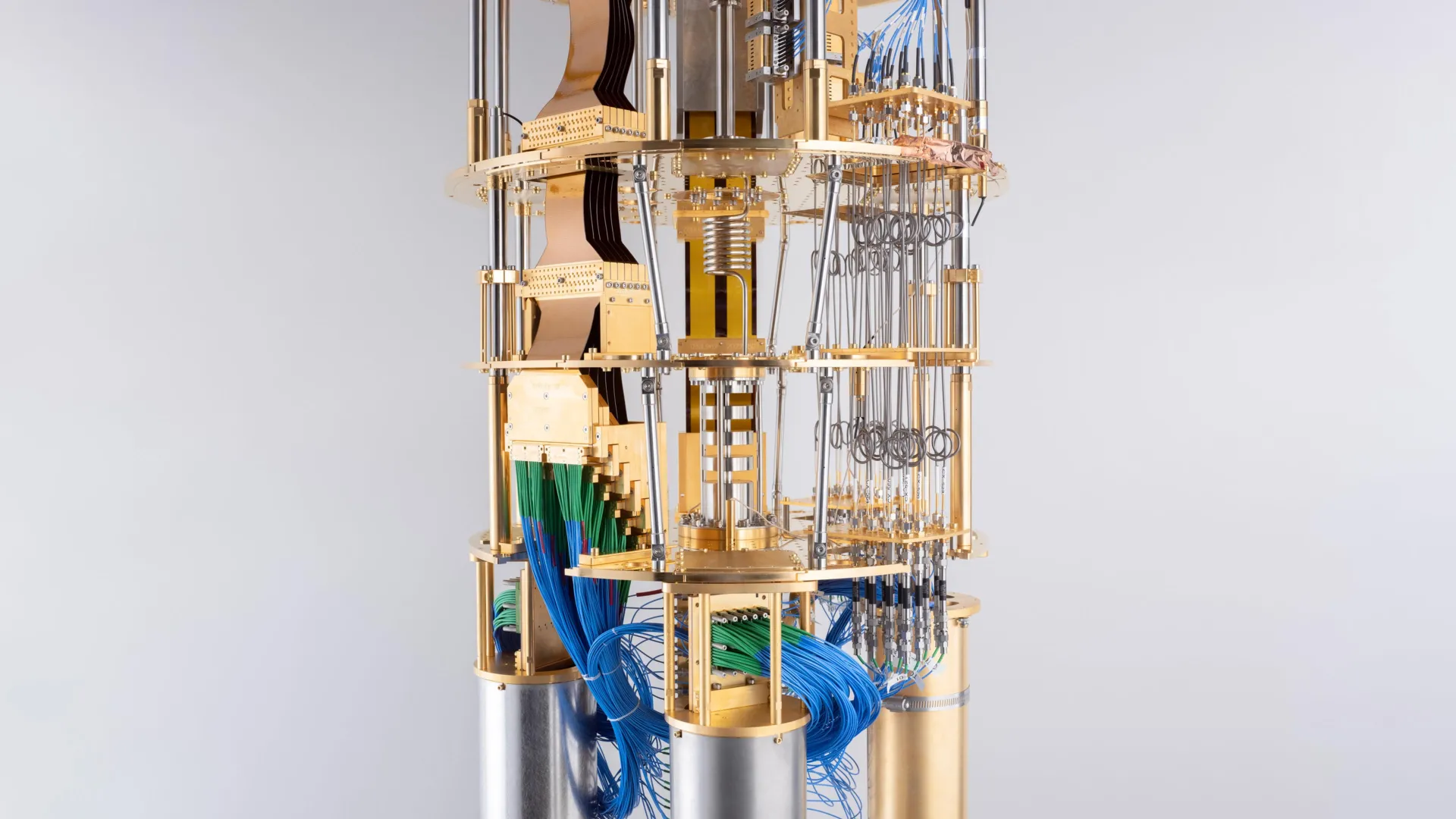
In a groundbreaking achievement, researchers have successfully demonstrated an exponential and unconditional speedup of quantum computation over classical computers, marking a significant milestone in the quest for powerful quantum machines. This breakthrough, detailed in the prestigious journal Physical Review X, utilized two 127-qubit IBM Quantum Eagle processor-powered quantum computers to tackle a variation of Simon’s problem, an algorithmic task where quantum systems theoretically offer an exponential advantage. The research, led by Professor Daniel Lidar at the USC Viterbi School of Engineering, addresses the long-standing challenge of quantum noise and errors, which have historically limited the practical power of quantum computers.
Quantum computers hold immense promise for revolutionizing various fields, from accelerating drug discovery and material science to breaking modern encryption methods. However, their potential has been largely theoretical due to the inherent fragility of quantum states, which are susceptible to noise and errors. These imperfections can degrade the quality of computation, making quantum machines less powerful than their classical counterparts for many tasks. Until now, achieving a demonstrable, scalable quantum advantage, especially an exponential one, has been a primary objective for the quantum computing community.
Professor Lidar, a renowned expert in quantum error correction and a co-founder of Quantum Elements, Inc., has been at the forefront of efforts to overcome these limitations. His team’s latest study, a collaboration with researchers at USC and Johns Hopkins, presents compelling evidence that this barrier has been overcome. "There have previously been demonstrations of more modest types of speedups like a polynomial speedup," Lidar stated. "But an exponential speedup is the most dramatic type of speed up that we expect to see from quantum computers." He further emphasized that the key milestone has always been to show that quantum computers can execute entire algorithms with a scaling speedup relative to ordinary classical computers.
A scaling speedup, as Lidar clarifies, is not simply about performing a task a fixed number of times faster. Instead, it signifies that as the size or complexity of a problem increases, the performance gap between quantum and classical computers widens considerably. An exponential speedup means this gap roughly doubles with each additional variable or unit of complexity. Crucially, the speedup demonstrated in this study is "unconditional," meaning it does not depend on any unproven assumptions about the limitations of classical algorithms. This is a significant departure from previous claims of quantum speedup, which often relied on the assumption that no more efficient classical algorithm existed for the problem being tested.
The team achieved this unconditional exponential speedup by modifying an algorithm designed for the quantum computer to solve a variation of "Simon’s problem." This early quantum algorithm, conceived by Daniel Simon, is a foundational example of how quantum computers can tackle certain problems exponentially faster than any classical machine, without requiring specific assumptions about classical computational limits. Simon’s problem, in essence, involves identifying a hidden repeating pattern within a mathematical function. It is considered a conceptual precursor to Shor’s factoring algorithm, a notorious algorithm capable of breaking widely used encryption methods and a catalyst for the entire field of quantum computing.
The "guessing game" analogy used to explain Simon’s problem vividly illustrates the quantum advantage. In this game, players attempt to guess a secret number known only to a game host, or "oracle." When a player successfully guesses two numbers that yield identical results from the oracle, the secret number is revealed, and that player wins. Quantum players, leveraging the principles of superposition and entanglement, can solve this game exponentially faster than their classical counterparts.
The success in achieving this significant speedup is attributed to meticulous optimization and innovative error mitigation techniques. Phattharaporn Singkanipa, a USC doctoral researcher and the first author of the paper, explained, "The key was squeezing every ounce of performance from the hardware: shorter circuits, smarter pulse sequences, and statistical error mitigation." The researchers implemented four primary strategies to achieve this:
Firstly, they strategically limited the input data by constraining the number of possible "secret numbers" that could be involved. This was achieved by restricting the number of ‘1’s in the binary representation of the set of secret numbers. This reduction in complexity led to fewer quantum logic operations, thereby minimizing the opportunities for errors to accumulate.
Secondly, the team employed a process known as "transpilation" to compress the number of required quantum logic operations as much as possible. Transpilation involves optimizing the sequence of operations for a specific quantum hardware architecture, making the computation more efficient.
Thirdly, and most critically, the researchers implemented a technique called "dynamical decoupling." This sophisticated method involves applying precisely timed sequences of control pulses to the qubits. These pulses act to shield the qubits from their noisy environment, effectively "detaching" their quantum states from external disturbances and maintaining the integrity of the quantum computation. Dynamical decoupling proved to be the most impactful strategy in enabling the demonstration of a quantum speedup.
Finally, the team utilized "measurement error mitigation." This post-processing technique identifies and corrects residual errors that may persist even after dynamical decoupling, particularly those introduced by imperfections in the process of measuring the final state of the qubits at the conclusion of the algorithm.
Professor Lidar, who also holds joint appointments in Chemistry and Physics at the USC Dornsife College of Letters, Arts and Sciences, expressed optimism about the current state of quantum computing. "The quantum computing community is showing how quantum processors are beginning to outperform their classical counterparts in targeted tasks, and are stepping into a territory classical computing simply can’t reach," he remarked. "Our result shows that already today’s quantum computers firmly lie on the side of a scaling quantum advantage." He further elaborated that the demonstrated exponential speedup is "unconditional," meaning the performance advantage is now more robust and harder to dispute.
Looking ahead, Lidar cautioned that while this is a monumental scientific achievement, its practical applications are currently limited to solving theoretical problems like the "guessing game." Significant further advancements are necessary before quantum computers can tackle complex, real-world challenges. Future research will need to focus on demonstrating speedups for problems that do not rely on "oracles" with pre-existing knowledge of the solution. Furthermore, substantial progress is required in developing more effective methods to reduce noise and decoherence in ever-larger quantum computing systems. Nevertheless, this study unequivocally validates the long-held theoretical promise of quantum computers to deliver exponential speedups, moving from a concept on paper to a demonstrable reality.
It is important to note the affiliations involved: USC is recognized as an IBM Quantum Innovation Center, and Quantum Elements, Inc. is a participant in the IBM Quantum Network, highlighting the collaborative ecosystem driving these advancements.