Imroatul Nasiyah
The burgeoning field of spintronics, which leverages the intrinsic angular momentum of electrons, known as "spin," for information storage and manipulation, stands as a cornerstone for next-generation information processing technologies. This paradigm shift promises ultra-low-power memory, advanced neuromorphic chips capable of mimicking the human brain, and computational devices designed for stochastic computing—all while consuming considerably less energy and offering greater non-volatility compared to traditional semiconductor technologies. The recent breakthrough by the KIST-led team represents a pivotal advancement, offering a novel approach that promises to dramatically enhance the efficiency of these transformative spintronic applications.
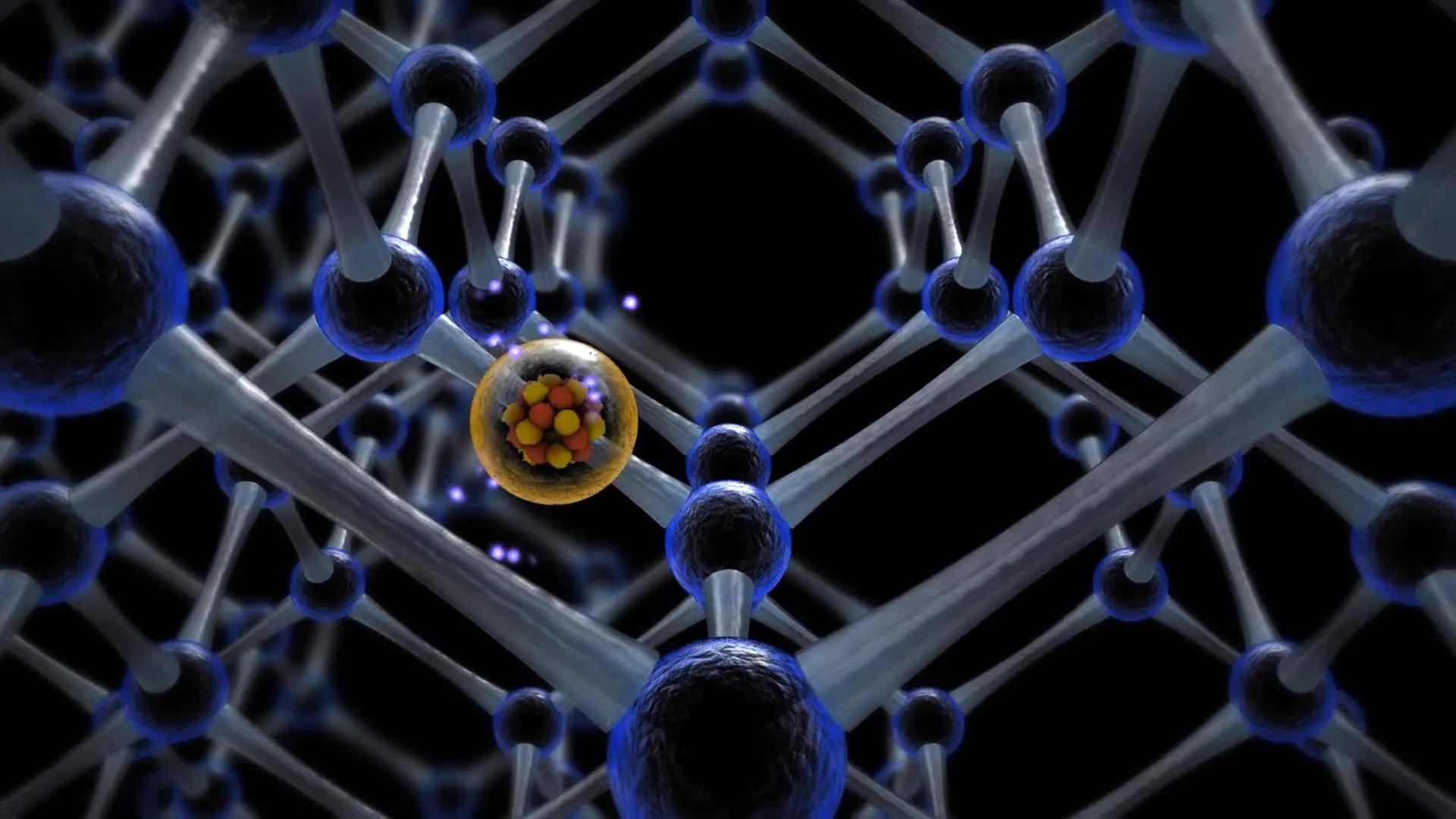
At the heart of this discovery lies the identification of a new physical phenomenon that enables magnetic materials to spontaneously alter their internal magnetization direction without the need for external energy input. Magnetic materials are fundamental to the development of advanced information processing devices, as their internal magnetization direction can be used to represent data. For instance, an upward magnetization can signify a ‘1’, while a downward magnetization can represent a ‘0’, allowing for the storage and manipulation of information. Traditionally, reversing this magnetization direction has required the application of substantial electrical currents. These currents, while effective, inevitably lead to "spin loss"—a phenomenon where a portion of the electron spins fail to reach their intended target within the magnetic material, dissipating as heat and wasted energy. This spin loss has long been recognized as a significant impediment to achieving higher energy efficiency and a major contributor to power consumption in spintronic devices.
For years, researchers in the spintronics community have diligently focused on material design and process optimization, striving to minimize or eliminate spin loss. However, the KIST team has unearthed a counterintuitive truth: spin loss, rather than being a mere waste product, can actively contribute to altering magnetization. Their research demonstrates that spin loss can, in fact, induce a spontaneous switch in the magnetization direction within a magnetic material. This phenomenon can be likened to the reactive movement of a balloon as air is released from it, illustrating how a loss of internal "substance" can lead to a dynamic change.
Through rigorous experimentation, the researchers have experimentally validated this paradoxical finding: the greater the spin loss, the less external power is required to achieve a magnetization switch. This remarkable revelation translates into an up to threefold increase in energy efficiency compared to conventional methods. Crucially, this enhanced efficiency can be achieved without resorting to specialized materials or complex device architectures, making the technology inherently practical and highly scalable for industrial adoption. The simplicity of the device structure is a key advantage, as it seamlessly integrates with existing semiconductor manufacturing processes, facilitating mass production and enabling the miniaturization and high-density integration essential for modern electronic devices.
The implications of this discovery are far-reaching, with potential applications spanning a diverse array of cutting-edge fields. These include the development of highly efficient AI semiconductors, ultra-low-power memory solutions, advanced neuromorphic computing architectures, and devices capable of probability-based computing. The impact on AI and edge computing is particularly significant, as the demand for high-efficiency computing devices that can operate with minimal power consumption is rapidly escalating. This breakthrough provides a critical pathway to fulfilling that demand.
Dr. Dong-Soo Han, a senior researcher at KIST and a lead author on the study, expressed his enthusiasm for the findings: "Until now, the field of spintronics has focused solely on minimizing spin losses. However, we have presented a fundamentally new paradigm by demonstrating how these losses can be ingeniously harnessed as an energy source to drive magnetization switching. Our next steps involve actively developing ultra-small and low-power AI semiconductor devices, as they are poised to become the bedrock of the ultra-low-power computing technologies that are indispensable in the current AI era."
This pioneering research was generously supported by the Ministry of Science and ICT, with funding provided through the KIST Institutional Program, the Global TOP Research and Development Project (GTL24041-000), and the Basic Research Project of the National Research Foundation of Korea (2020R1A2C2005932). The groundbreaking results of this study have been formally published in the esteemed international journal Nature Communications, a publication renowned for its high impact factor (IF 15.7) and its prominent position within the top 7% of research fields (JCR).