Imroatul Nasiyah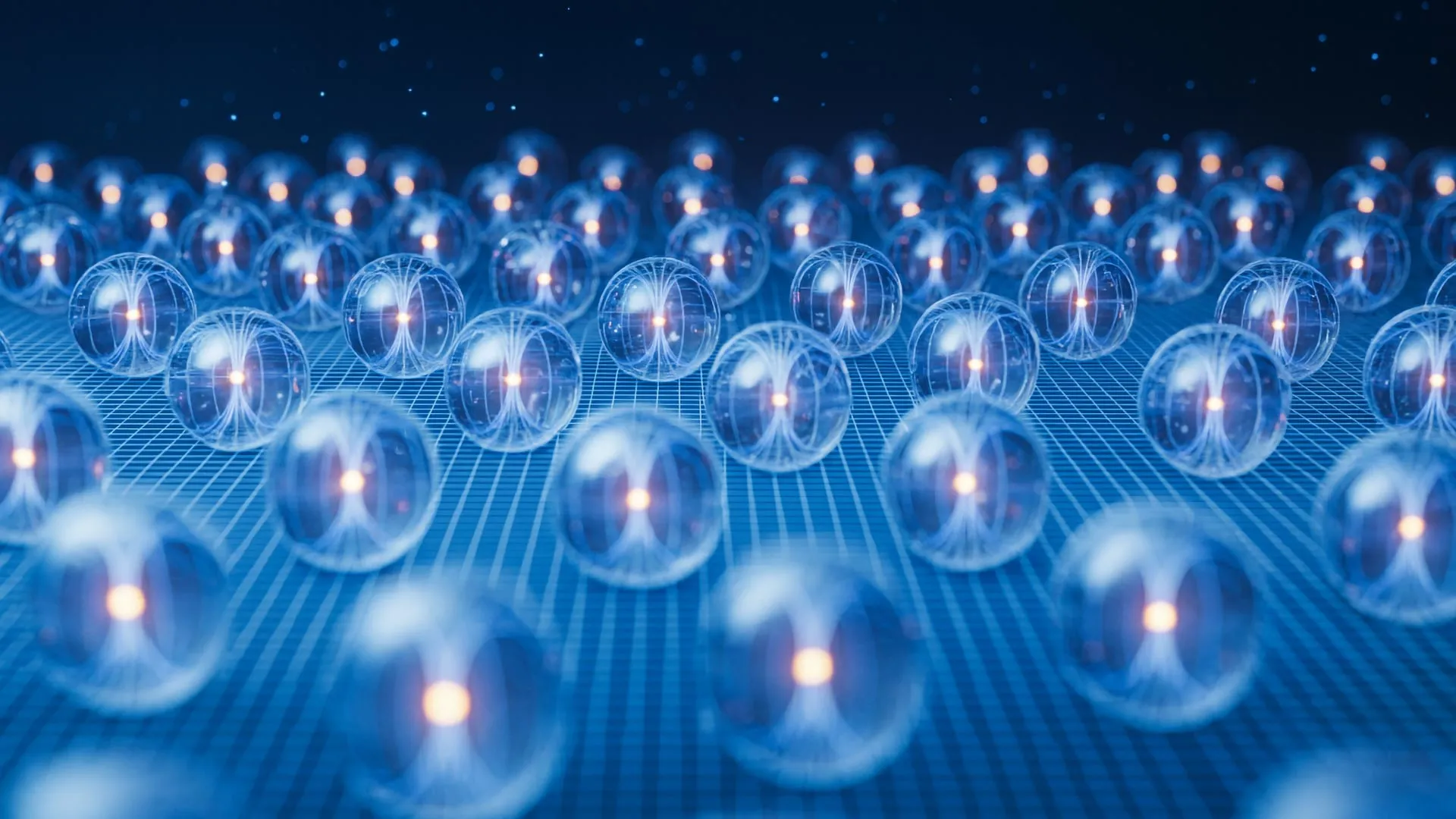
The core of quantum computing lies in the qubit, a quantum bit that, unlike its classical counterpart, can exist in multiple states simultaneously due to a phenomenon known as superposition. This inherent ability to explore numerous possibilities concurrently bestows upon quantum computers the extraordinary power to tackle complex calculations far beyond the reach of even the most powerful supercomputers today. However, this quantum advantage comes with a significant challenge: qubits are inherently fragile and susceptible to errors. To overcome this vulnerability, researchers are developing strategies that involve building quantum computers with vast numbers of redundant qubits, enabling sophisticated error correction mechanisms. Ultimately, for robust and fault-tolerant quantum computation, hundreds of thousands of qubits will be essential.
The Caltech team’s pioneering work has dramatically advanced this critical goal by constructing an array of 6,100 neutral-atom qubits, meticulously trapped in a precise grid by an intricate network of lasers. This represents a tenfold increase in scale compared to previous neutral-atom qubit arrays, which typically housed only hundreds of qubits. This milestone arrives at a pivotal moment, as a global race to scale up quantum computing capabilities intensifies, with diverse technological approaches being pursued, including superconducting circuits, trapped ions, and the neutral-atom platform championed by Caltech.
“This is an exciting moment for neutral-atom quantum computing,” exclaimed Manuel Endres, professor of physics at Caltech and the principal investigator of the research. “We can now see a pathway to large error-corrected quantum computers. The building blocks are in place.” The groundbreaking study was led by three Caltech graduate students: Hannah Manetsch, Gyohei Nomura, and Elie Bataille.
The ingenious method employed by the researchers involves utilizing optical tweezers – highly focused laser beams – to trap individual cesium atoms within a vacuum chamber. By splitting a single laser beam into an astonishing 12,000 individual tweezers, the team was able to precisely position and hold 6,100 atoms in a highly ordered grid. Manetsch vividly described the experience: "On the screen, we can actually see each qubit as a pinpoint of light. It’s a striking image of quantum hardware at a large scale."
Crucially, this significant increase in scale did not come at the expense of qubit quality. The Caltech team demonstrated remarkable coherence, maintaining the qubits in superposition for approximately 13 seconds – an improvement of nearly tenfold over previous similar arrays. Furthermore, they achieved an impressive individual qubit manipulation accuracy of 99.98 percent. “Large scale, with more atoms, is often thought to come at the expense of accuracy, but our results show that we can do both,” stated Nomura. “Qubits aren’t useful without quality. Now we have quantity and quality.”
Beyond maintaining qubit fidelity, the researchers also showcased their ability to move atoms across the array over hundreds of micrometers while preserving their delicate superposition states. This capacity to shuttle qubits is a distinct advantage of neutral-atom quantum computers, facilitating more efficient error correction compared to fixed, hard-wired architectures like those found in superconducting qubits. Manetsch drew an analogy to illustrate the complexity of this feat: "Trying to hold an atom while moving is like trying to not let the glass of water tip over. Trying to also keep the atom in a state of superposition is like being careful to not run so fast that water splashes over."
The next critical hurdle for the field is the implementation of quantum error correction on a scale involving thousands of physical qubits. The Caltech team’s work strongly suggests that neutral atoms are a prime contender for achieving this ambitious goal. “Quantum computers will have to encode information in a way that’s tolerant to errors, so we can actually do calculations of value,” explained Bataille. “Unlike in classical computers, qubits can’t simply be copied due to the so-called no-cloning theorem, so error correction has to rely on more subtle strategies.”
Looking ahead, the researchers are focused on entangling the qubits within their array. Entanglement, a peculiar quantum phenomenon where particles become inextricably linked and share a correlated fate, is a prerequisite for quantum computers to move beyond mere information storage and embark on complex quantum computations. It is this entanglement that unlocks the ultimate power of quantum computers: the ability to simulate the intricate workings of nature itself, from the fundamental behavior of matter to the quantum fields governing space-time. The ultimate aspiration is to harness entanglement to drive groundbreaking scientific discoveries, uncover novel phases of matter, and accelerate the design of advanced materials.
“It’s exciting that we are creating machines to help us learn about the universe in ways that only quantum mechanics can teach us,” Manetsch shared, highlighting the profound implications of their work.
The research, titled "A tweezer array with 6100 highly coherent atomic qubits," received generous funding from a consortium of esteemed organizations, including the Gordon and Betty Moore Foundation, the Weston Havens Foundation, the National Science Foundation (via its Graduate Research Fellowship Program), the Institute for Quantum Information and Matter (IQIM) at Caltech, the Army Research Office, the U.S. Department of Energy (including its Quantum Systems Accelerator), the Defense Advanced Research Projects Agency, the Air Force Office for Scientific Research, the Heising-Simons Foundation, and the AWS Quantum Postdoctoral Fellowship. The study also acknowledges the contributions of Caltech’s Kon H. Leung, an AWS Quantum senior postdoctoral scholar research associate in physics, and former Caltech postdoctoral scholar Xudong Lv, now at the Chinese Academy of Sciences. This collective effort underscores the broad scientific and governmental support for advancing the frontiers of quantum technology.