Faris Adani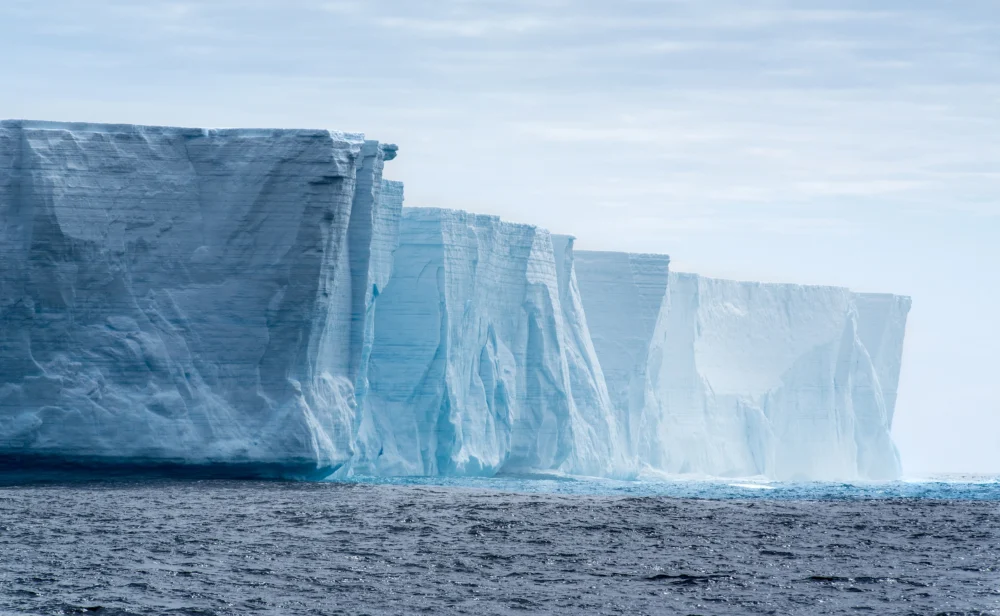
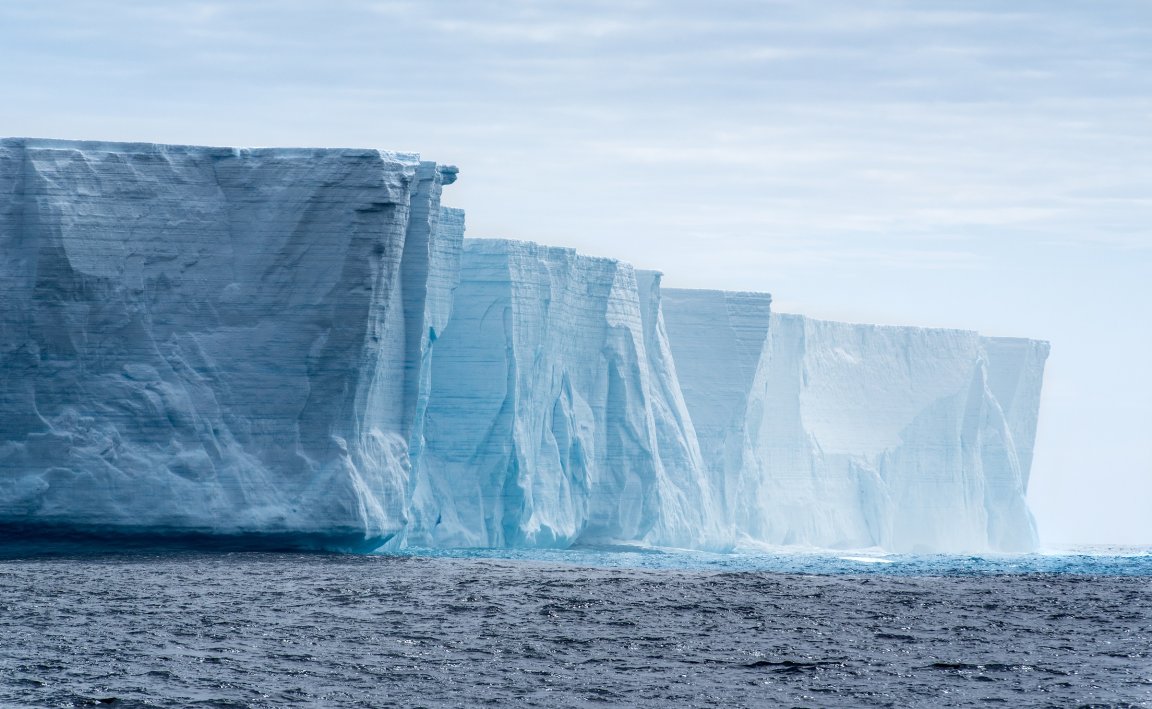
Scientists Embark on Crucial Expedition to Antarctica’s ‘Doomsday Glacier’ to Unravel its Catastrophic Future. A critical international expedition, involving nearly 40 researchers from diverse scientific backgrounds, has set sail from New Zealand, charting a course directly for the formidable Thwaites Glacier in Antarctica – notoriously dubbed the “Doomsday Glacier” – to conduct an unprecedented, up-close study of its rapid melting and profound implications for global sea levels.
The Thwaites Glacier, an immense and vital component of the West Antarctic Ice Sheet, represents one of the planet’s most significant climate change flashpoints. Spanning an area roughly the size of Florida, this colossal ice mass holds enough frozen water to elevate global sea levels by over two feet should it completely disintegrate. Alarmingly, extensive research has already indicated that Thwaites is undergoing an accelerating rate of melting, prompting scientists to embark on this urgent mission to better understand its complex dynamics and predict its uncertain future, which inextricably links to the fate of our planet.
Departing on Saturday, this multidisciplinary crew of glaciologists, oceanographers, marine biologists, and climate modelers is united by a shared sense of urgency and a formidable scientific agenda. Their journey into the remote and treacherous Antarctic waters marks a pivotal moment in climate science, aiming to gather data from an area notoriously difficult to access. The expedition, a testament to global collaboration, underscores the critical need for direct observation to refine climate models and inform future mitigation strategies. Chris Pierce, a glaciologist from Montana State University, whose team plans to employ advanced airborne radar to effectively “x-ray” the glacier’s interior, encapsulated the adaptive nature of Antarctic research, telling the *New York Times*, “There will be a Plan A through F.” Such flexibility is paramount in an environment where unpredictable weather, shifting ice, and extreme conditions can swiftly derail meticulously crafted plans.
The “Doomsday Glacier” moniker is not mere sensationalism; it reflects the potentially catastrophic scale of the glacier’s influence. Thwaites is particularly vulnerable due to its unique geological setting. Unlike many glaciers that rest on bedrock above sea level, much of Thwaites lies on bedrock that slopes downward inland. This configuration makes it highly susceptible to a phenomenon known as Marine Ice Sheet Instability (MISI). As warm ocean water erodes the glacier from beneath, the “grounding line” – the point where the glacier transitions from resting on bedrock to floating on the ocean – retreats. On a downward-sloping bed, this retreat exposes ever-thicker ice to the ocean, accelerating the melt and creating a positive feedback loop that can lead to an irreversible collapse. The enormous ice shelf fronting Thwaites plays a crucial role in buttressing the main glacier, slowing its flow. Any significant disintegration of this ice shelf could dramatically accelerate the glacier’s discharge into the ocean.
The immediate and visible signs of Thwaites’ decline have been stark. Satellite observations over the past decades have revealed a significant retreat of its grounding line, indicating that the ocean is making deeper inroads beneath the ice. Perhaps the most alarming recent discovery, as reported by scientists, was that the glacier’s vast underbelly, once believed to be insulated from warming ocean currents by its contact with the seafloor, is actively exposed to warm seawater. This intrusion occurs as rising tides subtly lift the glacier off the seafloor, allowing warmer, denser ocean currents to “sneak in,” leading to what researchers describe as “vigorous melting.” Doug Benn, a glaciologist at the University of St. Andrews in Scotland, vividly described the rapid changes: “Thwaites has really broken up in front of our eyes.” This observation highlights the dynamic and unpredictable nature of glacial retreat, challenging previous assumptions about the stability of massive ice formations.
The questions looming over this expedition are not *if* Thwaites is melting, but *how quickly* and *what precisely* its melting could unleash. The gravest concern is that Thwaites’ collapse could destabilize the entire West Antarctic Ice Sheet (WAIS). The WAIS, a monumental ice body over a mile thick in certain areas, holds enough ice to raise global sea levels by an astounding 10 to 15 feet if it were to melt entirely. While this worst-case scenario is projected to unfold over several centuries, the possibility is too severe to disregard. Scientific evidence suggests that a similar, rapid collapse event may have occurred around 120,000 years ago, contributing significantly to a period of higher global sea levels. Understanding the precise mechanisms and timescales of such a collapse is paramount for coastal communities and global infrastructure planning.
To tackle these complex questions, the expedition will deploy a range of cutting-edge technologies and innovative methodologies. Airborne radar systems, like those planned by Chris Pierce’s team, will penetrate thousands of feet of ice to map the subglacial topography, revealing the contours of the bedrock beneath—a crucial factor in predicting the glacier’s stability. Autonomous Underwater Vehicles (AUVs), specially designed to withstand the crushing pressures and frigid temperatures, will venture beneath the ice shelf to gather unprecedented data on ocean temperature, salinity, and currents at the ice-ocean interface. These robotic probes are essential for observing the direct interactions between warm seawater and the glacier’s underbelly.
Among the most intriguing and unconventional experiments is the integration of marine biology into glaciology: utilizing seals as data collectors. Instead of relying solely on costly and logistically challenging robotic deployments, researchers will attach specialized, non-invasive sensors to the blubbery mammals. These sensors, designed to be harmless and eventually fall off, will record vital oceanographic data, including temperature and salinity, as the seals dive and forage. This data is then transmitted to satellites, providing unique insights into hard-to-reach areas. Lars Boehme, an ecologist at the University of St. Andrews, explained the strategic advantage of this approach: “The seals go where the food is. And very often, that’s a place where, in terms of the environment and oceanography, things are happening.” This natural navigational intelligence allows scientists to collect data from areas of high biological and oceanographic activity, which are often key to understanding the glacier’s behavior.
The research at Thwaites Glacier is not an isolated scientific endeavor; it is deeply intertwined with the broader narrative of global climate change. The accelerating melt rates observed in Antarctica and Greenland, the increasing frequency and intensity of extreme weather events, and the dramatic ecological shifts, such as the recent reports of Alaskan rivers turning bright orange due to thawing permafrost, all point to a planet undergoing rapid and profound transformation. The data collected from this expedition will be invaluable for refining global climate models, providing more accurate projections for future sea-level rise, and informing international policy decisions regarding greenhouse gas emissions and climate adaptation. It is a race against time, where every piece of data, every observation, contributes to a clearer understanding of the challenges ahead.
In conclusion, the journey to the “Doomsday Glacier” represents more than just a scientific expedition; it is a profound testament to humanity’s effort to confront the realities of a changing climate. The nearly 40 scientists aboard the research vessel are not merely collecting data; they are seeking answers that will shape the future of coastal communities, economies, and ecosystems worldwide. Their work underscores the critical urgency of understanding Earth’s most vulnerable systems, reminding us that the fate of distant ice sheets is intimately connected to the daily lives of billions, demanding global attention and concerted action.