Faris Adani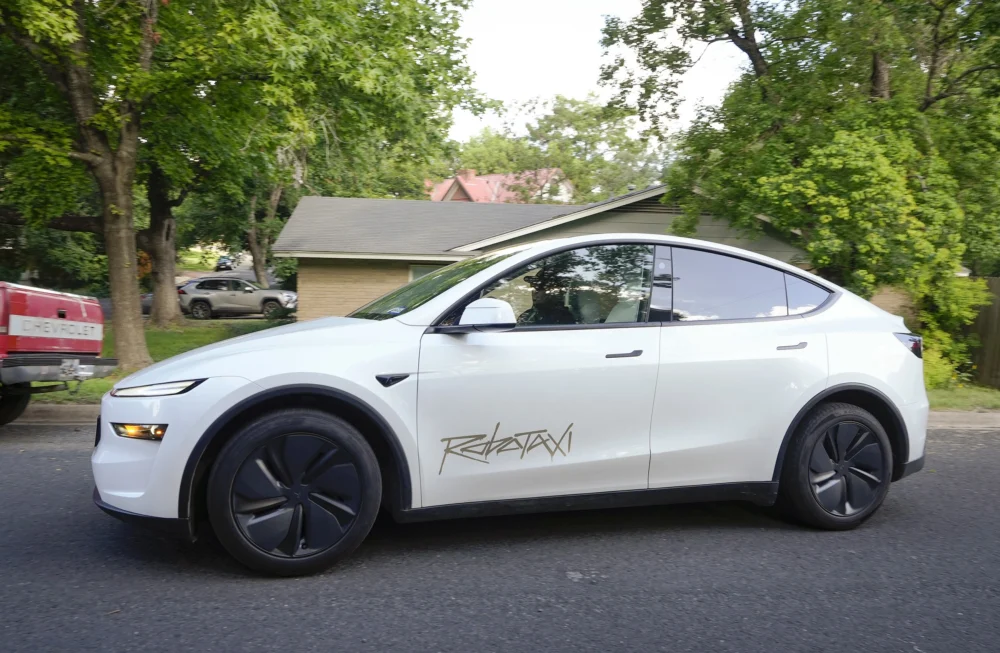
The disparity becomes immediately apparent when comparing Tesla’s progress to its established competitors. Companies like Waymo, a pioneer in autonomous driving, boast over a decade of operational experience and a substantial fleet of thousands of fully driverless robotaxis actively providing rides across multiple major US cities. Their vehicles, equipped with a comprehensive suite of lidar, radar, and camera sensors, navigate complex urban environments with increasing confidence and safety. In stark contrast, it was recently revealed that Tesla’s much-touted "Robotaxi" fleet currently numbers a mere 30 vehicles, all confined to Austin, Texas – the solitary city where the company is offering rides to the public. This minuscule footprint is not only dwarfed by Waymo’s scale but is also barely perceptible to the very residents it aims to serve. Kara Kockelman, a distinguished professor of engineering at the University of Texas at Austin specializing in transportation, candidly admitted to the NYT, "I’ve never seen a Robotaxi in Austin. Waymos are around all the time." This sentiment underscores a critical lack of market penetration and operational visibility that belies Musk’s grandiose predictions.
Compounding Tesla’s challenges is the fundamental operational model of its robotaxis. Unlike the fully autonomous vehicles deployed by Waymo and Cruise, Tesla’s self-driving cabs are not truly driverless. They necessitate the constant supervision of a human "safety monitor" who must remain present in the vehicle at all times. This requirement immediately negates the primary economic advantage of a robotaxi service – the elimination of driver costs – and highlights the technology’s continued immaturity. The necessity for human oversight is further underscored by a troubling track record of incidents. Numerous reports detail instances of Tesla’s autonomous vehicles violating traffic laws, and the company has faced scrutiny over an alarming crash rate, including a high-profile case where a Tesla operating on "Full Self-Driving" (FSD) mode tragically ran over and killed an elderly pedestrian when its front camera was reportedly blinded by sunlight. These incidents demonstrate why human intervention remains not just advisable but critically necessary, undermining the "full self-driving" moniker and the vision of uncrewed robotaxis.
The gap between Musk’s pronouncements and operational reality is a recurring theme in Tesla’s autonomous driving narrative. He famously declared that over a thousand Robotaxis would be operational in Austin "within a few months" of their launch. This promise, like many before it, has evaporated. Historically, Musk has consistently set aggressive, often unrealistic, timelines for FSD and robotaxi capabilities. In 2019, he promised one million fully autonomous Teslas would be on the road by the end of 2020. That deadline passed, as did subsequent ones. More recently, he stated that over a million fully autonomous Teslas would be on the road by 2026, and that the automaker’s Robotaxi operations would cover "half the population of the US" by the end of next year. These projections, while inspiring to some, have created a pattern of over-promising and under-delivering that has begun to erode credibility.
The stakes for Tesla and its CEO are extraordinarily high. Investors, captivated by the promise of exponential growth and disruptive technology, have often overlooked the delays, keeping Tesla’s stock buoyant. This unwavering investor confidence is not merely speculative; it’s directly tied to Musk’s own compensation. His eye-watering trillion-dollar pay package, recently re-approved by shareholders, is contingent upon achieving specific milestones, including the commercial deployment of one million Robotaxis. This linkage places immense pressure on Musk to deliver, yet the current state of the robotaxi program makes such a target seem increasingly distant and perhaps unattainable within the given timeframe. The question then arises: what happens if these foundational promises, central to Tesla’s valuation and its CEO’s reward, fail to materialize?
A significant point of contention among experts lies in Musk’s controversial technological philosophy. He has famously dismissed radar and lidar sensors as an "expensive crutch," choosing instead to double down on a "vision-only" approach, relying solely on cameras and artificial intelligence to interpret the environment. While vision systems are powerful, many in the autonomous vehicle industry argue that they have inherent limitations. Lidar (Light Detection and Ranging) provides precise 3D mapping regardless of lighting conditions and is less susceptible to adverse weather like heavy rain or fog. Radar, meanwhile, excels at detecting velocity and distance, crucial for avoiding collisions, especially in low visibility. Competitors like Waymo integrate all three sensor modalities (camera, lidar, radar) to create a robust, redundant perception system that can cross-verify data and compensate for the weaknesses of any single sensor type. Musk’s refusal to adopt this multi-modal approach, despite numerous incidents highlighting the limitations of vision-only, is viewed by many as a fundamental misstep that compromises safety and slows progress. The tragic incident involving the elderly pedestrian, where sunlight reportedly blinded the front camera, serves as a grim illustration of these risks.
Expert skepticism regarding Tesla’s approach is widespread and growing. Matthew Wansley, a professor at Cardozo School of Law in New York with experience at an autonomous driving start-up, articulated this sentiment to the NYT: "I’m still deeply skeptical that Tesla is all that close in terms of building a real automated driving system." Raj Rajkumar, a Carnegie Mellon University professor and a true pioneer in autonomous technology, minced no words, stating unequivocally that Tesla is "way behind Waymo." These aren’t isolated opinions; they reflect a consensus among many within the academic and engineering communities who understand the complexities of achieving true Level 4 or Level 5 autonomy.
While technology can sometimes advance at an astonishing pace, and fortunes can indeed shift rapidly in nascent industries, the current trajectory for Tesla’s robotaxi ambitions appears to be one of persistent challenges and unfulfilled promises. The operational gap between Tesla and its rivals is not merely one of scale but of fundamental technological approach, safety record, and realistic timelines. For a program touted as the future of the company and a cornerstone of its valuation, the current reality of a small, supervised fleet operating in a single city, grappling with safety concerns and an arguably incomplete sensor suite, feels less like a technological revolution and more like a carefully constructed illusion. The "smoke and mirrors" narrative isn’t just a critique; it’s a call for a serious reevaluation of expectations versus tangible progress, particularly as investors weigh the true value and viability of Tesla’s self-driving dreams.
More on robotaxis: Waymos Cause Traffic Jams Across City During Power Outage