isnaini azizah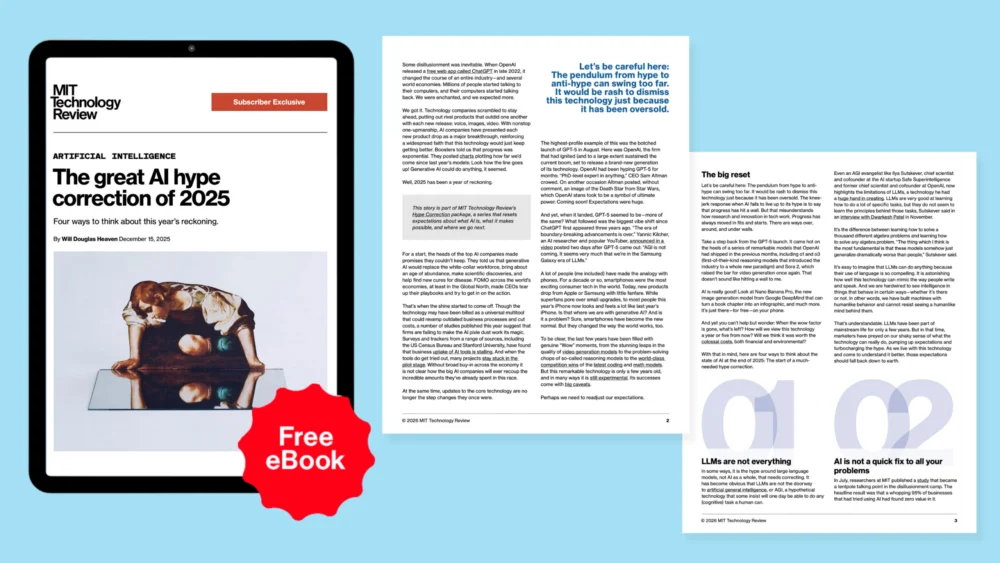
The seeds of the 2025 correction have been germinating for some time. We’ve witnessed a growing disconnect between the public perception of AI, often shaped by dramatic portrayals in media, and the more nuanced, often incremental, progress in the field. The "AI winter" of the past, characterized by reduced funding and public interest due to overpromising and underdelivering, serves as a historical precedent. While the current AI boom, driven by advancements in machine learning, deep learning, and massive datasets, has been undeniably impressive, the underlying limitations and challenges remain. The pursuit of Artificial General Intelligence (AGI) – AI that possesses human-level cognitive abilities across a wide range of tasks – continues to be a distant, if not elusive, goal. Many of the AI systems we celebrate today, while incredibly powerful, are still narrow in their scope, excelling at specific tasks but lacking true understanding, common sense, or the ability to adapt to novel situations with human-like flexibility.
The correction of 2025 will manifest in several key areas. Firstly, a more realistic assessment of AI’s current capabilities will emerge. We will see a shift from the grand pronouncements of AI taking over all jobs to a more pragmatic understanding of AI as a powerful tool that augments human abilities, automates specific processes, and enhances decision-making. This will involve a deeper appreciation for the human element in AI development and deployment, recognizing that human oversight, ethical guidance, and creative input remain indispensable. The focus will move from "can AI do it?" to "how can AI help us do it better?"
Secondly, the economic realities of AI will come into sharper focus. The massive investments poured into AI research and development, while driving innovation, have also led to inflated valuations and a race for market dominance. The correction will involve a more sober evaluation of return on investment, with a greater emphasis on practical applications that deliver tangible value. Companies that have been chasing the "AI unicorn" will need to demonstrate concrete business outcomes and sustainable revenue streams, rather than relying on speculative future potential. This will likely lead to a consolidation within the AI industry, with less robust business models faltering and stronger, more focused companies emerging.
Thirdly, the ethical and societal implications of AI will move from the periphery to the center of the conversation. The rapid deployment of AI has brought to the fore critical issues such as algorithmic bias, job displacement, data privacy, security vulnerabilities, and the potential for misuse. The hype cycle has often glossed over these complexities, assuming that technological advancement would inherently solve them. The correction of 2025 will demand a more robust and proactive approach to AI ethics and governance. This will involve increased regulatory scrutiny, the development of industry-wide ethical frameworks, and a greater public discourse on the responsible development and deployment of AI technologies. We will see a greater demand for transparency in AI systems, explainable AI (XAI) becoming a critical requirement, and a stronger emphasis on fairness, accountability, and human control.
Furthermore, the nature of AI research and development itself will evolve. The current paradigm, heavily reliant on large datasets and brute-force computation, may begin to show its limitations. The correction could usher in a new era of AI research, one that emphasizes more efficient learning algorithms, symbolic reasoning, causal inference, and a deeper understanding of the underlying principles of intelligence. This could lead to AI systems that are more robust, less data-hungry, and better able to generalize from limited information. The pursuit of true understanding, rather than mere pattern recognition, will become a more prominent research objective.
The hype correction will also impact the public’s perception of AI. The initial awe and wonder will likely be tempered by a more informed understanding of AI’s strengths and weaknesses. This doesn’t mean a loss of interest, but rather a more mature and critical engagement with the technology. Education and literacy around AI will become increasingly important, empowering individuals to understand how AI impacts their lives and to participate in informed discussions about its future. The fear-mongering narratives will likely be replaced by more nuanced discussions about the challenges and opportunities presented by AI.
The eBook, "The Great AI Hype Correction of 2025," will delve into these themes with the rigorous analysis and independent insight that has been the hallmark of MIT Technology Review since its founding at the Massachusetts Institute of Technology in 1899. For over a century, MIT Technology Review has served as a beacon, illuminating the complex interplay between technological innovation and its societal, commercial, and political ramifications. This independent media company, renowned for its insightful analysis, in-depth reviews, exclusive interviews, and engaging live events, provides unparalleled clarity on the newest technologies and their profound impact on our world.
This exclusive eBook will explore the historical context of AI hype cycles, drawing parallels with previous technological booms and busts. It will dissect the specific factors driving the current AI enthusiasm, from breakthroughs in deep learning to the proliferation of generative AI models. Crucially, it will provide a framework for understanding the indicators of the impending correction – the signs that suggest a shift from unbridled optimism to a more pragmatic outlook. This will include examining the evolving investment landscape, the increasing regulatory pressures, and the growing public demand for responsible AI.
Readers will gain a comprehensive understanding of how the AI industry is likely to mature. We will explore the potential impact on various sectors, from healthcare and finance to transportation and entertainment, identifying areas where realistic AI applications will drive significant progress and areas where overhyped promises will likely fall short. The eBook will also offer guidance for businesses and policymakers, providing actionable insights on how to navigate this evolving landscape, foster sustainable AI adoption, and mitigate potential risks.
The narrative of AI has always been one of aspiration. The Great AI Hype Correction of 2025 is not an end to that aspiration, but a crucial step towards its more grounded and impactful realization. By shedding unrealistic expectations, we can build a future where AI serves as a powerful, ethical, and beneficial tool for humanity, driving progress in a way that is sustainable, equitable, and truly transformative. This eBook aims to be your essential guide through this critical juncture in the evolution of artificial intelligence.
Elevate your brand to the forefront of the conversation around emerging technologies that are radically transforming business by advertising with MIT Technology Review. From event sponsorships to custom content to visually arresting video storytelling, advertising with MIT Technology Review creates opportunities for your brand to resonate with an unmatched audience of technology and business elite, ensuring your message is heard amidst the unfolding narrative of AI’s future.