Imroatul Nasiyah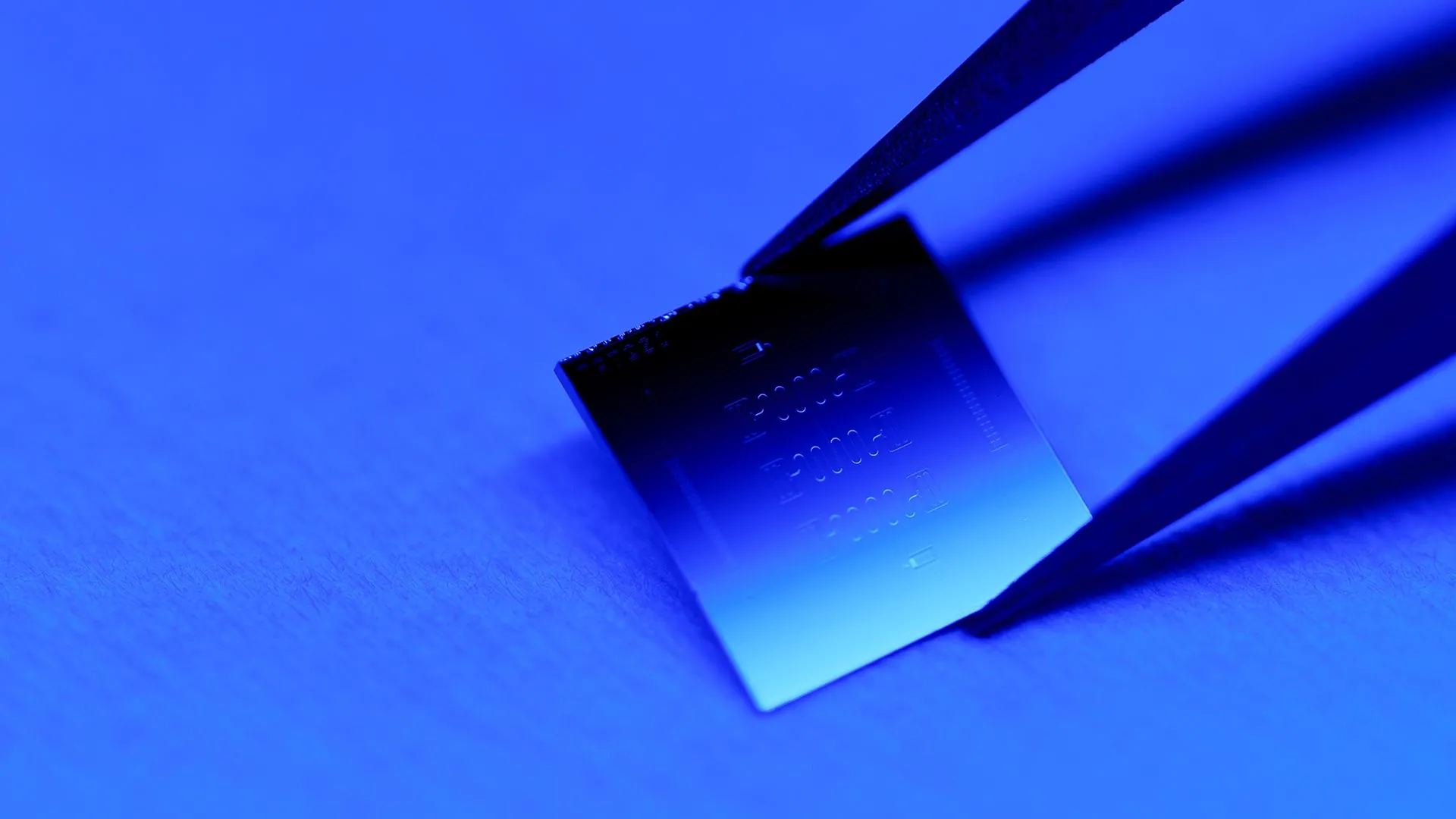
Princeton engineers have achieved a monumental leap forward in quantum computing with the development of a superconducting qubit that boasts a coherence time three times longer than the most advanced designs currently available, a critical advancement for building reliable and powerful quantum machines. This groundbreaking innovation, detailed in a November 5th publication in the prestigious journal Nature, directly addresses the primary bottleneck hindering the widespread deployment of functional quantum computers: the ephemeral nature of quantum information. Andrew Houck, a leading figure in national quantum research and Princeton’s dean of engineering, articulated the core challenge, stating, "The real challenge, the thing that stops us from having useful quantum computers today, is that you build a qubit and the information just doesn’t last very long. This is the next big jump forward."
The Princeton team’s newly engineered qubit has demonstrated an astonishing coherence time exceeding 1 millisecond. This represents a threefold increase over the longest coherence times previously documented in laboratory settings and a remarkable fifteen-fold improvement compared to the standard coherence times found in industrial quantum processors. To validate their findings, the researchers meticulously constructed a functional quantum chip incorporating their novel qubit. This demonstration not only confirmed the qubit’s enhanced stability but also underscored its capability to support error correction mechanisms and its scalability towards more complex, larger quantum systems.
A significant aspect of this breakthrough is the qubit’s compatibility with existing architectures employed by major players in the quantum computing arena, including industry giants like Google and IBM. Preliminary analyses suggest that if key components within Google’s advanced Willow processor were replaced with Princeton’s design, its performance could skyrocket by an astounding factor of 1,000. Houck further elaborated on the accelerating benefits of this new design, noting that as quantum systems integrate an increasing number of qubits, the advantages conferred by this innovation become exponentially more pronounced.
The Paramount Importance of Enhanced Qubit Durability in Quantum Computing
Quantum computers hold immense promise for tackling complex computational problems that lie beyond the reach of even the most powerful conventional supercomputers. However, their current capabilities are significantly constrained by the inherent fragility of qubits, which tend to lose their quantum information before intricate calculations can be completed. Consequently, extending qubit coherence time is an indispensable prerequisite for the realization of practical and impactful quantum hardware. Princeton’s latest achievement marks the most substantial single gain in coherence time witnessed in over a decade, signaling a pivotal moment in the field.
While numerous research laboratories are actively exploring a diverse range of qubit technologies, Princeton’s design builds upon a well-established and widely adopted platform known as the transmon qubit. Transmons, which function as superconducting circuits meticulously maintained at extremely low temperatures, are recognized for their inherent resilience against environmental interference and their amenability to integration with contemporary manufacturing processes.
Despite these inherent advantages, enhancing the coherence time of transmon qubits has presented a formidable and persistent challenge. Recent research from Google, for instance, identified material defects as the primary impediment to improving the performance of their most advanced processors.
A Novel Materials Strategy: The Synergy of Tantalum and Silicon
The Princeton research team devised a sophisticated two-pronged materials strategy to surmount these persistent material-related obstacles. Their approach involved the strategic incorporation of tantalum, a metal renowned for its exceptional ability to retain energy within delicate circuits. Complementing this, they replaced the conventional sapphire substrate, a material often associated with energy loss, with high-purity silicon, a cornerstone material of the global semiconductor industry. The direct deposition of tantalum onto silicon presented a series of intricate technical hurdles related to the material interface, but the researchers successfully navigated these challenges, uncovering significant performance advantages in the process.
Nathalie de Leon, co-director of Princeton’s Quantum Initiative and a co-principal investigator on the project, highlighted that the tantalum-silicon design not only outperforms previous methodologies but also offers a simpler manufacturing pathway for large-scale production. "Our results are really pushing the state of the art," she commented, underscoring the significance of their findings.
Michel Devoret, chief scientist for hardware at Google Quantum AI, which provided partial funding for the research, eloquently described the profound difficulty of extending the operational lifespan of quantum circuits, referring to the endeavor as a "graveyard" of attempted solutions. He praised de Leon’s tenacity, stating, "Nathalie really had the guts to pursue this strategy and make it work." Devoret’s recognition is particularly noteworthy, given his status as a recipient of the 2025 Nobel Prize in Physics.
The project received its primary financial backing from the U.S. Department of Energy National Quantum Information Science Research Centers and the Co-design Center for Quantum Advantage (C2QA). Houck led C2QA from 2021 to 2025 and currently serves as its chief scientist. The seminal Nature paper lists postdoctoral researcher Faranak Bahrami and graduate student Matthew P. Bland as co-lead authors, acknowledging their pivotal contributions.
Unraveling the Mechanism: How Tantalum Elevates Qubit Stability
Houck, who also holds the distinguished position of the Anthony H.P. Lee ’79 P11 P14 Professor of Electrical and Computer Engineering at Princeton, explained that the overall capability of a quantum computer hinges on two fundamental factors: the sheer number of qubits that can be interconnected and the number of operations each qubit can perform before accumulating unmanageable errors. Enhancing the durability of individual qubits directly bolsters both of these critical aspects. An extended coherence time intrinsically supports greater scalability and facilitates more robust error correction.
Energy loss represents the most prevalent source of failure in these highly sensitive quantum systems. Microscopic surface defects present within metallic components can trap energy, thereby disrupting the qubit’s state during computational processes. These disruptions tend to compound as more qubits are integrated into a system. Tantalum’s superiority in this regard stems from its intrinsic characteristic of possessing significantly fewer such defects compared to commonly used metals like aluminum. With a reduced defect density, the quantum system generates fewer errors, and the subsequent task of correcting the remaining errors becomes considerably simplified.
Houck and de Leon first introduced tantalum for superconducting chips in 2021, a development facilitated by the expertise of Princeton chemist Robert Cava, the Russell Wellman Moore Professor of Chemistry. Cava, a distinguished specialist in superconducting materials, became intrigued by the problem after attending one of de Leon’s presentations. Their subsequent discussions led him to propose tantalum as a highly promising material candidate. "Then she went and did it," Cava remarked, emphasizing the groundbreaking nature of their success. "That’s the amazing part."
Following this insightful suggestion, researchers across all three collaborating laboratories embarked on constructing a tantalum-based superconducting circuit integrated onto a sapphire substrate. This initial endeavor yielded a significant enhancement in coherence time, bringing it remarkably close to the previous world record.
Bahrami further elaborated on tantalum’s unique advantages, noting its exceptional durability and its ability to withstand the rigorous cleaning protocols essential for removing contaminants during the fabrication process. "You can put tantalum in acid, and still the properties don’t change," she asserted, underscoring its robustness.
Upon meticulous removal of contaminants, the research team proceeded to analyze the remaining sources of energy loss. Their investigation revealed that the sapphire substrate was the primary culprit for the majority of these persistent issues. The strategic decision to switch to a high-purity silicon substrate effectively eliminated this significant source of loss. The synergistic combination of tantalum and silicon, coupled with refined fabrication techniques, culminated in one of the most substantial improvements ever achieved in a transmon qubit. Houck aptly characterized the outcome as "a major breakthrough on the path to enabling useful quantum computing."
Houck further projected that the exponential scaling of benefits offered by this novel design means that replacing current industry-leading qubits with Princeton’s innovation could lead to a theoretical 1,000-qubit quantum computer operating approximately 1 billion times more effectively.
A Silicon-Based Design Paves the Way for Industry-Scale Growth
This transformative project draws upon the combined expertise of three distinct but complementary research areas. Houck’s group is a recognized leader in the design and optimization of superconducting circuits. De Leon’s laboratory excels in quantum metrology, with a deep understanding of the materials and fabrication methodologies that dictate qubit performance. Cava’s group brings decades of pioneering experience in the development of advanced superconducting materials. By pooling their collective strengths, the team achieved results that would have been unattainable by any single group working in isolation. This remarkable success has already garnered significant attention from the broader quantum industry.
Devoret emphasized the indispensable role of collaborations between academic institutions and commercial enterprises in propelling advanced technologies forward. "There is a rather harmonious relationship between industry and academic research," he observed. He posited that university researchers are ideally positioned to explore the fundamental limits of quantum performance, while industry partners can then effectively translate these fundamental discoveries into practical, large-scale systems.
"We’ve shown that it’s possible in silicon," de Leon stated, highlighting the significance of their achievement within a widely adopted and scalable material platform. "The fact that we’ve shown what the critical steps are, and the important underlying characteristics that will enable these kinds of coherence times, now makes it pretty easy for anyone who’s working on scaled processors to adopt."
The groundbreaking research, published as "Millisecond lifetimes and coherence times in 2D transmon qubits" in Nature on November 5th, involved a comprehensive list of authors including Jeronimo G.C. Martinez, Paal H. Prestegaard, Basil M. Smitham, Atharv Joshi, Elizabeth Hedrick, Alex Pakpour-Tabrizi, Shashwat Kumar, Apoorv Jindal, Ray D. Chang, Ambrose Yang, Guangming Cheng, and Nan Yao, in addition to the previously mentioned de Leon, Houck, Cava, Bahrami, and Bland. This pivotal research received primary financial support from the U.S. Department of Energy, Office of Science, National Quantum Information Science Research Centers, and the Co-design Center for Quantum Advantage (C2QA), with additional partial support from Google Quantum AI.